What Is Gua Sha?
Gua sha is a traditional Chinese medicine technique in which a smooth edged tool is used to gently scrape the skin along the muscles, drawing stagnant blood to the surface and releasing tension in the tissue underneath. The name comes from two Chinese words that translate roughly as "to scrape" and "sand," describing the fine reddish speckling that rises on the skin during treatment. It is a hands on, body work style therapy that many patients find helps with muscular tension, sluggish circulation, and certain kinds of pain.
Despite how the word "scrape" might sound, gua sha is not harsh. The practitioner applies oil to the skin first, then uses firm, controlled strokes with a rounded tool. The pressure is deep but should never be sharp or cutting. At Piraluna, Claire uses it where it suits your pattern, often as a complement to acupuncture and cupping rather than a treatment on its own.
How Gua Sha Works
The principle behind gua sha is movement. In TCM, pain and stiffness often arise when qi and blood become stagnant in an area, leaving the tissue tight, sore, and undernourished. The scraping action breaks up that stagnation, pulls fresh blood into the region, and helps the body clear the metabolic waste that builds up in overworked muscles.
The reddish marks that appear during treatment are called "sha." They are not bruises and they are not a sign of damage. They are stagnant blood and waste being drawn to the surface so the body can reabsorb and clear it. The color tells Claire something useful. Areas with significant stagnation tend to produce darker sha, while healthy, well circulated tissue may barely change color at all. The marks usually fade within two to four days, and with repeated treatment they tend to appear lighter as circulation improves.
From a modern perspective, the technique increases local blood flow, stimulates the tissue, and appears to support the body's anti inflammatory response. From the TCM perspective, it restores the smooth flow of qi and blood through the affected channels. Both descriptions point to the same outcome that patients report: looser muscles and less discomfort.
What Gua Sha May Help
Gua sha is versatile, and Claire uses it most often for the following.
- Muscular tension. Tight, knotted muscles in the upper back, shoulders, and neck respond well to the scraping action. It is a frequent choice for the stiffness that builds up from desk work, which we explore in our guide to office syndrome and TCM.
- Poor circulation. By drawing blood to the surface and into the deep tissue, gua sha helps areas that have become cold, stiff, or undernourished feel warmer and more mobile.
- Aches and pain. Many patients find relief from the dull, persistent muscular pain that comes with chronic tension, particularly across the upper back and along the spine.
- Stress that settles in the body. Emotional tension often lodges in the muscles. Releasing the muscles can leave patients feeling lighter and calmer, an effect people often describe after both gua sha and cupping.
These are honest, modest claims. Gua sha may help and many patients find it useful, but Claire will not promise a cure. She will tell you during your consultation whether it is the right tool for your situation.
How Gua Sha Differs from Cupping
Gua sha and cupping are often mentioned together because they share a goal of moving stagnant blood and releasing tension. The way they get there is different.
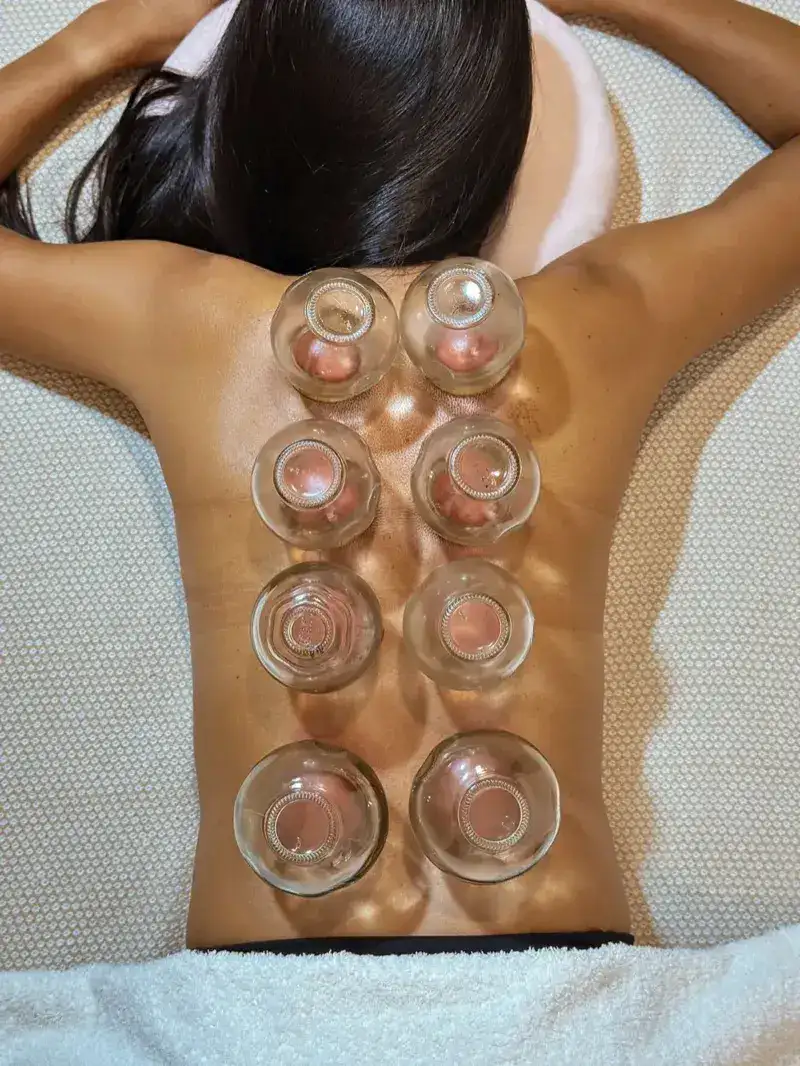
Cupping uses suction. Cups are placed on the skin and the air inside is removed, which lifts the skin, fascia, and muscle upward into the cup. It is a pulling action that decompresses the tissue. The marks it leaves are round, matching the rim of the cup.
Gua sha uses pressure and motion. A tool is pressed against the oiled skin and drawn along the muscle in repeated strokes. It is a scraping action that moves across the surface rather than lifting it. The marks it leaves are linear and speckled, following the direction of the strokes.
In practice, Claire often chooses gua sha for long muscle groups and broad areas of tension where she wants to work along the fibers, and cupping where she wants to lift and decompress a focused area. The two pair naturally, and a single session may include both alongside acupuncture, depending on what your body needs. You can read more about the suction technique on our cupping services page.
What a Session at Piraluna Looks Like
Your visit starts with a consultation. Claire, who trained at Chengdu University of Traditional Chinese Medicine, will ask about your symptoms, check your pulse and tongue, and palpate the areas of tension to find the knots and tight bands. This tells her where to work and how firmly.
She applies a thin layer of oil, then uses smooth, even strokes with the gua sha tool, checking in with you about the pressure as she goes. You will feel a deep, satisfying scrape and a spreading warmth in the treated area. It should feel strong but comfortable, and if any spot feels too intense she will ease off at once.
Afterward the muscles usually feel looser and the area warmer. Claire may then continue with acupuncture or cupping as part of your overall plan. For desk related stiffness she may also combine these techniques, much as she describes in our piece on acupuncture for neck and shoulder pain.
Is Gua Sha Right for You?
If you carry tension in your neck, shoulders, or back, struggle with stiff, sluggish muscles, or feel the physical weight of stress in your body, gua sha may be a good fit. It is non invasive, drug free, and well tolerated by most people, though it is avoided over broken skin, sunburn, or for those on blood thinning medication without an individual assessment.
Explore the full range of conditions we treat at Piraluna, and when you are ready, book a session at the clinic so Claire can build a treatment around your body and your goals.