Why Neck and Shoulder Pain Is So Common
If you carry tension in your neck and shoulders, you are far from alone. At our clinic in Koh Samui, neck and shoulder pain is the single most common reason people walk through the door, closely followed by lower back pain and sciatica. About half of all patients who visit Piraluna mention shoulder pain, and nearly as many report chronic neck tension.
The reasons are not hard to find. Hours spent hunched over a laptop, scrolling on a phone, or driving create a forward head posture that puts enormous strain on the muscles of the upper back, neck, and shoulders. Over time, that strain becomes chronic. The muscles tighten, blood flow decreases, and what started as occasional stiffness becomes a daily companion.
Stress makes it worse. When you feel anxious or overwhelmed, your body instinctively pulls your shoulders up toward your ears. You clench your jaw. The muscles around your neck lock down. If this pattern repeats daily, those muscles eventually forget how to let go. This connection between stress, anxiety, and physical tension is something we address frequently in treatment.
Travel can compound the problem too. Long flights, unfamiliar pillows, and backpacks overloaded with gear are a recipe for neck and shoulder flare ups. Many of our patients are travelers and digital nomads who have been carrying this tension across multiple countries and time zones.
How Acupuncture Treats Neck and Shoulder Pain
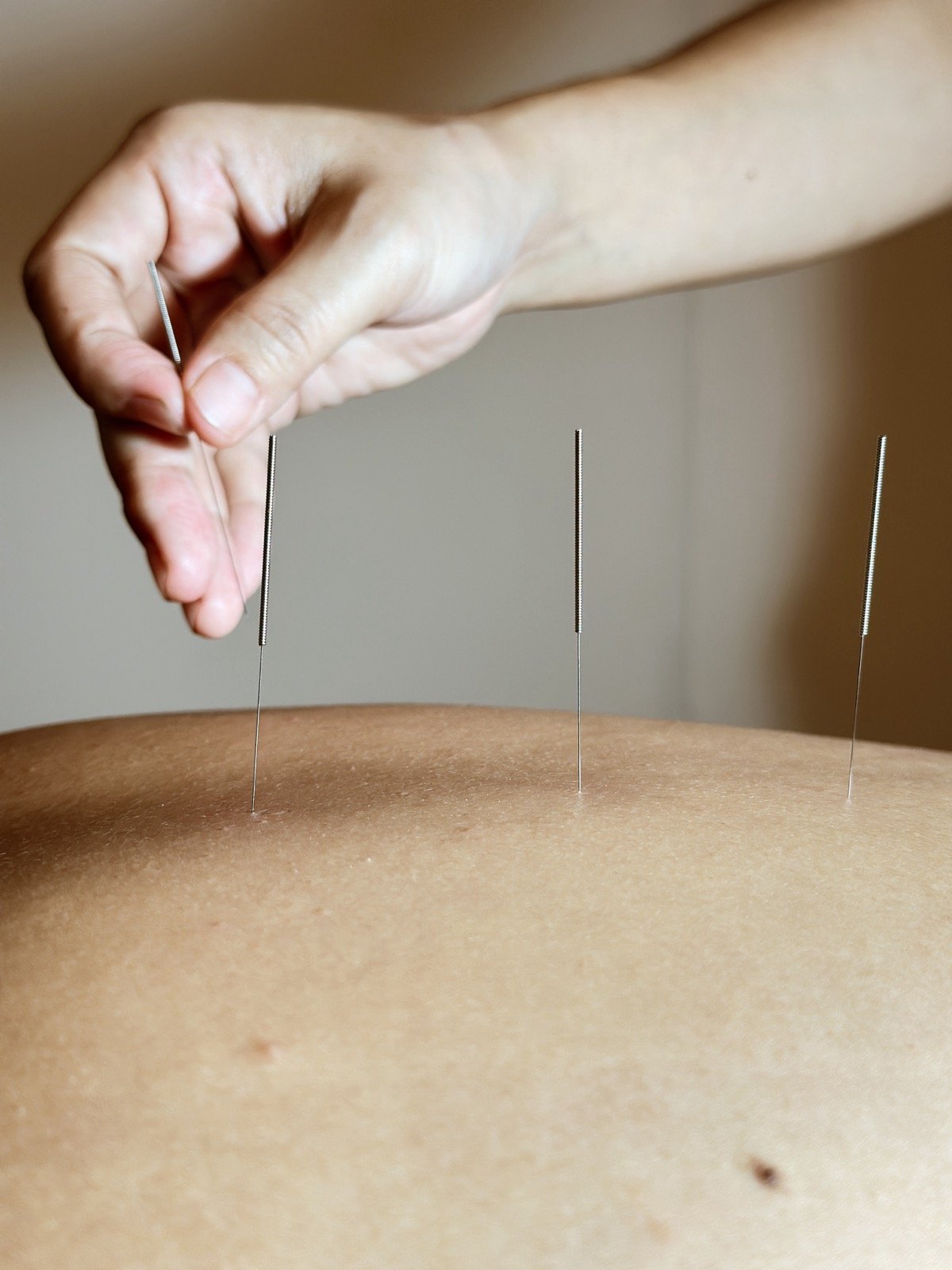
Acupuncture works by inserting very thin needles into specific points on the body. These points sit along pathways that Traditional Chinese Medicine (TCM) calls meridians. When a needle is placed at the right point, it triggers a cascade of responses in your body that reduce pain and promote healing.
From a modern perspective, acupuncture stimulates blood flow to tight, oxygen starved muscles. It encourages the release of endorphins, your body's natural painkillers. It also reduces inflammation and calms overactive nerve signals that keep muscles in a state of constant contraction.
From a TCM perspective, chronic neck and shoulder pain is usually a sign that qi (energy) and blood are stuck. The goal of treatment is to restore circulation and release the blockages that cause stiffness and pain. Once flow is restored, the muscles soften, range of motion improves, and pain diminishes.
What makes acupuncture different from a massage or a painkiller is that it addresses the underlying pattern, not just the symptom. A massage can temporarily release a tight muscle, and a painkiller can dull the signal. Acupuncture aims to change the conditions that created the tightness in the first place.
What Points Are Used for Neck and Shoulder Pain?
Your practitioner will select points based on your specific pattern of pain, but there are several commonly used points for neck and shoulder issues.
Points on the upper trapezius muscle (the thick muscle between your neck and shoulder) are often targeted directly. Points on the hands and forearms are used to release tension along the meridians that run through the shoulder and neck. Points on the feet and lower legs can help draw energy downward, relieving the upward pulling tension that builds in the upper body.
You might be surprised that needles placed in your hand or foot can affect your shoulder. But these distal points are often the most effective. They work by signaling the nervous system to release tension along the entire pathway, not just at the site of pain.
What a Session at Piraluna Looks Like
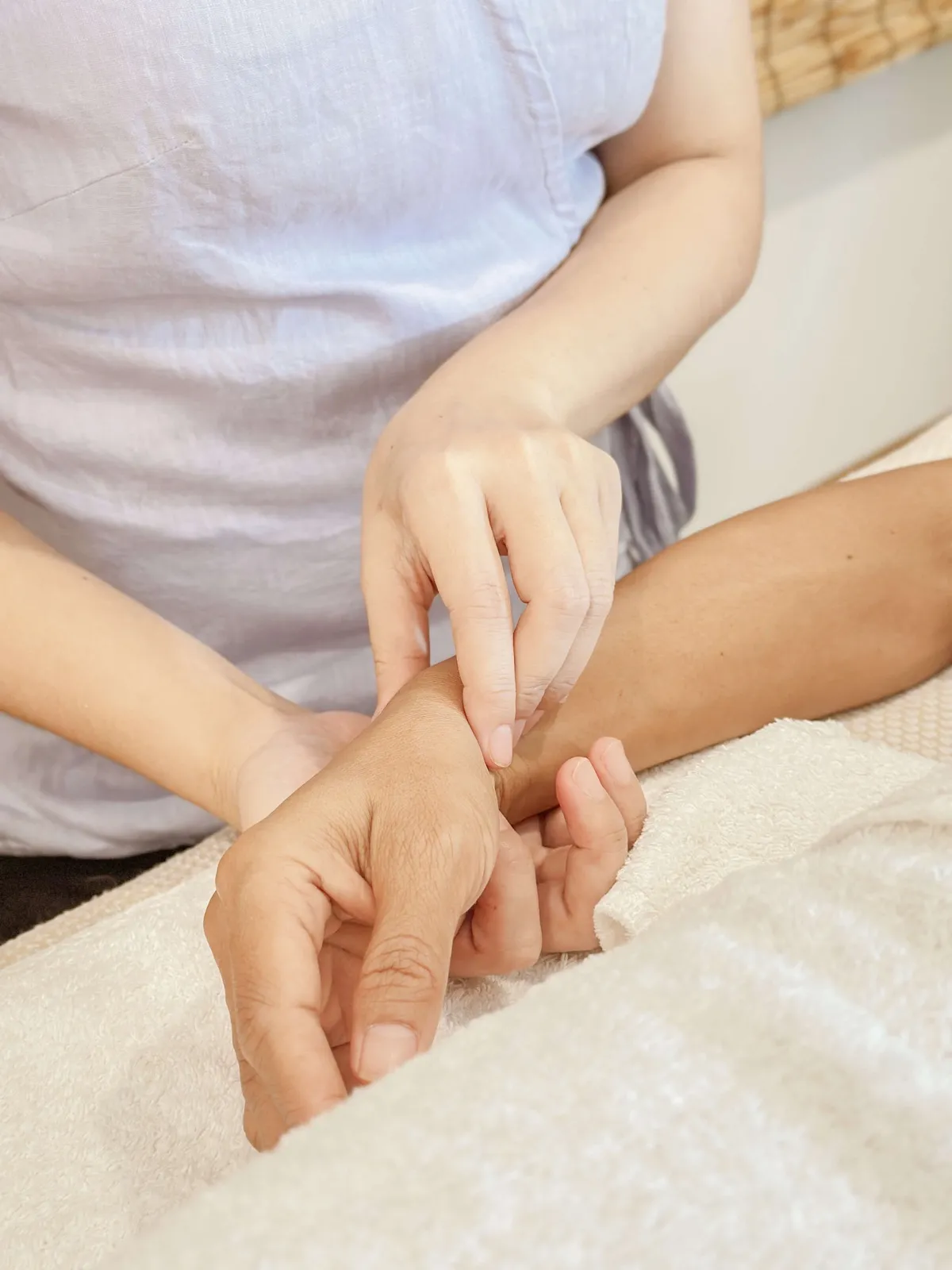
When you arrive for your first visit, we start with a thorough consultation. Claire will ask about where your pain is located, how long you have had it, what makes it better or worse, and what your daily habits look like. She will also check your pulse and look at your tongue, both of which provide valuable diagnostic information in TCM.
Based on this assessment, she will create a treatment plan tailored to your specific situation. No two patients get the exact same treatment, even if they come in with similar complaints.
During the treatment itself, you will lie comfortably on a padded treatment bed. The needles are incredibly thin, much thinner than a sewing needle or a blood draw needle. Most people feel a slight sensation when the needle is placed, sometimes a dull ache, a tingling, or a feeling of warmth. This is a sign the point is activated. Once all the needles are in, you will rest for 20 to 40 minutes. Many patients fall asleep during this time.
Depending on your condition, Claire may also incorporate cupping therapy on tight areas of the upper back and shoulders. Cupping uses suction to lift the fascia and muscle tissue, increasing blood flow and breaking up adhesions. It pairs extremely well with acupuncture for musculoskeletal pain.
How Many Sessions Will You Need?
This depends on how long you have had the pain and how severe it is. A recent flare up from a bad pillow or a long flight might resolve in one to three sessions. Chronic pain that has been building for months or years typically needs a longer course of treatment, often six to ten sessions spaced over several weeks.
Most patients notice some improvement after the very first session, even if the full resolution takes time. You might feel looser, sleep better that night, or notice that your range of motion has increased. These early improvements are a good sign that treatment is working.
We generally recommend starting with two sessions per week for the first week or two, then tapering to once a week as symptoms improve. Once the pain is under control, occasional maintenance sessions can help prevent it from returning.
What You Can Do Between Sessions
Acupuncture works best when supported by good daily habits. Here are a few things you can do between sessions to keep your progress moving forward.
- Check your posture every hour. Set a reminder on your phone. When it goes off, drop your shoulders away from your ears, pull your chin slightly back, and take three slow breaths.
- Move your neck gently each morning. Slow, controlled circles and side to side stretches help maintain the range of motion gained during treatment.
- Take breaks from screens. Every 30 to 45 minutes, look away from your screen, stand up, and move. Even a two minute break makes a difference.
- Stay warm. In TCM, cold and wind can tighten muscles and block circulation. If you sleep with air conditioning blowing directly on your neck and shoulders, redirect the airflow or cover up.
- Drink enough water. Hydration supports muscle recovery and helps your body process the changes triggered by acupuncture.
Ready to Get Relief?
If neck and shoulder pain has become part of your daily life, it does not have to stay that way. Acupuncture offers a proven, natural approach that goes beyond symptom management to address the root cause of your tension.
At Piraluna, Claire works with patients from all over the world who come to Koh Samui carrying the same patterns of tension you are dealing with right now. Whether you are a digital nomad locked to a laptop, a traveler worn out from months on the road, or a local resident dealing with chronic stiffness, we can help.
Book a session at Piraluna and take the first step toward living without that constant weight on your shoulders.