Office Syndrome Is More Than Just a Stiff Neck
If you work at a desk, a laptop, or a phone screen for more than a few hours a day, there is a good chance your body has been telling you something. Maybe your neck is tight by midafternoon. Maybe your shoulders sit somewhere near your ears without you noticing. Maybe your lower back aches on the left side, or your wrists tingle after a long stretch of typing.
Most people call this "desk pain" and assume it comes with the territory. But what you are experiencing has a name: office syndrome. And it is not just one ache in one place. It is a collection of interconnected symptoms caused by prolonged sitting, repetitive movement, and poor posture sustained over weeks, months, or years.
At Piraluna in Koh Samui, Claire treats office syndrome more often than almost any other condition. It is the number one complaint among the digital nomads, remote workers, and expats who make up a large part of the clinic's patients. The condition is extremely common. But that does not make it normal, and it certainly does not mean you have to live with it.
The Symptoms You Might Not Realize Are Connected
Office syndrome shows up differently in different people, but the pattern is recognizable once you know what to look for. The most obvious symptoms are musculoskeletal: chronic neck and shoulder tension, upper back stiffness, and lower back pain. These are the ones that drive most people to finally seek help.
But office syndrome reaches further than your muscles. Many people do not realize that the following symptoms are part of the same picture.
Tension headaches and migraines. Tight muscles in the neck, shoulders, and upper back restrict blood flow to the head. This is one of the most common causes of chronic headaches in desk workers. The pain typically starts at the base of the skull or behind the eyes and builds through the day.
Eye strain and blurred vision. Hours of screen exposure combined with tension in the muscles around the eyes and temples leads to eye fatigue, dry eyes, and difficulty focusing at the end of the day.
Numbness or tingling in the hands and fingers. Compressed nerves in the neck, shoulders, or wrists from sustained postures can produce pins and needles, weakness in grip strength, or a cold feeling in the fingertips. Left unaddressed, this can develop into more serious repetitive strain injuries.
Digestive sluggishness. Sitting compresses the abdomen and restricts the movement of the diaphragm. Over time, this slows digestion, creates bloating, and contributes to the heavy, sluggish feeling many desk workers notice after meals.
Fatigue and brain fog. When circulation is poor, when breathing is shallow, and when the body is held in tension for hours at a time, mental clarity suffers. The afternoon slump that many office workers accept as inevitable is often a direct consequence of how the body is being held, not simply a need for more coffee.
Sleep disruption. Chronic muscle tension keeps the nervous system in a heightened state. People with office syndrome often have trouble winding down at night, wake with a stiff neck, or grind their teeth during sleep.
Why It Happens: The TCM Perspective
In Western medicine, office syndrome is understood primarily as a musculoskeletal issue: sustained posture creates muscle tension, nerve compression, and joint strain. This is accurate, but it only describes part of the picture.
Traditional Chinese Medicine looks at office syndrome through a broader lens and identifies three interconnected problems happening in the body.
Qi stagnation. Qi, the vital energy that flows through your body along defined pathways called meridians, needs movement to circulate properly. When you sit still for hours, qi stagnates. The areas that suffer most are the channels running through the neck, shoulders, upper back, and arms. Stagnant qi produces tension, pain, stiffness, and that restless discomfort that makes you want to stretch or crack your neck. The longer the stagnation persists, the more it spreads.
Blood stasis. Where qi goes, blood follows. When qi stagnates, blood circulation slows. Muscles that are not receiving adequate fresh blood become tight, oxygen deprived, and prone to knots and trigger points. In TCM, blood stasis is the pattern behind fixed, aching pain that worsens with stillness and feels better with movement. This is why your back feels worst when you first stand up after sitting for two hours, and loosens once you start walking.
Liver qi stagnation. The liver in TCM is responsible for the smooth flow of qi throughout the entire body. Stress, frustration, and emotional tension cause the liver to tighten up, which restricts qi flow everywhere downstream. Many desk workers are not just sitting still. They are sitting still while under deadline pressure, managing difficult emails, or staring at problems that create mental tension. That emotional component compounds the physical stagnation and is one of the reasons stress and muscle pain so often travel together.
When these three patterns combine, they create a self reinforcing cycle. You sit and stagnate. Stagnation causes pain. Pain creates tension. Tension restricts movement further. Your body adapts to the imbalance, and what was once an occasional ache becomes a permanent fixture.
How Acupuncture Treats Office Syndrome
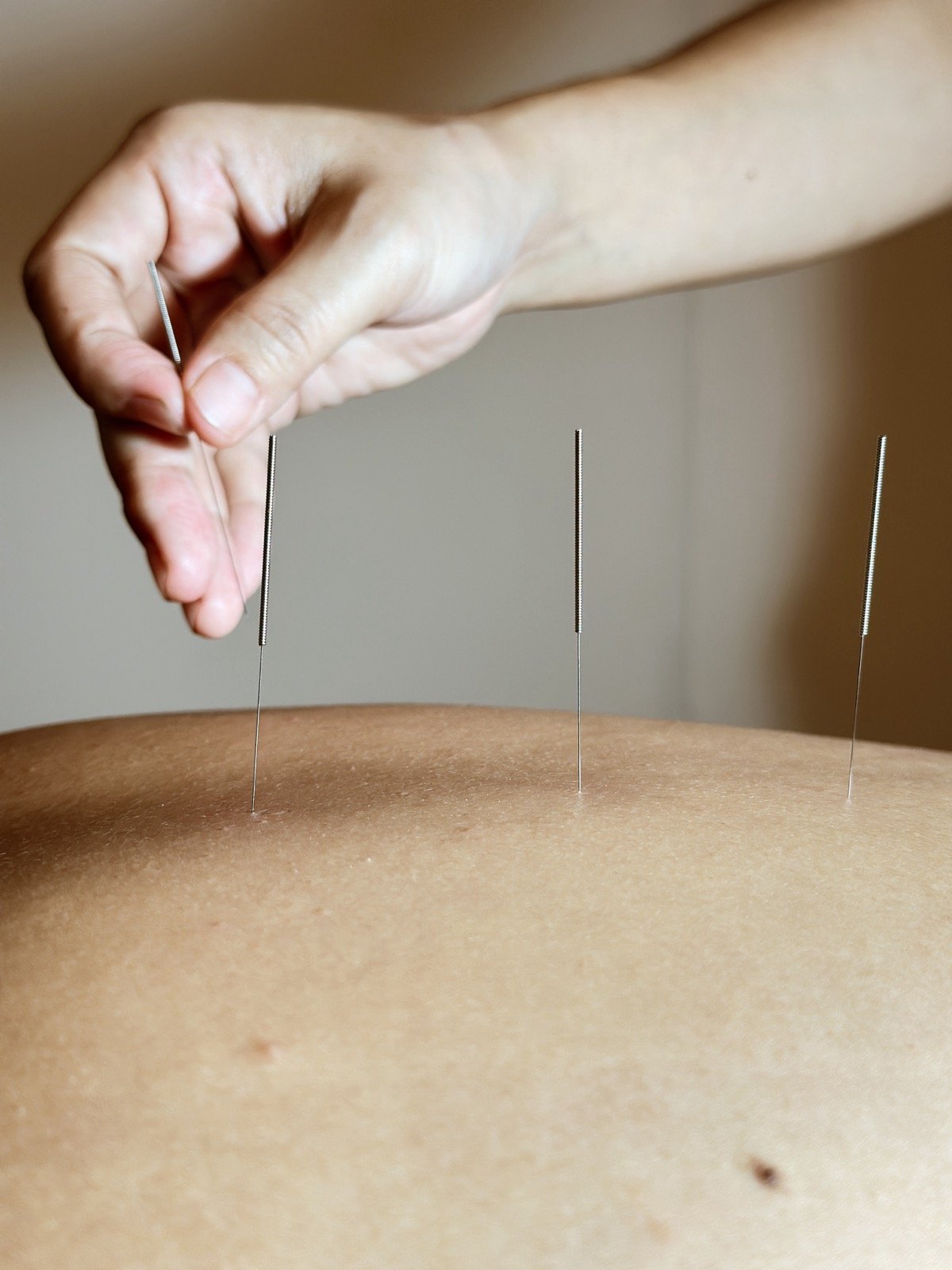
Acupuncture addresses office syndrome by breaking that cycle at multiple points simultaneously. Rather than treating one symptom at a time, Claire designs each treatment to move stagnant qi, improve blood circulation, release muscular tension, and calm the nervous system.
A typical session for office syndrome includes needles placed along the Gallbladder and Bladder meridians, which run through the neck, shoulders, and back. These are the pathways most affected by prolonged sitting. Points on the hands, forearms, and lower legs are used to open the channels distally, encouraging qi and blood to flow through the entire system rather than just the local area of pain.
Claire often uses electroacupuncture for office syndrome patients. This involves attaching small clips to pairs of needles and running a gentle electrical current between them. The stimulation increases blood flow to tight muscles, accelerates the release of endorphins, and produces a deeper level of muscle relaxation than needles alone. Many patients describe it as a pleasant buzzing sensation. For stubborn knots in the upper trapezius and between the shoulder blades, electroacupuncture can achieve in one session what manual stretching struggles to do over weeks.
Points commonly used include Gallbladder 21 (on the top of the shoulder), Gallbladder 20 (at the base of the skull), Small Intestine 3 (on the hand, used for neck pain), and Bladder 10 (at the back of the neck). The specific combination depends on your pattern and where your symptoms are concentrated.
Why Cupping Works So Well for Desk Workers
Cupping is one of the most effective TCM techniques for office syndrome, and it is the treatment that many desk workers respond to most dramatically. If you have never tried it, here is why it works.
When muscles are chronically tight, the fascia (the connective tissue surrounding muscle fibers) compresses and adheres. This is what creates those dense, painful knots in your upper back and shoulders. Stretching can help, but it often cannot reach the deeper layers of adhesion. Cupping creates a lifting, decompressing force that pulls the fascia upward and away from the muscle beneath it. This breaks up adhesions, floods the area with fresh blood, and allows the muscle to actually relax for the first time in weeks or months.
For office syndrome, cupping is typically applied across the upper back, shoulders, and the base of the neck. Many patients say they feel an immediate sense of release, as if someone has turned down the volume on their pain. The effects often last for days, and with repeated treatments, the chronic tension gradually resolves rather than just temporarily easing.
Claire frequently combines acupuncture and cupping in the same session for office syndrome patients. The acupuncture moves qi and calms the nervous system, while the cupping provides deep physical release to the musculature. Together, they address both the energetic and structural components of the condition.
Acupressure Points to Use at Your Desk
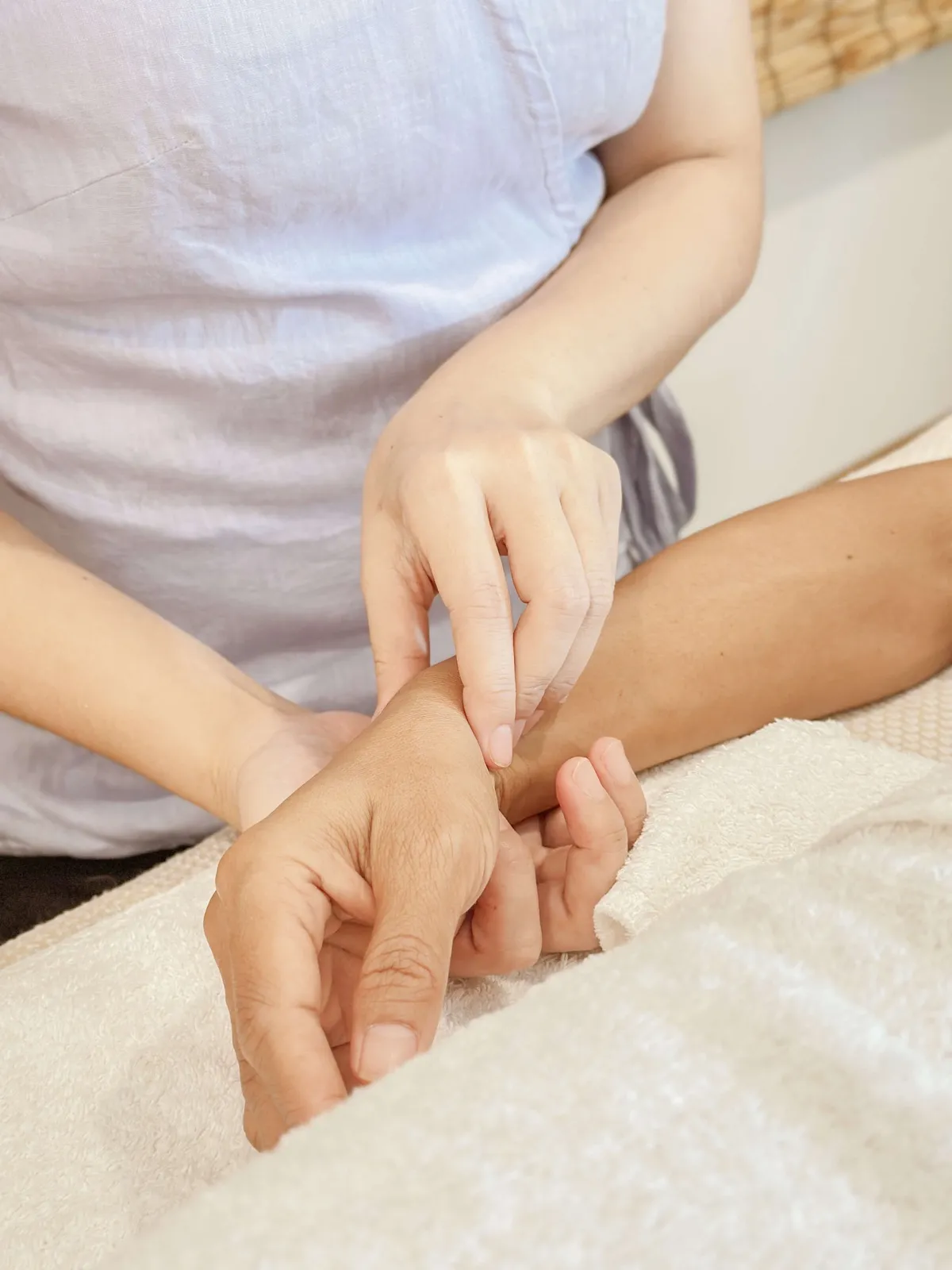
Between clinic sessions, there are several acupressure points you can press yourself to manage symptoms throughout the workday. These take less than two minutes each and can be done at your desk without anyone noticing.
Gallbladder 21 (Jianjing). This point sits on the top of your shoulder, halfway between your neck and the tip of your shoulder, at the highest point of the muscle. Press down firmly with your opposite thumb for 30 to 60 seconds. This is the single best point for shoulder tension and is the spot that naturally aches when you are stressed. Do not use this point during pregnancy.
Large Intestine 4 (Hegu). In the webbing between your thumb and index finger, at the peak of the muscle when you squeeze the two fingers together. Press firmly for one to two minutes on each hand. This point is the primary pain relief point in all of TCM and is particularly effective for headaches caused by neck tension. Do not use during pregnancy.
Small Intestine 3 (Houxi). Make a loose fist and find the crease that forms at the outer edge of your hand, just below the little finger. Press into the depression at the end of this crease. This point runs along the channel that travels through the neck and is remarkably effective for stiff neck pain. Press for one to two minutes on each hand whenever your neck feels locked.
Gallbladder 20 (Fengchi). At the base of your skull, in the hollows on either side of the two large muscles at the back of your neck. Place your thumbs in these depressions and press firmly inward and slightly upward for one to two minutes. This relieves tension headaches, neck stiffness, and eye strain simultaneously.
What a Treatment Plan Looks Like at Piraluna
Office syndrome responds well to acupuncture, but the key is consistency. A single session can provide noticeable relief, often lasting several days. But if you return to the same desk, the same posture, and the same habits, the tension will rebuild.
For most patients, Claire recommends an initial course of four to six weekly sessions. During this period, the focus is on breaking the stagnation pattern, releasing the accumulated tension, and retraining the muscles and meridians to hold a healthier state. Many patients notice significant improvement by session two or three.
After the initial course, most people shift to maintenance sessions every two to four weeks. These prevent the pattern from re establishing itself and keep the channels open. Some patients combine their acupuncture with periodic cupping sessions for the physical release component.
Claire also provides practical guidance on workspace ergonomics, movement breaks, and targeted stretches that support the treatment between visits. The goal is not to make you dependent on ongoing treatment. It is to break the pattern, give your body the tools to stay balanced, and have a reliable option available when things flare up.
Your Body Was Not Built for Eight Hours in a Chair
Office syndrome is the price your body pays for modern work. But paying that price is not mandatory. The tension, the headaches, the numbness, the brain fog, the disrupted sleep: all of these are signals that your body needs something different. Not a standing desk. Not a better chair. Not another stretching video on YouTube. It needs the stagnation to be broken and the circulation to be restored.
That is exactly what acupuncture and cupping do. They address the root pattern, not just the surface symptom. And they do it without medication, without surgery, and without taking more than an hour out of your week.
If you are working from Koh Samui (or visiting for a while) and office syndrome is affecting your productivity, your sleep, or your quality of life, book a session at Piraluna. Claire will assess your pattern, identify the specific channels and muscles involved, and create a treatment plan that fits your schedule and your symptoms.
Want to start managing the tension at home? Download our free acupressure guide for three points that help you sleep more deeply tonight. Better sleep is one of the fastest ways to reduce the nervous system activation that keeps office syndrome locked in place.