Why Lower Back Pain Is So Common in Koh Samui
Lower back pain is one of the most universal human complaints. At Piraluna, roughly four out of ten patients mention it as a primary reason for their visit, making it the third most common issue we treat after shoulder and neck pain. And in Koh Samui, certain factors make it even more prevalent.
Start with desk work. A huge portion of our patients are digital nomads and remote workers who spend hours folded into cafe chairs and coworking spaces that were never designed for long hours of typing. The lower back absorbs the cumulative cost of poor ergonomics, one slouched hour at a time. Often the neck and shoulder pain that comes with desk work develops alongside the lower back issues. Over weeks and months, the muscles that support your lumbar spine become tight, weak, or both.
Then add travel. Long haul flights, overnight buses, and bumpy scooter rides across the island create repeated compression and vibration through the spine. Hauling backpacks and suitcases puts uneven loads on muscles that are already strained. Many of our patients arrive in Koh Samui carrying not just their luggage but months of accumulated spinal tension from life on the road.
The tropical climate plays a role too. In TCM, dampness and heat are environmental factors that can settle into the body and aggravate pain conditions. Koh Samui's high humidity, especially during the rainy season, can make existing back pain feel heavier and more persistent. You might notice that your back feels worse on muggy days or after spending time in strong air conditioning that shifts you rapidly between hot and cold. That pattern is not coincidental. TCM has recognized the connection between environmental dampness and musculoskeletal pain for thousands of years.
Sciatica: When Back Pain Travels Down the Leg
Some back pain stays in the lower back. Sciatica does not. If you have ever felt a shooting, burning, or tingling sensation that starts in your lower back or buttock and radiates down the back of one leg, you have likely experienced sciatica.
In Western terms, sciatica occurs when the sciatic nerve, the longest nerve in your body, becomes compressed or irritated. This can happen because of a herniated disc, a bone spur, piriformis muscle tightness, or general inflammation in the lumbar spine. The pain can range from a dull ache to a sharp, electric jolt that makes it hard to stand, walk, or sit comfortably.
Conventional treatment usually involves painkillers, anti inflammatory medication, and sometimes steroid injections. Surgery is considered for severe cases. These approaches target the symptom, but they often leave the underlying conditions that created the problem unaddressed.
This is where acupuncture offers a different perspective, and often, a more lasting solution.
How TCM Diagnoses Lower Back Pain Differently
Walk into a Western doctor's office with lower back pain and you will likely get an X ray or MRI, a diagnosis based on structural findings, and a prescription. The approach is the same whether you are a 25 year old surfer or a 55 year old retiree.
Walk into a TCM clinic and the conversation goes in a completely different direction.
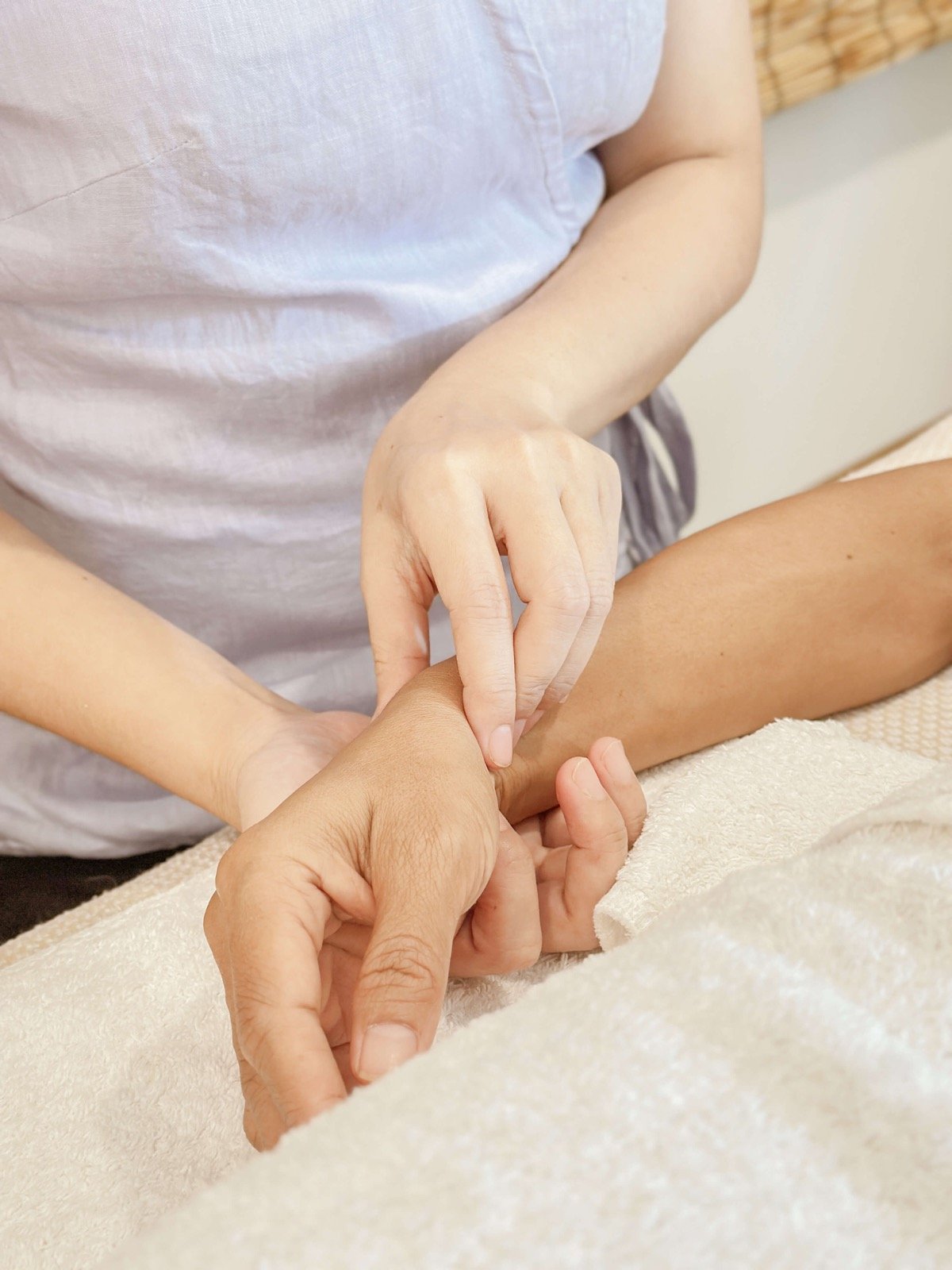
In Traditional Chinese Medicine, lower back pain is not a single diagnosis. It is a symptom that can arise from several distinct patterns, each requiring a different treatment strategy. Claire will examine your pulse at both wrists, look at your tongue, ask detailed questions about your pain, and piece together a picture of what is happening beneath the surface.
Kidney deficiency is one of the most common patterns behind chronic lower back pain in TCM. The kidneys in Chinese medicine govern the lower back and the bones. When kidney energy is depleted through overwork, chronic stress, insufficient rest, or simply aging, the lower back loses its support. The pain tends to be a deep, dull ache that worsens with fatigue and improves with rest. You might also notice tiredness in your legs, frequent urination, or a feeling of weakness in the knees.
Qi and blood stagnation is the pattern most associated with acute or injury related back pain. When circulation in the lower back is blocked, qi and blood cannot flow freely, and the result is sharp, fixed, stabbing pain that worsens with sitting or standing in one position. This is the pattern Claire sees most often in patients who have recently strained their back or who sit for long periods without movement.
Cold damp invasion is a pattern that feels particularly relevant in a tropical climate. Dampness from the environment can penetrate the body, especially if you spend time in wet conditions, sleep in heavily air conditioned rooms, or swim frequently without drying off properly. This pattern produces a heavy, stiff ache in the lower back that feels worse on rainy or humid days and improves with warmth and movement.
These patterns can overlap and combine. Claire's job during the consultation is to determine exactly which pattern or combination of patterns is driving your pain, so that treatment targets the cause rather than simply masking the symptom.
How Acupuncture Treats Lower Back Pain and Sciatica
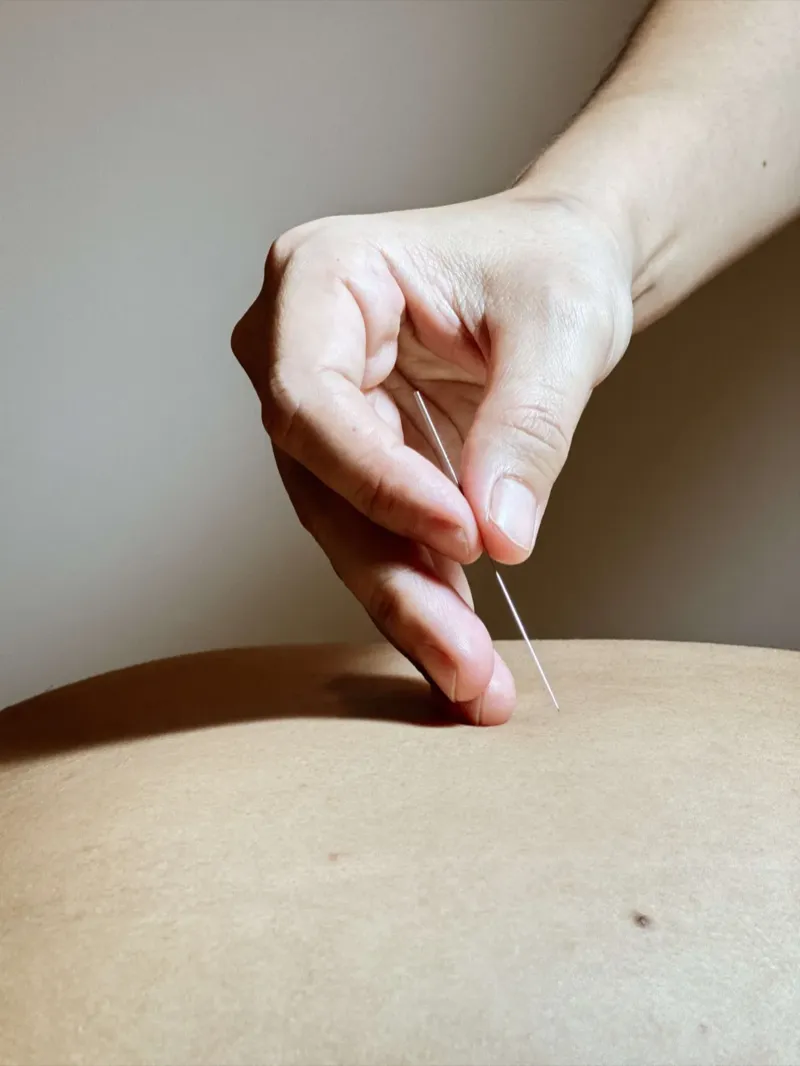
Acupuncture for lower back pain works through several mechanisms, both from the TCM and modern scientific perspectives.
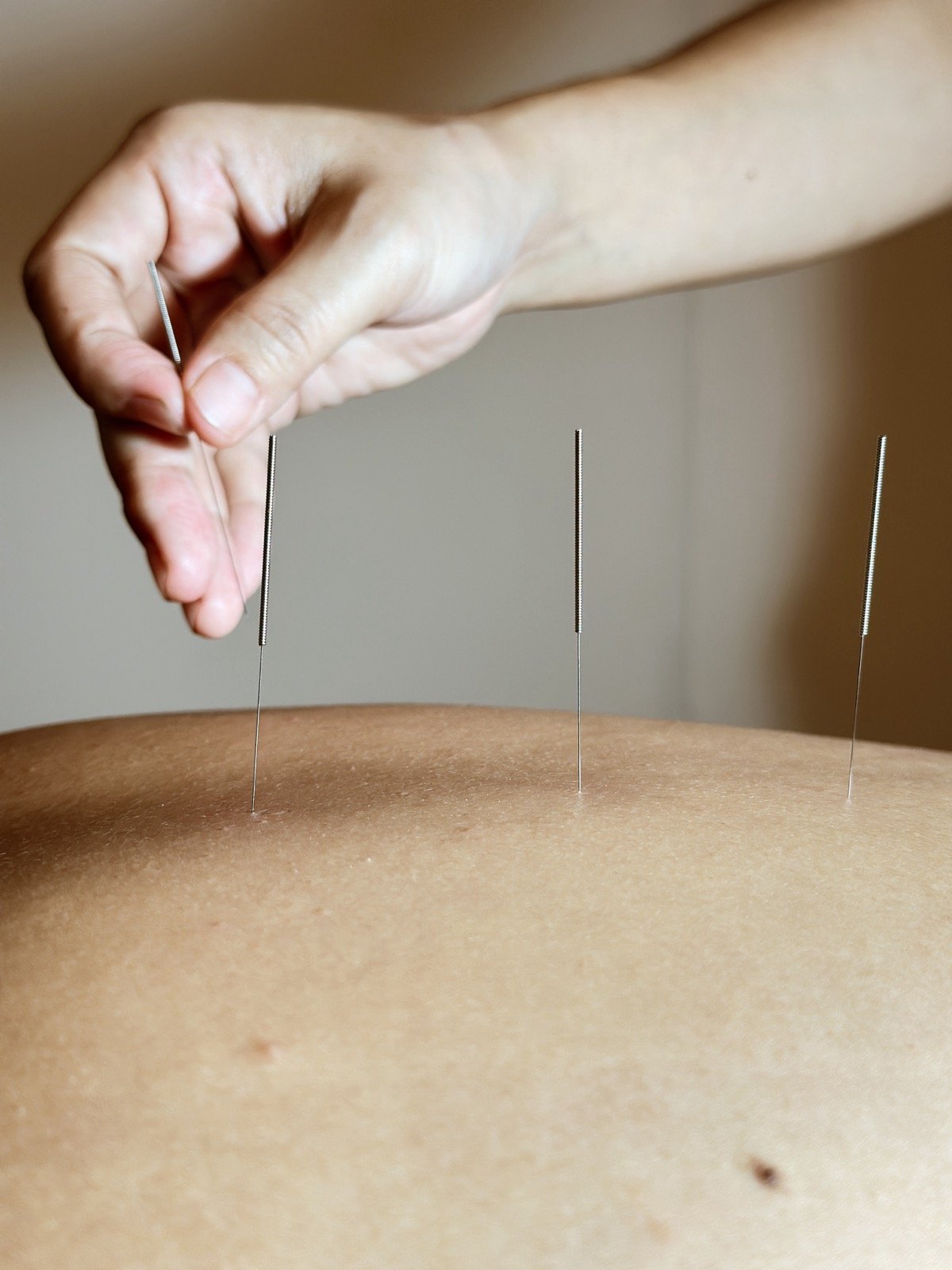
On the physiological level, acupuncture stimulates the release of endorphins and enkephalins, your body's own painkillers. It reduces inflammation by modulating pro inflammatory cytokines. It relaxes muscles that have been locked in spasm. And it improves blood flow to areas that have become oxygen starved from chronic tension. Research published in major medical journals has consistently shown acupuncture to be effective for chronic low back pain, with some studies finding it more effective than conventional treatment alone.
From the TCM perspective, the needles restore the flow of qi and blood through the meridians that pass through the lower back. The Bladder meridian, which runs in two parallel lines down the entire length of the spine, is the primary channel involved. Points along this meridian release tension in the paraspinal muscles and address the deeper energetic imbalances causing the pain. The Gallbladder meridian, which runs along the side of the body and down the outside of the leg, is particularly important in sciatica cases where pain radiates laterally.
For sciatica specifically, acupuncture targets both local and distal points. Local points in the lower back and buttock area address the site of nerve compression. Distal points on the leg, ankle, and foot work along the meridian pathway to release the entire chain of tension from the lumbar spine to the toes. Many patients feel the referred pain begin to diminish during the session itself, as the needles reduce nerve irritation and muscle spasm along the sciatic pathway.
Claire also uses a specialized technique called Zhu's Scalp Acupuncture for certain pain conditions. This approach stimulates specific zones on the scalp that correspond to the motor and sensory areas of the brain controlling the affected region. It can produce remarkably fast results for pain that has not responded well to body acupuncture alone.
What Cupping and Moxibustion Add to Back Pain Treatment
Acupuncture is the foundation, but it is rarely the only tool Claire uses for lower back pain. Cupping and moxibustion each bring something unique to the treatment.
Cupping on the lower back works by lifting and separating the layers of fascia and muscle tissue that have become compressed and adhered together. The suction draws stagnant blood to the surface and brings fresh, oxygenated blood into the deep tissue. For patients with qi and blood stagnation patterns, cupping often provides immediate relief. The muscles soften, range of motion increases, and the sharp edge of the pain dulls noticeably. Fire cupping along the Bladder meridian on either side of the spine is one of the most satisfying treatments we offer. Patients consistently describe the sensation as a deep release that they can feel from their lower back all the way up through their shoulders.
Moxibustion is particularly valuable for cold damp patterns and kidney deficiency. The warming properties of moxa (a dried herb called mugwort) penetrate deep into the tissue and drive out the cold and dampness that aggravate pain. If your back feels worse in the morning, worse on cold or rainy days, or worse after sitting in air conditioning, moxibustion is almost certainly going to be part of your treatment. The warmth feels deeply comforting, and many patients say their lower back feels looser and warmer for days after a session that includes moxa.
Claire decides which combination to use based on your specific pattern. Some patients respond best to acupuncture and cupping together. Others benefit more from acupuncture and moxibustion. For chronic cases with multiple overlapping patterns, all three may be used in a single session. The treatment plan adapts to you, not the other way around.
What a Treatment Course Looks Like at Piraluna
Your first visit begins with a thorough consultation. Claire will ask about your pain in detail: where exactly it is, when it started, what makes it better, what makes it worse, whether it radiates, and how it affects your daily life. She will also assess your overall health, check your pulse and tongue, and identify the TCM pattern driving your back pain.
Based on this assessment, she will outline a treatment plan. For acute back pain or a recent flare up, two to four sessions over one to two weeks is often enough to resolve the issue. For chronic lower back pain that has been present for months or years, a longer course is typical. Most chronic cases require six to twelve sessions, usually starting at two sessions per week and tapering to once a week as the pain improves.
Sciatica cases vary depending on severity. Mild sciatica with occasional leg tingling may respond in three to five sessions. More severe cases with constant radiating pain may need eight to twelve sessions. Claire will be honest with you about what to expect during your first visit. She will also tell you if she thinks your case needs imaging or a medical referral before starting TCM treatment.
Most patients notice meaningful improvement within the first three sessions. The pain becomes less intense, the stiffness decreases, and daily activities become easier. Full resolution takes longer for chronic conditions, but the trajectory is usually clear early on.
Each session builds on the previous one. Claire tracks your progress and adjusts the point selection and techniques from session to session. What works in week one may shift by week three as your body responds and the underlying pattern changes.
Self Care Tips Between Sessions
What you do between sessions matters. Acupuncture creates a window of change in your body, and supporting that change with good daily habits makes the results come faster and last longer.
Keep moving gently. Complete rest is almost never the right approach for lower back pain. Walking, gentle swimming, and simple stretching keep blood flowing to the area and prevent the muscles from locking up again. Avoid sitting for more than 45 minutes without standing and moving.
Apply warmth, not ice. This surprises many patients who have been told to ice their back. In TCM, cold contracts muscles and slows circulation, exactly the opposite of what you want for most types of lower back pain. A warm compress, a hot water bottle, or a warm shower directed at the lower back can help keep the muscles relaxed between sessions. The exception is acute inflammation with visible swelling, which is relatively rare in chronic back pain.
Watch your posture while sitting. If you work at a desk, make sure your feet are flat on the floor and your lower back has some support. A rolled up towel or small cushion behind the lumbar curve can make a significant difference. If you work from a laptop, elevate the screen to eye level and use an external keyboard if possible.
Strengthen your core gradually. Your abdominal and pelvic floor muscles act as a natural support belt for your lower back. Gentle core exercises like pelvic tilts, bridges, and planks (when you are ready for them) help stabilize the lumbar spine over the long term. Claire can recommend specific exercises based on your condition.
Stay warm and dry. If you swim regularly, dry off and change out of wet clothes promptly. Avoid sitting directly in air conditioning after being in the heat. Keep a light layer handy for over air conditioned restaurants and coworking spaces. These small habits help prevent dampness from settling back into the lower back.
Sleep on your side with a pillow between your knees. This keeps the spine in a neutral position and reduces the rotational stress on the lumbar discs and sacroiliac joints. If you sleep on your back, a pillow under your knees achieves a similar effect.
You Do Not Have to Live with Back Pain
Lower back pain has a way of becoming part of your identity if you let it. You start planning your day around it. You avoid activities you used to enjoy. You accept stiffness as your new normal. But pain that has been present for months or even years can still be treated effectively. The body is remarkably capable of healing when given the right support.
At Piraluna, Claire has treated hundreds of patients with lower back pain and sciatica, from surfers who threw out their back to office workers who have been stiff for years to travelers whose bodies simply gave out after one too many bus rides. The approach is always individualized, always thorough, and always focused on getting you back to feeling like yourself.
If lower back pain or sciatica is holding you back, do not wait for it to resolve on its own. Book a session at Piraluna and let Claire build a treatment plan around your specific situation. You can learn more about what acupuncture treatment involves on our services page.
If sleep is also part of the picture (and for most back pain patients, it is), download our free acupressure guide for better sleep. It includes three points you can press tonight to help your body rest and recover.