Can Acupuncture Help Tennis Elbow and Golfer's Elbow?
Yes, acupuncture is a recognized natural option for tennis elbow and golfer's elbow, and many patients find it eases the aching, the tenderness, and the weakness in the grip that come with these repetitive strain injuries. It works by relaxing the tight forearm muscles that pull on the elbow, reducing the inflammation around the irritated tendons, and improving circulation so the tissue can recover. For people whose elbow pain has stubbornly refused to settle with rest alone, acupuncture offers a drug free path that addresses the whole forearm rather than only the sore point at the joint.
At Piraluna in Lamai, Claire treats a steady stream of elbow and forearm complaints, and very few of them come from actually playing tennis. The pattern is familiar: long days at a laptop, hours of gripping a phone, a recent burst of paddleboarding or weight training, and an elbow that has started to protest. Caught reasonably early, this kind of strain tends to respond well to TCM care.
Why Tennis Elbow and Golfer's Elbow Develop
Tennis elbow and golfer's elbow are both forms of tendinopathy, where the tendons that anchor the forearm muscles to the elbow become irritated and inflamed from overuse. Tennis elbow affects the outer side of the elbow, where the muscles that extend the wrist and fingers attach. Golfer's elbow affects the inner side, where the muscles that flex the wrist attach. Despite the names, both are usually caused by everyday repetitive movements rather than sport.
The common thread is repeated gripping and wrist movement without enough recovery. Typing, using a mouse, carrying heavy bags, and scrolling a phone all load the forearm muscles in small doses that add up over time. Many of our patients arrive with elbow pain sitting alongside neck and shoulder pain, because the same desk bound posture that tightens the upper body also overloads the arms.
This belongs to the same cluster of repetitive strain problems we describe in our guide to office syndrome and TCM. The elbow is simply one of the places that quietly takes the strain, and because the pain flares with everyday gripping, it can be slow to settle if the underlying load is never addressed.
How TCM Understands Elbow and Forearm Pain
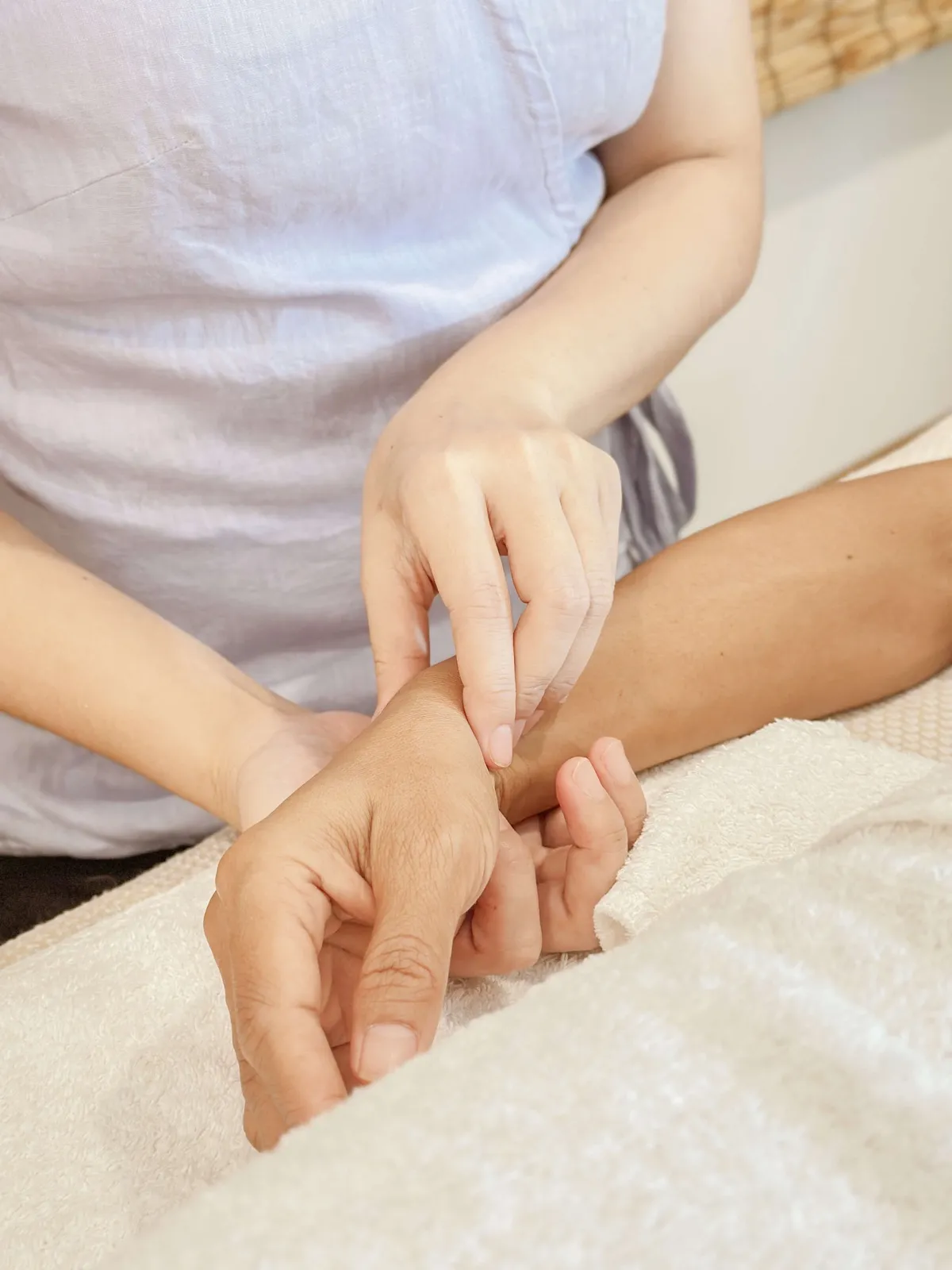
In Traditional Chinese Medicine, elbow pain is not treated as an isolated joint problem. Claire, who trained at Chengdu University of Traditional Chinese Medicine, looks at the whole forearm and beyond, examining your pulse and tongue and asking detailed questions about your symptoms and the way you use your hands each day.
Most repetitive strain in the elbow falls into a pattern of qi and blood stagnation. When the same gripping movements are repeated thousands of times, circulation through the channels that cross the elbow and run down the forearm becomes blocked. The result is fixed, nagging pain, stiffness, and a grip that tires and weakens quickly. Several meridians pass directly through the elbow and into the hand, which gives Claire precise pathways to work along.
Some patients also show signs of underlying deficiency or cold, where the tissue lacks the warmth and nourishment to recover from daily use. This is common in people who work long hours in strongly air conditioned spaces. Identifying which pattern is driving your pain is what allows the treatment to address the cause rather than only quieting the symptom.
How Acupuncture Treats Tennis Elbow
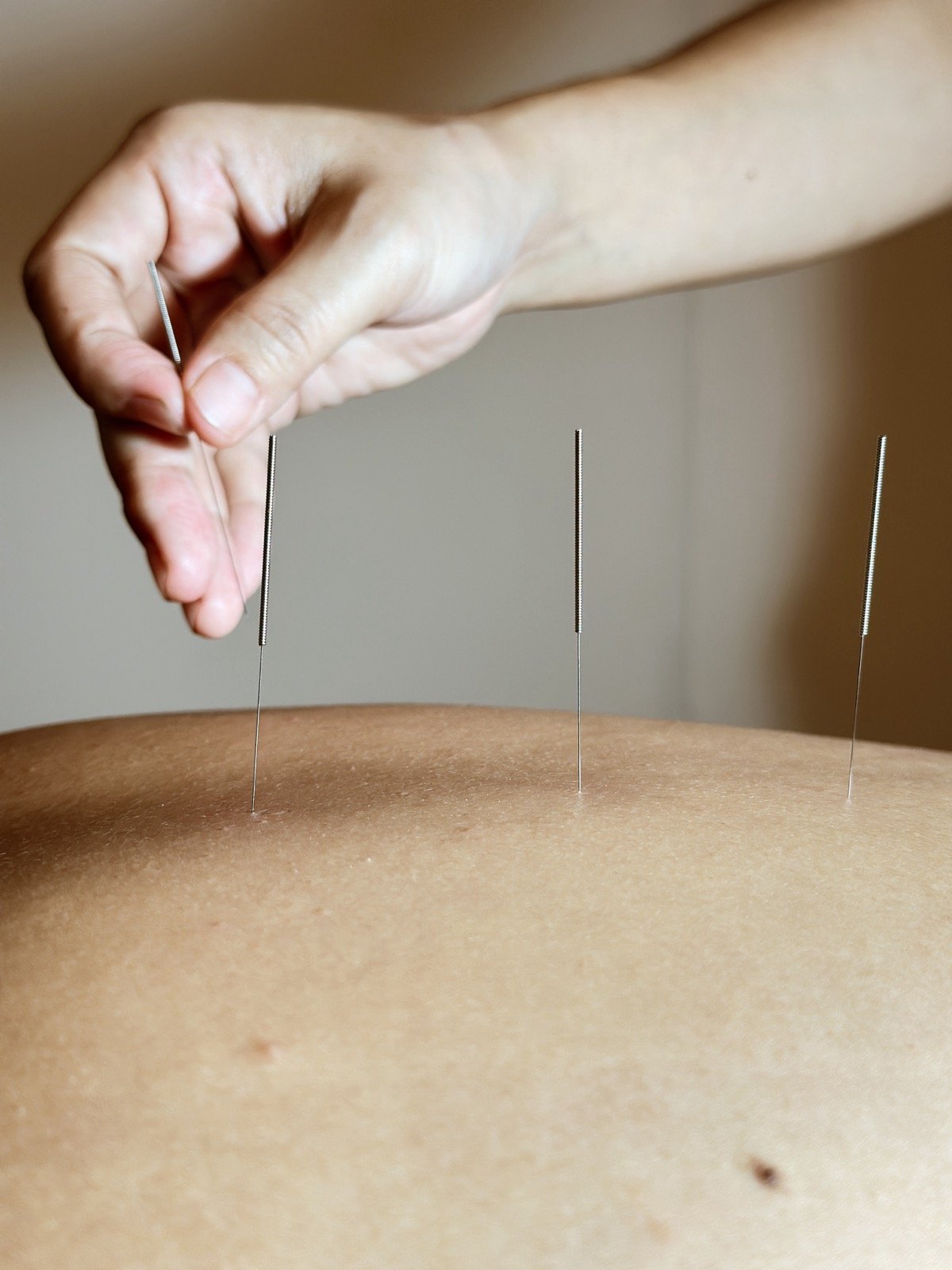
Acupuncture for elbow and forearm pain works on several levels at once.
- It relaxes the forearm muscles. Much elbow pain is driven by tight muscles along the forearm, and releasing them takes the constant pull off the irritated tendon.
- It reduces inflammation. By improving circulation and modulating the body's inflammatory response, acupuncture helps settle the swelling around the tendon attachment.
- It eases the pain signal. Local and distal points calm the overactive nerve signals that keep the area sore and tender to the touch.
- It restores flow. In TCM terms, the needles clear the stagnation in the channels that cross the elbow, allowing qi and blood to move freely into the hand again.
Claire treats both local points around the elbow and forearm and distal points further along the meridians, which helps release the whole chain of tension feeding into the joint. Where it suits your pattern, she may add work on the neck and shoulders when the upper body is part of the picture, or gentle warming techniques for patterns involving cold and deficiency. The combination is chosen for your body, and it adapts from session to session as the elbow responds.
What a Session at Piraluna Looks Like
Your first visit begins with a full consultation. Claire will ask where the pain sits, when it started, what movements set it off, and how it affects your work, sleep, and activity. She will check your pulse and tongue, examine the elbow and forearm, and identify the pattern behind your symptoms. If she thinks your case needs imaging or a medical referral, she will tell you honestly.
The treatment itself is calm and unhurried. The needles are very fine, and most patients feel only a small sensation as each one is placed. You rest comfortably while they do their work, often for twenty to thirty minutes. If you are new to acupuncture, our guide on what to expect during a first acupuncture session walks you through the whole experience.
For acute, recent elbow pain, a handful of sessions over a week or two is often enough. For strain that has been building for months, a longer course is typical, usually starting with two sessions a week and tapering as the elbow improves. Many patients notice the ache easing within the first few visits, though tendons are slow healing tissue, so long standing cases need patience.
Helping Your Elbow Between Sessions
What you do day to day matters as much as what happens at the clinic. A few simple changes protect the gains you make in treatment:
- Raise your laptop and use an external keyboard and mouse so the forearm is not constantly braced.
- Take a short break every thirty to forty minutes to stretch and shake out the arm.
- Keep the forearm warm in strongly air conditioned spaces, since cold tightens the tissue.
- Ease back gradually on the activity that triggered the strain rather than pushing through the pain.
You Do Not Have to Push Through Elbow Pain
Elbow and forearm pain has a way of creeping into every grip and lift until it shapes your whole day. It does not have to stay that way. Acupuncture offers a drug free, non invasive path to relief, and the sooner repetitive strain is addressed, the better it tends to respond.
You can learn more on our acupuncture services page or browse the full range of conditions we treat. When you are ready, book a session at Piraluna and let Claire build a treatment plan around your arm and the way you use it.