La ménopause n'est pas une maladie
Quelque part en cours de route, la ménopause a été classée comme un problème médical. Une déficience. Quelque chose de cassé qui doit être réparé. Mais la ménopause n'est pas une maladie. C'est une transition naturelle que chaque femme traverse, tout comme son corps a traversé la puberté des décennies plus tôt.
Le problème n'est pas la transition en elle-même. Le problème, c'est quand la transition se passe mal. Quand les bouffées de chaleur interrompent votre journée dix fois avant le déjeuner. Quand les sueurs nocturnes trempent vos draps et vous laissent épuisée au matin. Quand votre humeur change si brusquement que vous vous reconnaissez à peine. Quand le sommeil devient instable et que votre esprit semble enveloppé de brouillard.
Ces symptômes sont réels et ils méritent un traitement sérieux. Mais l'objectif du traitement ne devrait pas être d'empêcher la ménopause de se produire. L'objectif est de faciliter la transition pour que votre corps puisse s'adapter sans vous rendre la vie insupportable dans le processus.
C'est exactement ce que la médecine traditionnelle chinoise fait pour la ménopause depuis plus de deux mille ans.
Ce qui se passe réellement dans votre corps
La ménopause survient généralement entre 45 et 55 ans, bien que la périménopause (les années de transition qui la précèdent) puisse commencer bien plus tôt. Pendant cette période, vos ovaires réduisent progressivement leur production d'œstrogènes et de progestérone.
Ces hormones font bien plus que réguler votre cycle menstruel. Les œstrogènes influencent la chimie de votre cerveau, la densité osseuse, la santé cardiovasculaire, l'élasticité de la peau, la régulation de la température corporelle et la stabilité de l'humeur. Lorsque les niveaux d'œstrogènes fluctuent puis déclinent, tous ces systèmes en ressentent l'impact.
Le symptôme le plus reconnaissable est la bouffée de chaleur. Le thermostat de votre corps, contrôlé par l'hypothalamus, devient hypersensible aux petites variations de température. Une fluctuation qui passerait normalement inaperçue déclenche soudain une réponse thermique complète : rougeur, transpiration, accélération du rythme cardiaque, puis un frisson lorsque le corps surcompense.
Mais les bouffées de chaleur ne sont qu'une partie du tableau. L'ensemble comprend souvent des sueurs nocturnes, de l'insomnie, de l'anxiété, de l'irritabilité, du brouillard cérébral, des raideurs articulaires, une prise de poids autour de la taille, une sécheresse vaginale, une baisse de la libido et une fatigue que rien ne semble pouvoir dissiper.
Pour certaines femmes, ces symptômes sont légers et gérables. Pour d'autres, ils sont suffisamment sévères pour perturber le travail, les relations et le quotidien. La différence tient souvent à la fluidité avec laquelle le corps s'adapte au changement hormonal.
Pourquoi certaines femmes souffrent plus que d'autres
Si la ménopause est naturelle, pourquoi certaines femmes la traversent-elles sans encombre tandis que d'autres souffrent pendant des années ? La MTC offre une réponse éclairante.
En médecine chinoise, la ménopause est comprise comme un déclin de l'essence rénale, qui est la réserve profonde d'énergie vitale gouvernant la croissance, la reproduction, le vieillissement et la force constitutionnelle. Chacun naît avec une quantité finie d'essence rénale. Elle s'épuise au fil d'une vie par le travail, le stress, les grossesses, les maladies et le simple vieillissement.
Les femmes qui abordent la ménopause avec des réserves rénales plus solides tendent à traverser la transition plus en douceur. Celles qui arrivent déjà épuisées par des années de surmenage, de stress chronique, de mauvais sommeil ou de grossesses multiples tendent à présenter des symptômes plus sévères. Leur corps dispose de moins de ressources pendant la transition.
Ce n'est pas un jugement. C'est une cartographie. Et cela explique pourquoi le même changement hormonal crée des expériences très différentes chez différentes femmes. Cela explique aussi pourquoi le traitement en MTC se concentre sur la reconstruction de ces réserves plutôt que sur la simple suppression des symptômes.
Les trois déséquilibres de la ménopause les plus fréquents en MTC
Tout comme nous observons différents déséquilibres derrière l'anxiété et différents déséquilibres derrière l'insomnie, la ménopause ne se présente pas de la même façon chez chaque femme. À Piraluna, Claire identifie quel déséquilibre est à l'origine de vos symptômes avant de choisir une approche thérapeutique. Voici les trois plus courants.
Déficience du yin rénal avec chaleur vide. C'est le déséquilibre classique de la ménopause et celui que la plupart des gens associent à cette transition. Le yin représente l'aspect rafraîchissant, hydratant et apaisant de votre corps. Lorsque le yin rénal décline, la chaleur monte sans opposition. Vous ressentez des bouffées de chaleur, des sueurs nocturnes, une peau sèche, des yeux secs, une sensation de chaleur dans les paumes et la plante des pieds, un sommeil agité et une tendance à l'anxiété et à l'agitation. Votre gorge est sèche. Vous pouvez remarquer des acouphènes. Votre langue paraît rouge avec peu ou pas d'enduit. Ce déséquilibre est particulièrement fréquent chez les femmes qui ont naturellement tendance à avoir chaud ou qui ont un passé de stress et de surmenage.
Déficience du yang rénal. Le yang est l'énergie chauffante et activatrice. Lorsque le yang rénal décline au lieu du (ou en même temps que le) yin, le tableau est différent. Vous avez froid plutôt que chaud. Votre énergie est basse et votre motivation chute. Vous prenez du poids facilement, surtout autour de la taille et des hanches. Votre digestion ralentit. Votre bas du dos est douloureux. Vous vous sentez lourde et fatiguée, surtout le matin. La rétention d'eau et les mictions fréquentes sont courantes. Ce déséquilibre est plus fréquent chez les femmes qui ont toujours eu tendance à être frileuses, qui ont eu plusieurs grossesses, ou qui vivent dans des environnements humides ou froids.
Stagnation du qi du Foie avec chaleur montante. Ce déséquilibre chevauche souvent l'un des déséquilibres rénaux mentionnés ci-dessus. Lorsque l'énergie du Foie se bloque (généralement à cause de frustrations non résolues, d'émotions refoulées ou d'un stress prolongé), elle génère de la chaleur qui monte. Vous ressentez des accès soudains d'irritabilité, des sautes d'humeur qui ne vous ressemblent pas, des maux de tête, une oppression thoracique et une sensation de boule dans la gorge. Les bouffées de chaleur peuvent survenir avec des déclencheurs émotionnels plutôt que de manière aléatoire. C'est le déséquilibre derrière l'expérience « je ne me reconnais plus » que tant de femmes ménopausées décrivent. Si vous avez tendance à ruminer et à vous frustrer, ce déséquilibre vous sera peut-être particulièrement familier.
Beaucoup de femmes présentent une combinaison de ces déséquilibres. Une femme peut avoir une déficience du yin rénal sous-jacente (bouffées de chaleur, sueurs nocturnes) avec une stagnation du qi du Foie en couche supérieure (sautes d'humeur, irritabilité). Le traitement aborde les deux niveaux.
Comment l'acupuncture traite les symptômes de la ménopause
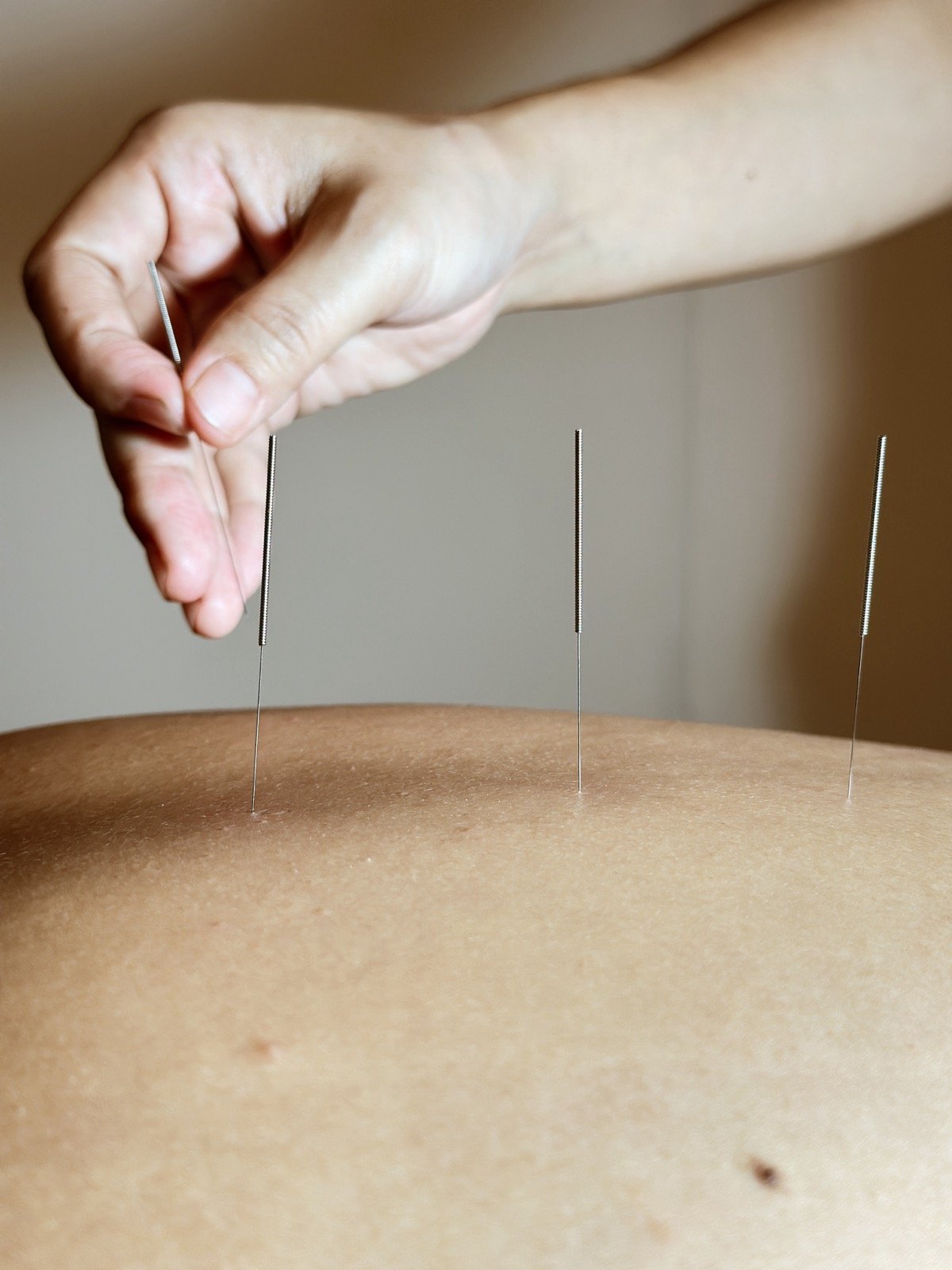
L'acupuncture ne remplace pas vos hormones. Ce qu'elle fait, c'est aider votre corps à s'adapter plus harmonieusement à la nouvelle réalité hormonale. Elle y parvient par plusieurs mécanismes.
Régulation de l'hypothalamus. L'hypothalamus est la structure cérébrale responsable de la régulation de la température, des cycles de sommeil, de la signalisation hormonale et de la réponse au stress. Tous ces éléments se dérèglent pendant la ménopause. La recherche montre que l'acupuncture module le fonctionnement hypothalamique, contribuant à restaurer une régulation plus stable de la température et des rythmes de sommeil.
Réduction de la fréquence et de l'intensité des bouffées de chaleur. Plusieurs essais cliniques ont démontré que l'acupuncture réduit à la fois la fréquence des bouffées de chaleur et leur intensité ressentie. Un essai contrôlé randomisé de 2019 publié dans BMJ Open a montré que les femmes recevant de l'acupuncture ont connu une réduction de 36 % de la fréquence des bouffées de chaleur sur cinq semaines, avec des effets qui se sont poursuivis après la fin du traitement.
Amélioration de la qualité du sommeil. L'acupuncture active le système nerveux parasympathique, augmente la production de mélatonine et réduit le cortisol. Pour les femmes ménopausées confrontées à l'insomnie et aux sueurs nocturnes, cette combinaison traite à la fois la perturbation physique (la transpiration) et la barrière neurologique (un système nerveux hyperactif qui refuse de se mettre en veille).
Stabilisation de l'humeur. L'acupuncture augmente la production de sérotonine et d'endorphines tout en réduisant le cortisol et l'adrénaline. Cela aide à lisser la volatilité émotionnelle que de nombreuses femmes vivent pendant la ménopause. L'effet n'est pas une sédation. C'est un retour à un état de base où vos réactions émotionnelles sont proportionnelles à ce qui se passe réellement.
Réduction de l'inflammation. La baisse des niveaux d'œstrogènes augmente l'inflammation systémique, qui contribue aux douleurs articulaires, au brouillard cérébral, à la fatigue et à la prise de poids. L'acupuncture possède des effets anti-inflammatoires bien documentés qui aident à contrebalancer ce changement.
La moxibustion : pourquoi la chaleur est importante
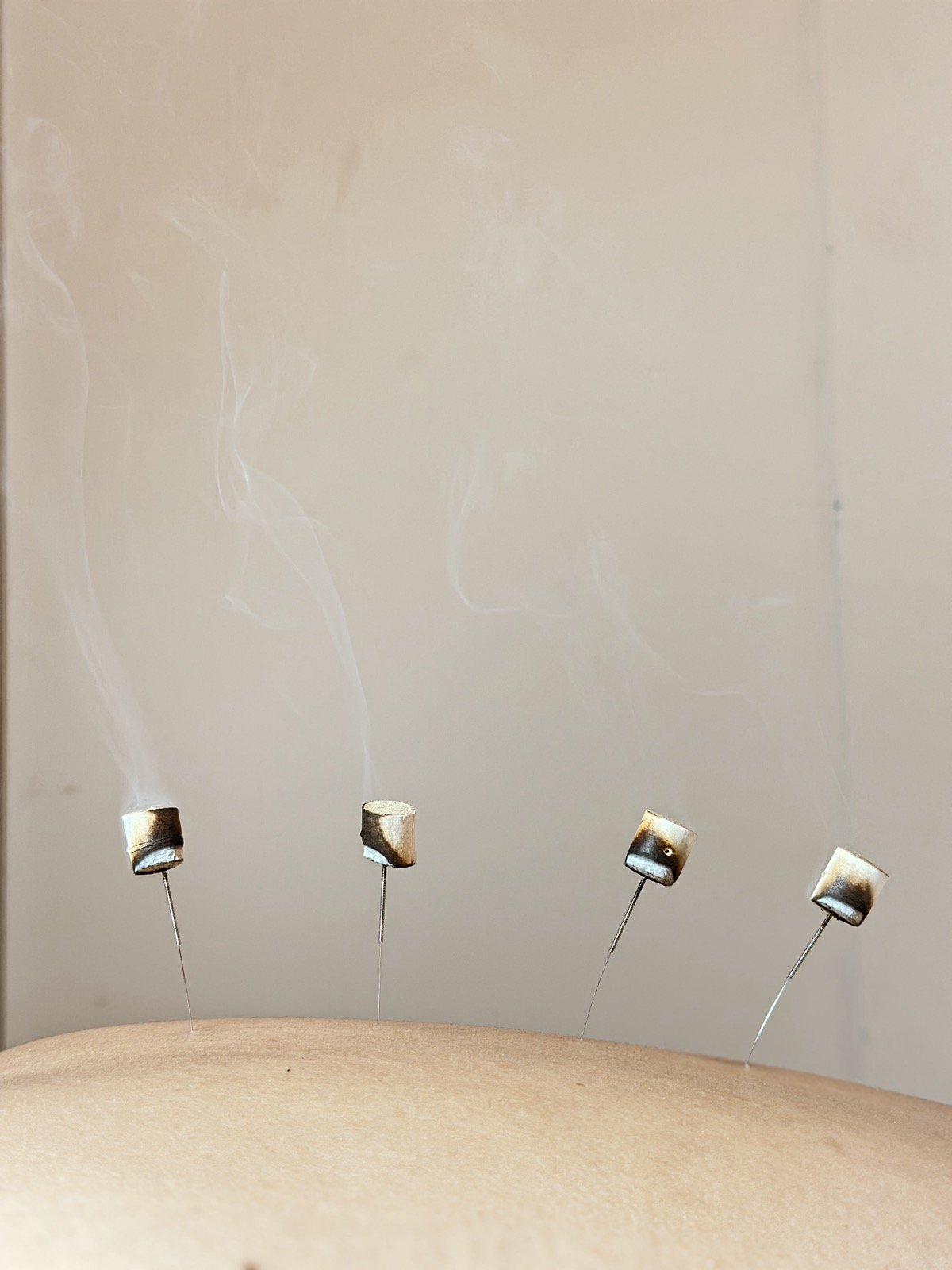
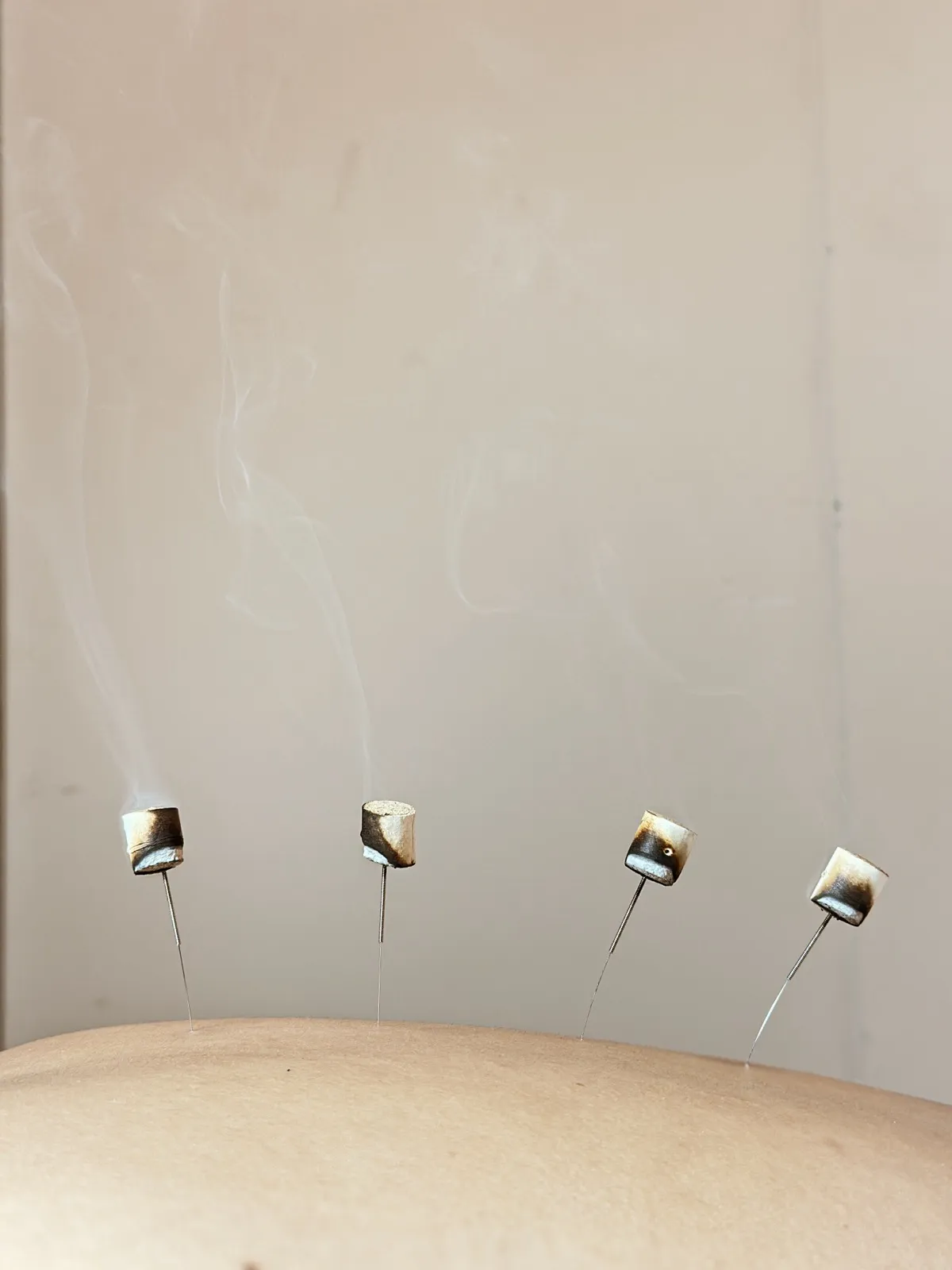
Pour les femmes présentant une déficience du yang rénal (le déséquilibre avec froid, fatigue et lourdeur), la moxibustion est un élément essentiel du traitement. La moxibustion consiste à brûler de l'armoise séchée près de points d'acupuncture spécifiques pour réchauffer le corps en profondeur. Ce n'est pas une chaleur de surface comme une bouillotte. La chaleur pénètre jusqu'au niveau des méridiens et des organes, tonifiant l'énergie yang et améliorant la circulation.
À Piraluna, Claire utilise la moxibustion sur des points du bas du dos et de l'abdomen pour réchauffer le yang du Rein et de la Rate. Pour les femmes qui se sentent constamment frileuses, épuisées et lourdes, c'est souvent le traitement qui fait la plus grande différence. Les patientes décrivent fréquemment une vague de chaleur et d'énergie qui dure plusieurs jours après une séance de moxibustion.
Même pour le déséquilibre de déficience du yin (celui avec la chaleur), la moxibustion a un rôle à jouer. Cela peut sembler contradictoire d'ajouter de la chaleur à un corps qui surchauffe déjà, mais une moxibustion ciblée sur des points spécifiques peut aider à ancrer l'énergie yang vers le bas pour qu'elle cesse de monter sous forme de bouffées de chaleur. La clé est de savoir quels points réchauffer et lesquels rafraîchir. Cette distinction est au cœur de la formation d'un praticien de MTC.
Ce que dit la recherche
Les preuves en faveur de l'acupuncture dans la gestion de la ménopause n'ont cessé de se renforcer. Voici ce que montre la recherche.
Une revue systématique Cochrane de 2023 analysant plusieurs essais contrôlés randomisés a conclu que l'acupuncture réduisait significativement la fréquence des bouffées de chaleur par rapport à l'acupuncture factice et aux groupes témoins sans traitement. L'ampleur de l'effet était comparable à celle de certaines interventions pharmaceutiques.
Une recherche publiée dans Menopause: The Journal of The North American Menopause Society a montré que l'acupuncture améliorait les scores de qualité du sommeil de 30 % chez les femmes péri- et post-ménopausées sur huit semaines de traitement.
Un essai randomisé danois (l'étude ACUFLASH) a démontré que les femmes recevant de l'acupuncture rapportaient des améliorations significatives dans cinq catégories de symptômes : bouffées de chaleur, sommeil, bien-être émotionnel, symptômes physiques et qualité de la peau et des cheveux. Ces améliorations se maintenaient lors du suivi à six mois.
Plusieurs études ont également montré que l'acupuncture est bien tolérée avec des effets secondaires minimes, ce qui en fait une option attrayante pour les femmes qui ne peuvent pas ou préfèrent ne pas recourir au traitement hormonal substitutif.
Le déroulement d'un traitement à Piraluna
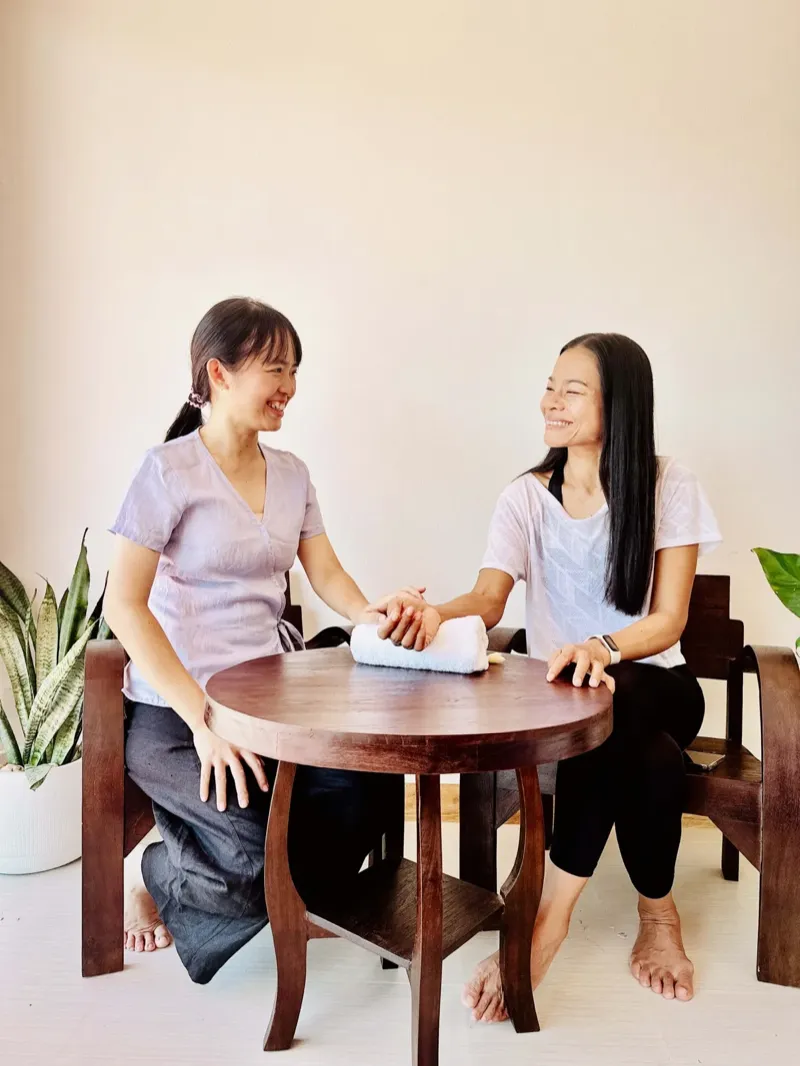
Lorsque vous venez à Piraluna pour un accompagnement de la ménopause, votre première séance commence par un entretien détaillé. Claire vous posera des questions précises sur vos symptômes : quand surviennent les bouffées de chaleur, leur intensité, si elles s'accompagnent de transpiration ou simplement de chaleur, à quelle heure vous vous réveillez la nuit, comment votre humeur a changé et comment se répartit votre énergie tout au long de la journée.
Elle prendra votre pouls aux deux poignets, recherchant des qualités qui révèlent l'état de vos systèmes Rénal, Hépatique et Cardiaque. Elle examinera votre langue, notant sa couleur, son enduit et sa forme. Une langue rouge sans enduit oriente vers une déficience du yin. Une langue pâle, gonflée avec des marques de dents suggère une déficience du yang. Ces outils diagnostiques ont été affinés au fil des siècles et fournissent des informations que les analyses sanguines ne capturent pas.
Sur la base de cette évaluation, elle sélectionnera des points d'acupuncture adaptés à votre déséquilibre. Les points courants pour la ménopause se trouvent sur les jambes, les pieds, le bas de l'abdomen, les poignets et la tête. Si votre déséquilibre le nécessite, elle ajoutera la moxibustion ou les ventouses à la séance.
Le traitement commence généralement par des séances hebdomadaires. La plupart des femmes remarquent une amélioration en trois à quatre séances. Les bouffées de chaleur deviennent moins fréquentes ou moins intenses. Le sommeil commence à s'améliorer. L'humeur se stabilise. Le délai varie selon la sévérité des symptômes et leur ancienneté, mais un premier cycle de traitement typique comprend huit à douze séances.
À mesure que les symptômes s'améliorent, les séances s'espacent à une toutes les deux semaines, puis une par mois en entretien. Certaines femmes continuent avec des séances mensuelles de maintien bien après la résolution de leurs symptômes principaux, car elles apprécient le sentiment général d'équilibre et de bien-être que l'acupuncture régulière leur procure.
Ce que vous pouvez faire entre les séances
Le traitement fonctionne au mieux lorsqu'il est soutenu par des habitudes quotidiennes en accord avec ce dont votre corps a besoin pendant cette transition.
- Rafraîchir la chaleur naturellement. Si vous présentez le déséquilibre de déficience du yin, consommez des aliments rafraîchissants comme le concombre, la pastèque, la poire, les haricots mungo et les légumes verts. Réduisez les plats épicés, l'alcool et le café, qui génèrent tous de la chaleur interne.
- Réchauffer le froid. Si vous présentez le déséquilibre de déficience du yang, privilégiez les aliments réchauffants comme le gingembre, la cannelle, l'agneau et le bouillon d'os. Évitez les aliments crus et froids ainsi que les boissons glacées, qui affaiblissent davantage l'énergie yang.
- Bouger en douceur. La marche, la natation, le tai-chi et le yoga favorisent la circulation sans épuiser vos réserves. Évitez l'exercice intense qui vous laisse exténuée, car cela peut aggraver les symptômes.
- Protéger votre sommeil. Gardez votre chambre fraîche. Superposez vos couvertures pour pouvoir vous ajuster rapidement lors des sueurs nocturnes. Évitez les écrans une heure avant le coucher. Essayez les points d'acupression pour le sommeil décrits dans notre guide.
- Gérer le stress consciemment. Le stress amplifie chaque symptôme de la ménopause. Même cinq minutes de respiration consciente ou de méditation quotidienne peuvent abaisser votre taux de cortisol de base et réduire la sévérité des symptômes.
Cette transition ne doit pas vous définir
La ménopause est un chapitre, pas un verdict. Votre corps ne vous abandonne pas. Il change, et il a besoin de soutien pendant ce changement. La MTC offre ce soutien d'une manière qui accompagne votre corps plutôt que de le contrarier.
À Piraluna, nous accompagnons des femmes à toutes les étapes de la transition ménopausique. Certaines viennent en début de périménopause quand les symptômes apparaissent à peine. D'autres viennent après des années de lutte. Où que vous en soyez dans le processus, il existe un chemin qui ne vous oblige pas à simplement « tenir bon ».
Si vous êtes prête à vous retrouver, réservez une séance à Piraluna. Claire prendra le temps de comprendre votre déséquilibre et d'élaborer un plan de traitement qui s'attaque à vos symptômes spécifiques à leur racine.
Vous préférez commencer par quelque chose de simple ? Téléchargez notre guide gratuit d'acupression avec trois points qui peuvent vous aider à mieux dormir ce soir.