Quand s'installer au paradis ne ressemble pas du tout au paradis
Vous l'imaginiez autrement. Des soirées chaudes, des fruits de mer frais, un rythme de vie plus lent. Et tout cela est vrai. Mais la fatigue persistante qui s'est installée après votre premier mois est tout aussi réelle. La digestion qui n'est plus comme avant depuis votre arrivée. La peau qui fait des éruptions comme jamais auparavant. Cette sensation d'être simultanément en surchauffe et épuisé, même après une nuit complète de sommeil.
Les expatriés qui s'installent à Koh Samui ou ailleurs en Thaïlande tropicale rapportent souvent une phase de lune de miel suivie d'une phase d'adaptation sanitaire dont personne ne les avait prévenus. Ce n'est pas une faiblesse ni un signe que les tropiques ne sont pas faits pour vous. Du point de vue de la médecine traditionnelle chinoise, c'est une réponse prévisible à un changement radical de climat, d'alimentation et de rythmes quotidiens.
La MTC est utilisée en Asie du Sud-Est depuis des siècles précisément parce qu'elle a développé une compréhension fine de comment bien vivre dans la chaleur, l'humidité et les conditions de mousson. Le cadre qu'elle propose n'est pas qu'une curiosité historique. Il est très pratique pour quiconque construit sa vie sous les tropiques aujourd'hui.
Comment la MTC comprend le climat tropical
En MTC, les facteurs environnementaux ont des effets directs sur le corps. Les textes classiques décrivent six pathogènes externes : le Vent, le Froid, la Chaleur estivale, l'Humidité, la Sécheresse et le Feu. À Koh Samui et dans le golfe de Thaïlande, deux d'entre eux dominent.
La Chaleur estivale est le pathogène auquel on pense en premier. Ce n'est pas simplement avoir chaud. La Chaleur estivale en MTC décrit une combinaison de haute température et d'exposition directe qui peut submerger les mécanismes de refroidissement du corps. Les symptômes incluent une soif intense, une transpiration abondante, la fatigue, l'agitation et des difficultés à dormir même en étant épuisé. Dans ses formes sévères, elle peut provoquer un coup de chaleur. Dans ses formes légères et chroniques, elle se manifeste par cette sensation brumeuse et vidée que de nombreux expatriés décrivent comme le « cerveau tropical ».
L'Humidité est le second facteur majeur, et souvent le plus insidieux. Koh Samui est humide la majeure partie de l'année. L'Humidité en MTC est un pathogène qui s'accumule dans le corps et interfère avec le mouvement normal des fluides et de l'énergie. Elle vous fait vous sentir lourd, embrumé et amorphe. Elle se loge dans les articulations et provoque des douleurs. Elle perturbe la digestion, entraînant ballonnements, selles molles et perte d'appétit. Elle peut aussi obscurcir l'esprit, contribuant à ce brouillard mental léger qui rend difficile la concentration même quand on a assez dormi.
Ces deux pathogènes combinés expliquent pourquoi beaucoup d'expatriés durant leur première année se décrivent comme simultanément vidés et gonflés, ayant chaud mais se sentant lourds, fatigués mais incapables de bien dormir. Le corps n'a pas encore appris à se défendre contre cette combinaison particulière de pressions extérieures.
Le système digestif est le premier touché
En MTC, la Rate et l'Estomac sont les organes centraux de la digestion. Ils sont responsables de la transformation de ce que vous mangez et buvez en énergie et sang utilisables. Point crucial, la Rate est particulièrement vulnérable à l'Humidité. Quand l'Humidité envahit ou s'accumule à l'intérieur, la fonction de la Rate s'affaiblit. Et quand la fonction de la Rate s'affaiblit, le corps produit davantage d'Humidité interne. Cela devient un cercle auto-entretenu.
Pour les expatriés, les défis digestifs sont amplifiés. Vous avez déménagé dans un pays avec une culture alimentaire très différente. Les méthodes de cuisson, les huiles, les épices et les habitudes de repas sont tous nouveaux. Vous mangez peut-être plus souvent à l'extérieur qu'avant. La nourriture de rue, bien que souvent délicieuse, est fréquemment frite, très sucrée ou préparée avec des ingrédients que votre système digestif n'a jamais rencontrés.
Ajoutez la chaleur (qui supprime l'appétit et modifie ce que le corps peut traiter efficacement) et l'ajustement devient évident. Les présentations digestives courantes chez les expatriés comprennent les ballonnements après les repas, un transit irrégulier, des selles molles persistantes, une perte d'appétit et une sensation de plénitude qui persiste bien trop longtemps après avoir mangé.
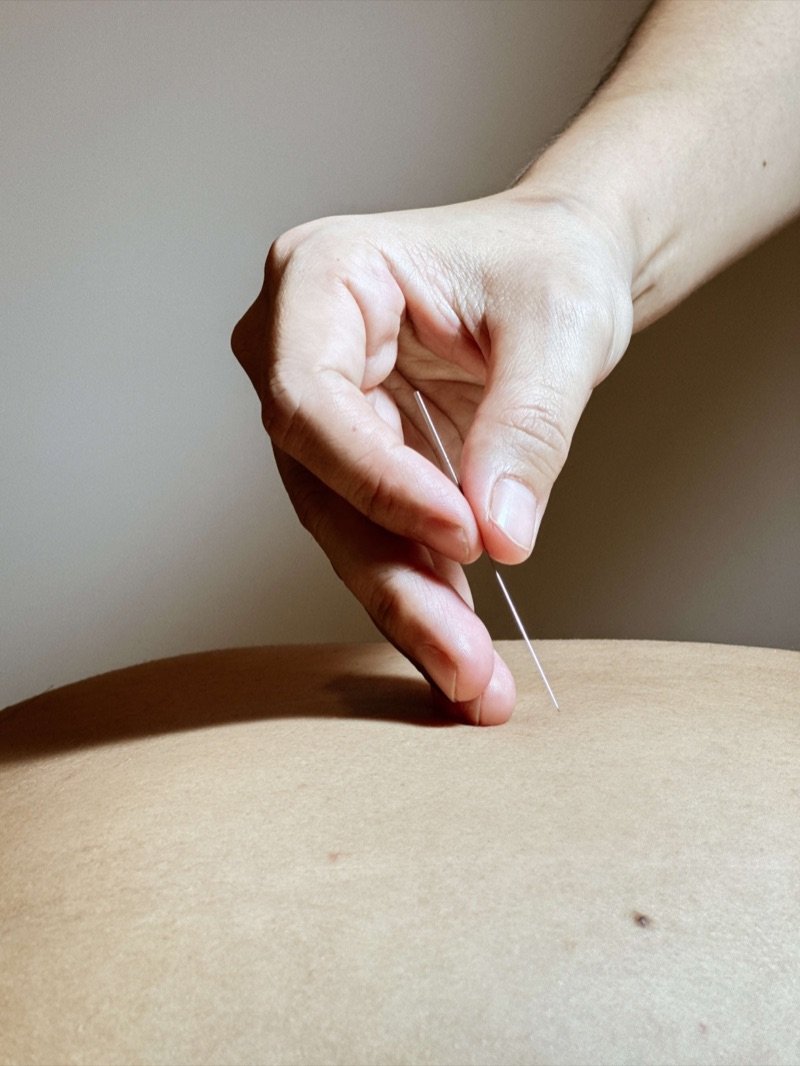
Du point de vue de la MTC, l'approche thérapeutique se concentre sur le renforcement de la fonction de la Rate, l'élimination de l'Humidité et la régulation du rythme digestif. Cela implique généralement de l'acupuncture sur des points spécifiques de l'abdomen, des jambes et des avant-bras, souvent accompagnée de conseils diététiques sur les aliments qui soutiennent la digestion dans un climat chaud et humide.
L'orientation générale de ces conseils diététiques : des aliments chauds et cuits plutôt que crus. Légèrement épicés plutôt que fades. Des protéines faciles à digérer plutôt que des repas lourds et riches. De l'eau tiède ou à température ambiante plutôt que des boissons glacées (qui choquent le système digestif et affaiblissent la fonction de la Rate). Des horaires de repas réguliers plutôt que des repas irréguliers ou sautés. Cela va à l'encontre de certaines tendances alimentaires occidentales (salades froides, smoothies, beaucoup de fruits crus) qui sont mal adaptées aux climats tropicaux.
Le problème de la climatisation
Voici une ironie que la plupart des expatriés découvrent à leurs dépens : ce que vous utilisez pour échapper à la chaleur peut vous rendre malade d'une autre façon.
En termes de MTC, le Froid est un autre pathogène. Quand vous restez assis pendant des heures dans un bureau, un restaurant ou une chambre fortement climatisés, le Froid peut pénétrer le corps par la peau et l'arrière du cou. Cela crée un déséquilibre appelé invasion de Vent-Froid, qui produit des symptômes ressemblant à un léger rhume : raideur de la nuque, nez qui coule, courbatures, léger mal de tête et fatigue.
De manière plus chronique, l'alternance constante entre l'air chaud extérieur et la climatisation froide crée un défi permanent pour les défenses de surface du corps. La peau ouvre ses pores pour transpirer dans la chaleur, puis les referme brusquement dans le froid, piégeant la chaleur et perturbant la circulation.
Ajustements pratiques : gardez une couche légère à portée de main quand vous entrez dans des espaces climatisés. Évitez le flux d'air direct sur l'arrière du cou pendant le sommeil. Laissez votre température corporelle se normaliser progressivement quand vous passez d'un environnement à l'autre. Ces petites habitudes réduisent la fréquence de la fatigue et des courbatures que beaucoup d'expatriés attribuent à « c'est juste comme ça ici ».
Les changements de sommeil sous les tropiques
De nombreux expatriés rapportent que leur sommeil change après leur installation sous les tropiques. Certains dorment plus qu'avant mais se sentent moins reposés. D'autres constatent qu'ils se réveillent fréquemment la nuit, en particulier entre 23h et 3h du matin. Certains mettent simplement beaucoup plus de temps à s'endormir, malgré une fatigue réelle.
En MTC, les heures nocturnes correspondent à des organes spécifiques et à leurs fonctions. La fenêtre de 23h à 1h correspond à la Vésicule biliaire, et celle de 1h à 3h au Foie. Ces deux organes sont impliqués dans le traitement des expériences de la journée, la régulation du sang et le maintien d'un flux émotionnel et physiologique harmonieux. Lorsque la Chaleur estivale est présente dans le système, elle peut agiter ces systèmes organiques et perturber leurs fonctions nocturnes de repos et de réparation.
Favoriser un bon sommeil sous les tropiques implique quelques ajustements qui peuvent sembler contre-intuitifs. Dîner tôt (avant 19h si possible) donne au système digestif le temps de terminer son travail avant que le corps ne doive passer en mode nocturne. Éviter les écrans une heure avant le coucher réduit la stimulation qui s'ajoute à l'agitation existante due à la chaleur. Garder la chambre fraîche mais pas froide, avec un flux d'air minimal directement sur le corps, favorise un repos d'où l'on se sent véritablement récupéré au réveil.
Si le sommeil est un problème persistant depuis votre installation, il vaut la peine de le traiter directement plutôt que de supposer qu'il se résoudra de lui-même. La MTC dispose d'outils spécifiques pour traiter l'insomnie, et de nombreux expatriés constatent qu'une courte cure d'acupuncture réinitialise leur rythme de sommeil d'une manière que les remèdes maison n'ont jamais réussi à faire.
La peau et l'environnement tropical
Les réactions cutanées sont parmi les plaintes les plus courantes chez les expatriés fraîchement installés sous les tropiques. Éruptions de chaleur, infections fongiques, éruptions persistantes et rougeurs inhabituelles sont des présentations fréquentes. Certaines personnes qui avaient une peau nette depuis des années se retrouvent confrontées à de l'acné ou de l'eczéma dans un climat qu'elles pensaient bénéfique.
En MTC, la peau est étroitement liée au système du Poumon, qui gouverne la surface du corps et son interface avec l'environnement extérieur. Lorsque des pathogènes comme la Chaleur ou l'Humidité pénètrent la peau ou s'accumulent à l'intérieur, ils s'expriment souvent vers l'extérieur à travers la peau. L'acné associée à la chaleur tend à être rouge, enflammée et concentrée sur le visage et le haut du corps. Les problèmes cutanés liés à l'Humidité tendent à être suintants, prurigineux ou persistamment humides.
Les traiter par la MTC implique d'éliminer la Chaleur ou l'Humidité interne à l'origine de la manifestation, plutôt que de traiter la surface cutanée isolément. Des ajustements alimentaires font généralement partie de l'approche : réduire les aliments très épicés, l'alcool et les fritures dans un déséquilibre de chaleur ; réduire les aliments sucrés, crus et froids dans un déséquilibre d'humidité.
Douleurs articulaires et saison des pluies
La saison des pluies à Koh Samui s'étend approximativement d'octobre à décembre, la côte du Golfe recevant beaucoup plus de précipitations que le reste de la Thaïlande pendant cette période. De nombreuses personnes ayant des problèmes articulaires préexistants (anciennes blessures, arthrite, courbatures générales) constatent que leurs symptômes s'aggravent à cette période.
La MTC a un déséquilibre spécifique pour cela appelé syndrome Bi, qui décrit une obstruction dans les articulations causée par le Vent, le Froid ou l'Humidité pénétrant dans les méridiens. Le syndrome Bi de type Humidité, le plus courant dans les climats tropicaux humides, produit une douleur sourde, fixe et pesante dans les articulations qui s'aggrave par temps humide et s'améliore avec la chaleur et le mouvement.
L'acupuncture pour les douleurs articulaires dans ce déséquilibre se concentre sur des points qui réchauffent et font circuler l'énergie à travers les articulations affectées, combinée avec la moxibustion (une herbe chauffante brûlée près de la peau) pour chasser l'Humidité et le Froid. Beaucoup de patients trouvent cette approche plus efficace que les anti-inflammatoires pour la douleur articulaire sourde et liée au temps qui caractérise ce déséquilibre.
Gérer son énergie au fil des saisons thaïlandaises
La Thaïlande n'a pas quatre saisons au sens occidental, mais elle connaît trois phases climatiques distinctes qui affectent le corps différemment.
La saison fraîche (approximativement de novembre à février) est la plus agréable pour la plupart des Occidentaux. Le corps peut fonctionner plus facilement. C'est un bon moment pour renforcer sa condition physique, faire de l'exercice plus intensément et préparer le système à la chaleur à venir.
La saison chaude (mars à mai) est celle où la Chaleur estivale devient le défi dominant. La stratégie clé en MTC est d'éviter le surmenage aux heures les plus chaudes, de rester bien hydraté, de manger des aliments qui éliminent la chaleur (concombre, pastèque, menthe, thé à la menthe poivrée) et de réduire les stimulants comme l'alcool et les plats très épicés qui ajoutent de la Chaleur interne.
La saison des pluies à Koh Samui (octobre à décembre sur la côte est) est celle où l'Humidité devient le défi dominant. La priorité passe au soutien de la digestion, au maintien de la chaleur et de la sécheresse corporelles, et à l'évitement des aliments froids, crus et sucrés qui nourrissent l'Humidité.
Adapter votre mode de vie et votre alimentation à ces changements saisonniers ne consiste pas à suivre des règles rigides. Il s'agit de prêter attention à la façon dont votre corps réagit et de faire de petits ajustements qui maintiennent votre énergie stable tout au long de l'année. De nombreux expatriés constatent que la fatigue et l'instabilité de santé qu'ils ont connues durant leur première année diminuent significativement une fois qu'ils apprennent à évoluer avec le climat plutôt que contre lui.
Quand consulter un praticien de MTC
Bon nombre des ajustements ci-dessus peuvent être autogérés. Mais certaines présentations bénéficient significativement d'une évaluation et d'un traitement professionnels.
Envisagez de prendre rendez-vous à Piraluna si vous présentez l'un des symptômes suivants :
- Une fatigue persistante qui ne se résout pas avec plus de sommeil ou de repos
- Des troubles digestifs qui durent depuis plus de quelques semaines depuis votre arrivée en Thaïlande
- Des infections récurrentes (notamment respiratoires, urinaires ou cutanées)
- Un sommeil qui s'est notablement détérioré depuis votre installation
- Des douleurs articulaires qui s'aggravent avec les changements météorologiques
- Un sentiment d'être simultanément épuisé et incapable de décompresser
- Un moral bas ou une anxiété aggravée par la chaleur
Claire fera un bilan complet, évaluera votre déséquilibre actuel en MTC et élaborera un plan de traitement adapté à votre situation du moment. Ce ne sont pas des conseils bien-être génériques. C'est une évaluation clinique de votre situation spécifique, éclairée par le contexte de la vie tropicale et la façon dont cet ensemble particulier de pressions affecte votre système.
De nombreux expatriés qui consultent à Piraluna sont surpris d'apprendre que leur ensemble de symptômes apparemment sans lien (fatigue, troubles digestifs, mauvais sommeil, réactions cutanées) pointent tous vers le même déséquilibre sous-jacent. Traiter le déséquilibre de fond résout plusieurs symptômes à la fois, ce qui rend la MTC particulièrement efficace pour les ajustements de santé complexes qui accompagnent les transitions de vie majeures.
Habitudes pratiques de MTC pour la vie tropicale quotidienne
Vous n'avez pas besoin d'être en traitement pour commencer à appliquer les principes de la MTC. Voici quelques habitudes quotidiennes qui soutiennent la santé dans un climat chaud et humide :
- Buvez de l'eau tiède ou à température ambiante. Les boissons froides sont tentantes sous la chaleur mais choquent répétitivement le système digestif. Passer à l'eau tiède ou à température ambiante est l'un des ajustements les plus simples et les plus efficaces que vous puissiez faire pour la stabilité digestive.
- Prenez un petit-déjeuner. Les heures de 7h à 9h correspondent à l'Estomac en MTC, ce qui en fait la fenêtre optimale pour le repas le plus copieux de la journée. Sauter le petit-déjeuner et prendre un dîner copieux est l'inverse de ce que le rythme biologique du corps demande sous les tropiques.
- Reposez-vous aux heures les plus chaudes. La pause de mi-journée existe dans toutes les cultures tropicales pour une bonne raison. Votre température corporelle augmente, la digestion ralentit et les performances cognitives chutent en début d'après-midi. Un court repos (ou même simplement se retirer de toute activité directe) pendant cette fenêtre préserve l'énergie pour le reste de la journée.
- Protégez l'arrière de votre cou. C'est l'un des points les plus vulnérables en MTC pour l'invasion de pathogènes externes. Si vous dormez avec un ventilateur ou la climatisation, assurez-vous que le flux d'air ne souffle pas directement sur votre cou. Une écharpe légère dans les environnements froids est une solution pratique.
- Observez comment votre corps évolue avec la météo. L'énergie, la digestion et l'humeur ne sont pas constants. Suivre comment vous vous sentez selon les différentes conditions météorologiques vous aide à comprendre vos propres schémas et à réagir de manière appropriée plutôt que de forcer quand votre corps signale qu'il a besoin de soutien.
Construire une vie ici qui soit véritablement agréable
Koh Samui offre une qualité de vie réellement bonne pour les expatriés qui apprennent à travailler avec le climat plutôt que contre lui. La période d'adaptation est réelle, mais elle n'est pas permanente. Avec le bon soutien, la plupart des gens la traversent dans les six premiers mois à un an et atteignent un niveau de santé de base qui peut être tout à fait solide.
La MTC est particulièrement bien adaptée à cette transition car elle a été conçue pour répondre exactement à ce type de situation : une personne dont le corps doit fonctionner dans un nouvel environnement avec de nouvelles exigences. L'objectif n'est pas de faire de vous une autre personne. C'est d'aider votre système à trouver son équilibre dans ce lieu précis.
Si vous vivez à Koh Samui ou dans les environs et que vous rencontrez l'un des déséquilibres de santé décrits ici, réservez une première séance à Piraluna. Claire accompagne régulièrement des expatriés, des nomades numériques et des visiteurs de longue durée, et elle comprend les pressions spécifiques liées à la vie en Thaïlande tropicale. La première séance est toujours un bilan complet, et vous en repartirez avec une image claire de votre déséquilibre actuel en MTC et de ce qu'il faut faire.
Des questions avant de venir ? Contactez-nous par le formulaire ou WhatsApp. Nous serons ravis de discuter de ce que vous vivez et de savoir si une approche MTC convient à votre situation.
Pourquoi les expatriés se sentent-ils souvent moins bien dans les premiers mois de vie en Thaïlande ?
La MTC explique cela par la difficulté du corps à s'adapter à un nouveau climat. La combinaison de chaleur, d'humidité et de modes alimentaires très différents peut submerger le système digestif et épuiser les réserves d'énergie. Cette phase se résout généralement en quelques mois à mesure que le corps s'acclimate, mais l'acupuncture et des ajustements du mode de vie peuvent rendre la transition beaucoup plus douce.
L'acupuncture peut-elle aider contre la fatigue tropicale et le manque d'énergie à Koh Samui ?
Oui. La fatigue tropicale en MTC est souvent un déséquilibre de déficience de Qi aggravé par la Chaleur estivale et l'Humidité. L'acupuncture soutient la Rate et l'Estomac (les organes digestifs centraux en MTC), élimine les facteurs pathogènes et restaure l'énergie. La plupart des patients rapportent une amélioration notable de leur niveau d'énergie en trois à cinq séances.