L'anxiété vit dans votre corps, pas seulement dans votre tête
La plupart des gens décrivent l'anxiété comme un problème mental. Des pensées qui s'emballent. Une inquiétude constante. Un cerveau qui refuse de s'arrêter de tourner. Mais quiconque a vécu une véritable anxiété sait que c'est un événement qui touche tout le corps.
Votre poitrine se serre. Votre estomac se noue. Vos épaules remontent vers vos oreilles et y restent. Votre respiration devient superficielle et rapide. Votre cœur bat la chamade alors que rien de menaçant ne se passe. Vous vous sentez agité mais épuisé en même temps.
Ce n'est pas une faiblesse ni un défaut de caractère. C'est votre système nerveux qui fait exactement ce pour quoi il a été conçu, sauf qu'il le fait au mauvais moment, dans le mauvais contexte, et qu'il ne trouve pas le bouton d'arrêt.
À Piraluna, l'anxiété est l'une des plaintes les plus fréquentes que nous traitons. Plus de la moitié des patients qui franchissent notre porte à Koh Samui signalent l'anxiété, la rumination mentale ou le stress chronique comme motif principal de consultation. Et ce qu'ils nous disent systématiquement, c'est que les symptômes physiques les dérangent autant que les symptômes mentaux. C'est là que l'acupuncture fait la plus grande différence.
Pourquoi votre système nerveux reste bloqué
Votre système nerveux autonome possède deux modes. Le mode sympathique est votre accélérateur. Il s'active face à une menace, inondant votre corps d'adrénaline et de cortisol, augmentant votre rythme cardiaque, aiguisant votre concentration et préparant vos muscles à combattre ou fuir. Le mode parasympathique est votre frein. Il ralentit tout, abaisse votre rythme cardiaque, améliore la digestion et dit à votre corps que vous êtes en sécurité.
Dans un système sain, ces deux modes alternent harmonieusement tout au long de la journée. Vous montez en régime quand vous devez performer et vous redescendez quand la pression passe. Le problème, c'est que la vie moderne maintient l'accélérateur enfoncé presque en permanence.
Les deadlines, le stress financier, les réseaux sociaux, les tensions relationnelles, les incertitudes de santé, le sommeil perturbé, les notifications constantes. Rien de tout cela n'est une menace vitale au sens littéral, mais votre système nerveux ne fait pas la différence entre une échéance professionnelle imminente et un véritable prédateur. Il réagit aux deux de la même manière.
Au fil des semaines et des mois d'activation soutenue, votre système nerveux perd la capacité de s'éteindre. Le mode sympathique devient votre état par défaut. Même quand vous essayez de vous détendre, votre corps reste en alerte. C'est ce que l'anxiété produit comme sensation de l'intérieur : un système nerveux bloqué en surrégime sans moyen clair de se réinitialiser.
Comment l'acupuncture réinitialise l'interrupteur
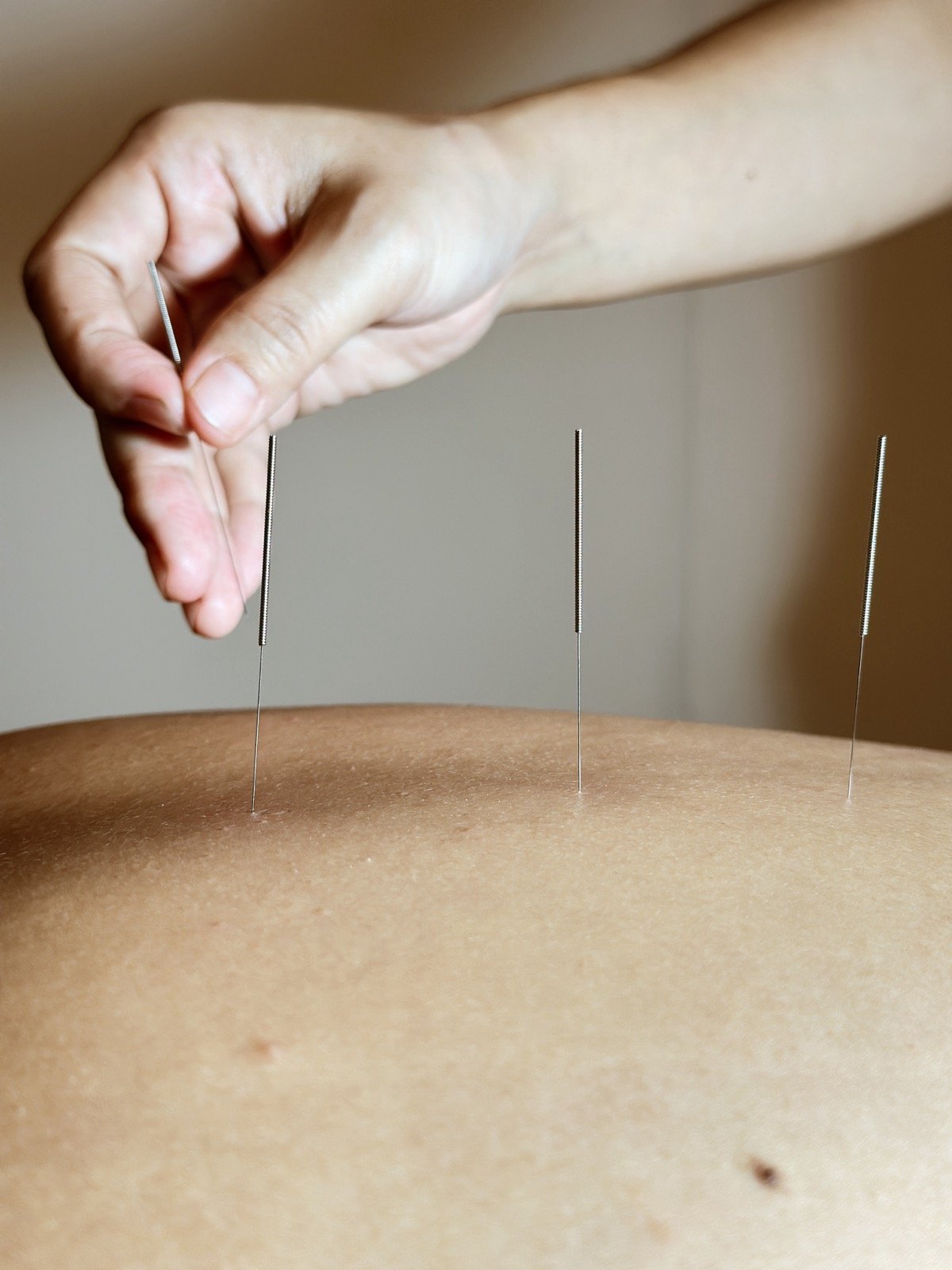
L'acupuncture agit directement sur ce système nerveux bloqué. Lorsque des aiguilles sont placées à des points spécifiques du corps, elles déclenchent une cascade de réponses physiologiques qui font basculer votre système nerveux de la dominance sympathique vers l'équilibre parasympathique.
La voie la plus importante est le nerf vague. C'est le nerf crânien le plus long du corps, qui s'étend du tronc cérébral jusqu'au cou, à la poitrine et à l'abdomen. Il constitue la principale autoroute de communication du système nerveux parasympathique. Lorsque le nerf vague est stimulé, votre rythme cardiaque ralentit, votre respiration s'approfondit, votre digestion s'active et vos muscles relâchent leur tension.
La recherche montre que l'acupuncture stimule directement le nerf vague. Une revue de 2021 publiée dans la revue Frontiers in Neuroscience a montré que l'acupuncture à des points spécifiques de l'oreille, du poignet et de la jambe inférieure produisait des augmentations mesurables du tonus vagal, c'est-à-dire la force et la réactivité de votre système parasympathique. Un tonus vagal plus élevé signifie une meilleure capacité de récupération après le stress.
Au-delà du nerf vague, l'acupuncture déclenche la libération de plusieurs neurochimiques qui contrecarrent directement l'anxiété.
- Les endorphines réduisent la perception de la douleur et créent un sentiment de bien-être. Les patients décrivent souvent une sensation chaude et flottante pendant le traitement.
- Le GABA est le principal neurotransmetteur calmant du cerveau. Il apaise les circuits neuronaux hyperactifs et constitue la même cible que les médicaments anxiolytiques comme les benzodiazépines.
- La sérotonine régule l'humeur, le sommeil et la stabilité émotionnelle. Un faible taux de sérotonine est associé à la fois à l'anxiété et à la dépression.
- La réduction du cortisol fait baisser l'hormone du stress qui maintient votre corps en mode combat ou fuite. Des études montrent que l'acupuncture diminue les niveaux de cortisol de façon mesurable dès une seule séance.
Ce n'est pas un effet placebo. Des études d'IRM fonctionnelle ont montré que l'acupuncture module l'activité de l'amygdale (le centre de la peur dans votre cerveau) et du cortex préfrontal (la partie rationnelle de votre cerveau qui aide à réguler les réponses émotionnelles). En termes simples, l'acupuncture aide votre cerveau de la peur à se calmer tout en renforçant la partie de votre cerveau qui dit « tu es en sécurité en ce moment ».
Ce que dit la recherche
La base de preuves en faveur de l'acupuncture comme traitement de l'anxiété s'est considérablement étoffée au cours de la dernière décennie. Une revue systématique de 2022 publiée dans les Annals of General Psychiatry a analysé 20 essais contrôlés randomisés et a conclu que l'acupuncture était significativement plus efficace que l'acupuncture factice ou le groupe témoin en liste d'attente pour réduire les symptômes d'anxiété.
Une grande méta-analyse dans JAMA Network Open a montré que l'acupuncture était associée à une réduction cliniquement significative des scores d'anxiété généralisée, avec des effets qui persistaient pendant au moins 24 semaines après la fin du traitement. Ce dernier détail est important. Contrairement aux médicaments qui cessent d'agir quand on arrête de les prendre, l'acupuncture semble créer des changements durables dans la façon dont votre système nerveux se régule.
D'autres études ont montré l'efficacité de l'acupuncture dans des contextes d'anxiété spécifiques. L'anxiété préopératoire, l'anxiété liée aux examens, l'anxiété pendant les traitements de FIV et le stress post-traumatique ont tous montré des réponses positives dans des essais contrôlés. L'Organisation mondiale de la santé inclut les troubles anxieux parmi les affections pour lesquelles l'acupuncture est considérée comme un traitement efficace.
Rien de cela ne signifie que l'acupuncture est un remède miracle. Les troubles anxieux sévères bénéficient souvent d'une approche combinée incluant la thérapie, des changements de mode de vie et parfois des médicaments. Mais pour de nombreuses personnes, l'acupuncture apporte un niveau de soulagement que d'autres approches n'ont pas réussi à fournir seules.
Différentes anxiétés, différentes racines
L'une des forces de la médecine traditionnelle chinoise est qu'elle ne traite pas toutes les anxiétés de la même manière. Dans notre article sur la MTC pour le stress et l'anxiété, nous avons expliqué le rôle central du Foie et du Cœur dans la santé émotionnelle. Pour cet examen plus approfondi de l'anxiété, voici les déséquilibres que nous observons le plus souvent en clinique.
La déficience de sang du Cœur se manifeste par une anxiété généralisée, diffuse et difficile à cerner. Vous vous sentez mal à l'aise mais vous ne pouvez pas pointer du doigt une inquiétude précise. Vous sursautez facilement. Votre mémoire semble embrumée. Vous pouvez ressentir des palpitations ou une sensation de papillonnement dans la poitrine. Le sommeil est léger et rempli de rêves intenses. Ce déséquilibre est particulièrement fréquent chez les personnes qui travaillent trop ou qui mangent de façon irrégulière depuis longtemps.
La stagnation du qi du Foie se transformant en chaleur crée une forme d'anxiété plus agitée et irritable. Vous vous sentez tendu, prêt à exploser. Les petites contrariétés semblent énormes. Vous pouvez ressentir une oppression dans la poitrine ou une sensation de boule dans la gorge. Ce déséquilibre s'accompagne souvent de maux de tête, de serrement de mâchoire et d'un goût amer dans la bouche. C'est le profil classique du « professionnel stressé ».
La déficience du qi de la Rate se manifeste par l'inquiétude et la rumination. Votre esprit ressasse les mêmes pensées encore et encore. Vous vous sentez mentalement lourd et fatigué. Prendre des décisions semble impossible car chaque option paraît aussi problématique que les autres. Cela s'accompagne souvent de symptômes digestifs : ballonnements, selles molles, perte d'appétit. L'intestin et l'esprit sont profondément connectés en MTC.
La déficience rénale sous-tend une forme d'anxiété profonde et existentielle. La peur, l'insécurité et un sentiment d'épuisement total. C'est le déséquilibre associé au burnout, aux maladies chroniques et au vieillissement. Vous vous sentez fondamentalement en insécurité dans le monde, comme si vos réserves avaient été complètement drainées. Il s'accompagne souvent de difficultés à dormir, de douleurs lombaires et d'une sensation constante de froid.
À Piraluna, Claire identifie quel déséquilibre (ou quelle combinaison de déséquilibres) est à l'origine de votre anxiété avant de placer la moindre aiguille. Deux patients qui disent tous les deux « je me sens anxieux tout le temps » peuvent recevoir des protocoles de traitement complètement différents car la cause profonde est différente. C'est cette précision qui distingue la MTC d'une approche uniforme.
À quoi ressemble une séance pour l'anxiété
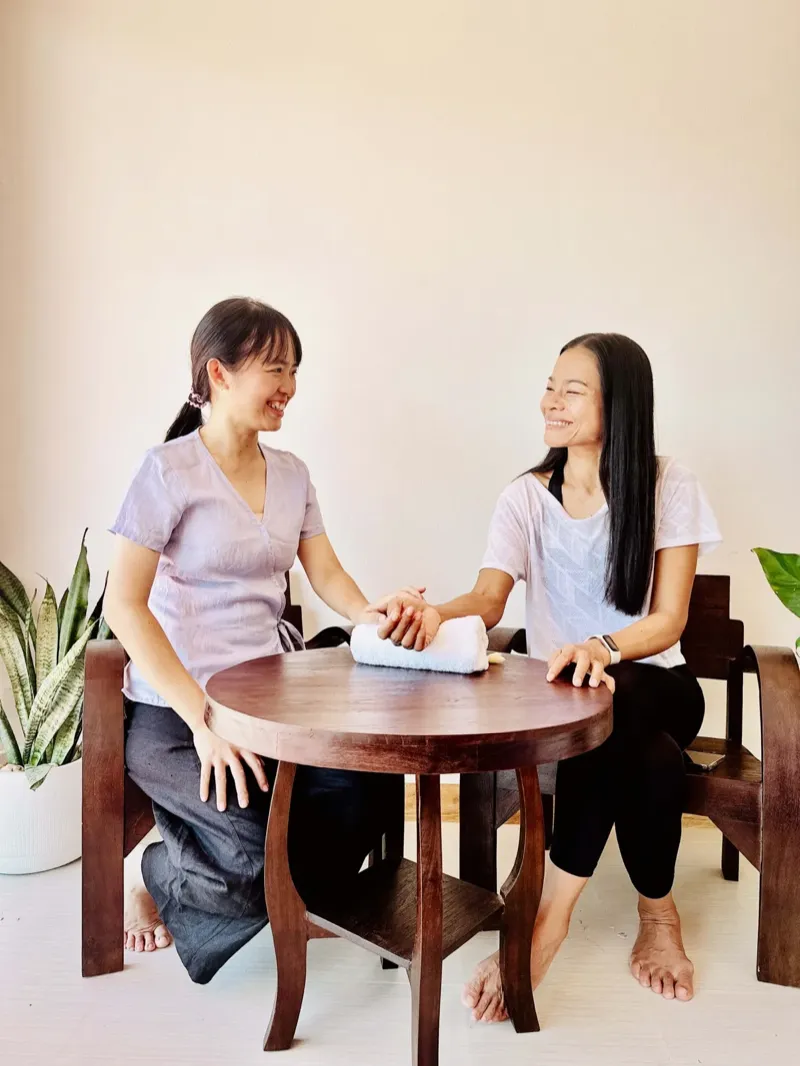
Lorsque vous venez à Piraluna pour de l'anxiété, la première séance commence par un échange approfondi. Claire vous posera des questions détaillées sur votre anxiété : quand elle a commencé, ce qui la déclenche, comment elle se manifeste dans votre corps, si elle s'aggrave à certains moments de la journée. Elle vous interrogera également sur votre sommeil, votre digestion, votre niveau d'énergie et votre cycle menstruel (pour les femmes), car tous ces éléments orientent le diagnostic en MTC.
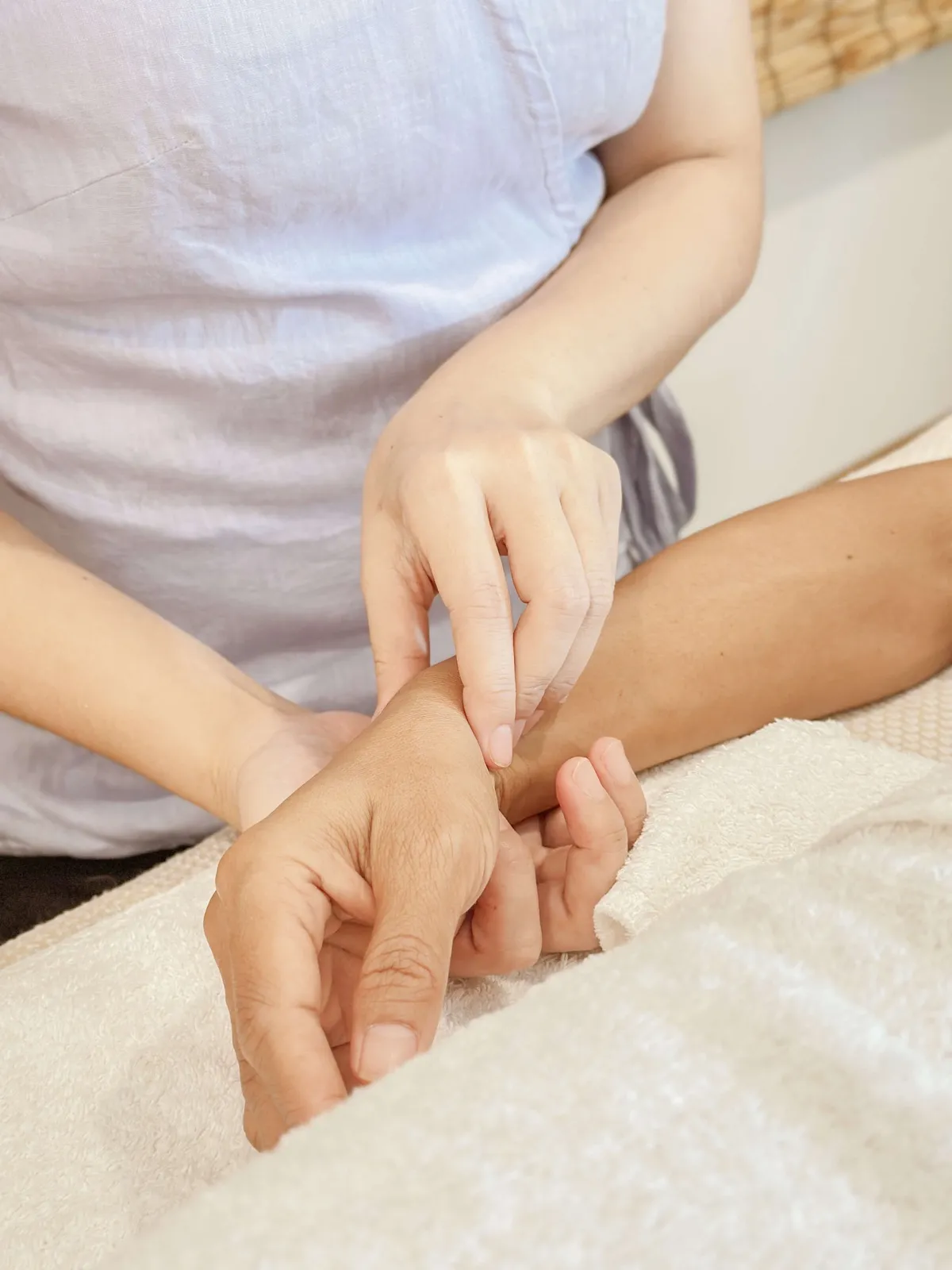
Elle prendra votre pouls aux deux poignets. Pas seulement pour savoir s'il est rapide ou lent, mais pour en évaluer la qualité : s'il est fin, tendu, glissant ou haché. En MTC, le pouls révèle l'état de vos systèmes organiques et aide à confirmer le déséquilibre sous-jacent à vos symptômes. Elle examinera également votre langue, qui fournit une carte visuelle de votre santé interne.
Sur la base de toutes ces informations, elle placera des aiguilles à des points soigneusement sélectionnés. Les points courants pour l'anxiété se trouvent sur les poignets, les jambes, les pieds, le cuir chevelu et les oreilles. Les aiguilles sont extrêmement fines. Vous pouvez ressentir une brève sensation à l'insertion de chacune : une douleur sourde, de la chaleur, des picotements ou une sensation de lourdeur. Ces sensations sont normales et indiquent que le point est activé.
Une fois les aiguilles en place, vous vous reposez pendant 20 à 40 minutes. C'est là que le véritable basculement se produit. La plupart des patients remarquent que leur respiration ralentit dans les cinq premières minutes. Le bavardage mental s'apaise. Les muscles crispés depuis des semaines commencent à se relâcher. Beaucoup de patients s'endorment sur la table de traitement, parfois pour la première fois depuis des jours.
Selon votre déséquilibre, Claire peut également utiliser des ventouses sur le haut du dos pour libérer les tensions accumulées, ou la moxibustion pour réchauffer et renforcer les zones affaiblies. La combinaison de techniques varie d'une séance à l'autre à mesure que votre état évolue.
Pour l'anxiété chronique, nous recommandons généralement de commencer par deux séances par semaine pendant les deux premières semaines, puis de passer à une séance par semaine. La plupart des patients constatent un changement significatif en trois à cinq séances. L'anxiété ne disparaît pas du jour au lendemain, mais le volume est nettement réduit. Vous commencez à sentir que vous avez plus d'espace entre le déclencheur et la réaction.
Trois points d'acupression contre l'anxiété à essayer maintenant
Bien que le traitement professionnel traite le déséquilibre dans sa globalité, ces trois points d'acupression peuvent apporter un soulagement immédiat lors des pics d'anxiété. Pressez chaque point fermement avec votre pouce pendant 60 à 90 secondes en respirant lentement et profondément.
Yintang (le point entre les sourcils). Placez votre pouce au centre de l'espace entre vos sourcils, exactement là où l'arête du nez rejoint le front. Appuyez doucement et respirez. Ce point calme le shen (l'esprit) et constitue l'un des points les plus efficaces pour un soulagement immédiat de l'anxiété. Il est utilisé dans presque tous les protocoles de traitement de l'anxiété.
Péricarde 6 (face interne du poignet). Tournez votre paume vers le haut. Placez trois doigts en travers de votre poignet à partir du pli. Le point se trouve directement sous votre troisième doigt, entre les deux tendons au centre de votre avant-bras. Appuyez fermement. Ce point apaise la poitrine, calme les nausées et régule le rythme cardiaque. C'est le même point utilisé contre le mal des transports et il est remarquablement efficace pour l'anxiété qui se concentre dans la poitrine.
Cœur 7 (pli du poignet). Paume toujours tournée vers le haut, trouvez le pli où votre main rejoint votre poignet. Suivez la ligne de votre auriculaire jusqu'à ce pli. Le point se situe dans la petite dépression du côté de l'auriculaire. Pressez et maintenez. Ce point nourrit le Cœur et ancre le shen. Il est particulièrement efficace pour l'anxiété qui s'aggrave la nuit et perturbe le sommeil.
Ces points fonctionnent mieux ensemble. Essayez de presser les trois en séquence (les deux poignets pour Péricarde 6 et Cœur 7) quand vous sentez l'anxiété monter. Cela prend environ cinq minutes et peut ramener votre système nerveux du bord du gouffre.
Acupuncture et médicaments : ce n'est pas un choix binaire
Certaines personnes viennent à l'acupuncture parce qu'elles veulent éviter les médicaments. D'autres viennent parce qu'elles sont déjà sous traitement et souhaitent un soutien supplémentaire. Les deux approches sont tout à fait valables.
L'acupuncture fonctionne bien en complément des anxiolytiques et des antidépresseurs. Elle n'interfère pas avec les ISRS, les IRSN ou les benzodiazépines. En fait, la recherche suggère que combiner l'acupuncture avec un traitement médicamenteux peut produire de meilleurs résultats que l'une ou l'autre approche seule. Certains patients constatent qu'après une série de séances d'acupuncture, ils peuvent réduire leur posologie sous la supervision de leur médecin prescripteur.
Si vous prenez actuellement des médicaments contre l'anxiété, continuez à les prendre comme prescrit. L'acupuncture est un complément, pas un substitut. Et si vous n'êtes pas sous traitement et préférez d'abord essayer une approche non médicamenteuse, c'est un choix tout à fait raisonnable que beaucoup de personnes font avec succès.
L'important, c'est de faire quelque chose. L'anxiété non traitée tend à s'aggraver avec le temps à mesure que les schémas du système nerveux s'enracinent plus profondément. Plus tôt vous intervenez, plus il est facile de réinitialiser le système.
Vous n'êtes pas obligé de vivre ainsi
L'anxiété n'est pas un trait de personnalité. C'est un état dans lequel votre système nerveux est resté bloqué. Et tout comme il a appris à rester bloqué, il peut apprendre à se libérer.
À Piraluna, nous accompagnons chaque jour des personnes qui portent une anxiété devenue si familière qu'elles ont cessé de se demander si cela doit forcément être ainsi. Des expatriés qui naviguent dans un nouveau pays. Des travailleurs à distance qui gèrent des entreprises sur plusieurs fuseaux horaires. Des femmes confrontées à des fluctuations hormonales qui amplifient tout. Des voyageurs arrivés à Koh Samui en portant les tensions de leurs cinq dernières destinations.
Si vous vous reconnaissez dans l'une de ces descriptions, l'acupuncture peut vous aider. Non pas en engourdissant les émotions ou en vous en distrayant, mais en offrant à votre système nerveux la réinitialisation qu'il n'a pas réussi à trouver par lui-même.
Réservez une séance à Piraluna et faites le premier pas vers un système nerveux plus serein. Claire travaillera avec vous pour comprendre le déséquilibre à l'origine de votre anxiété et créer un plan de traitement qui s'attaque à la racine du problème.
Pas encore prêt à réserver ? Téléchargez notre guide gratuit d'acupression avec trois points qui peuvent vous aider à mieux dormir ce soir. C'est un petit pas, mais parfois un petit pas suffit à votre système nerveux pour commencer à aller dans la bonne direction.