Le son qui ne s'arrête pas
Les acouphènes sont l'une des pathologies les plus isolantes qu'une personne puisse vivre. Un sifflement, bourdonnement, grésillement ou rugissement dans les oreilles qui n'a pas de source extérieure, que personne d'autre ne peut entendre, que la médecine vous dit devoir peut-être simplement gérer plutôt que résoudre. Si vous souffrez d'acouphènes, vous savez ce que cela signifie de rester éveillé(e) la nuit en essayant d'échapper à un son qui vit dans votre propre tête.
L'audiologie conventionnelle offre des options limitées. Les appareils auditifs peuvent masquer le son. Les dispositifs de thérapie sonore peuvent apporter un soulagement temporaire. La thérapie cognitivo-comportementale peut aider avec la détresse psychologique. Mais pour la plupart des personnes souffrant d'acouphènes chroniques, le système médical finit par délivrer le même message : il n'y a pas de remède, apprenez à vivre avec.
La médecine traditionnelle chinoise a une vision différente. En MTC, les acouphènes ne sont pas une impasse. C'est un symptôme avec des schémas identifiables, et ces schémas répondent au traitement. L'acupuncture pour les acouphènes est pratiquée depuis des siècles, et un corpus croissant de recherches cliniques commence à expliquer pourquoi elle fonctionne pour de nombreux patients et quelles présentations répondent le mieux.
Comment la MTC comprend les acouphènes
En MTC, les oreilles sont gouvernées principalement par le système organique des Reins. Il ne s'agit pas du rein anatomique isolé mais d'un concept plus large qui englobe l'énergie constitutionnelle profonde du corps, y compris l'audition, la moelle osseuse, la fonction cérébrale et le processus de vieillissement. Le Rein est considéré comme la racine de la vie, le réservoir de l'essence, et lorsqu'il est épuisé, les organes sensoriels qu'il nourrit, y compris les oreilles, commencent à souffrir.
Aux côtés des Reins, les méridiens du Foie et de la Vésicule Biliaire passent directement par l'oreille. Lorsque le Foie est sous stress, lorsque le qi stagne sous l'effet de la pression émotionnelle ou du surmenage, cette énergie bloquée peut se transformer en chaleur et monter le long du méridien de la Vésicule Biliaire. Les oreilles, situées au bout de cette voie, sont souvent le premier endroit où la chaleur et l'énergie montante se manifestent.
C'est pourquoi les acouphènes en MTC ne sont pas une pathologie unique mais un ensemble de schémas distincts, chacun avec sa propre qualité, son mode d'apparition et ses caractéristiques associées. Identifier le bon schéma est ce qui rend le traitement efficace.
Les quatre principaux schémas MTC derrière les acouphènes
Déficience de l'essence des Reins. C'est le schéma le plus courant dans les acouphènes chroniques, en particulier chez les adultes plus âgés ou toute personne ayant traversé une période d'épuisement significatif : maladie, surmenage, stress chronique, ou simplement l'usure progressive de l'énergie constitutionnelle avec le temps. Le son des acouphènes est généralement de tonalité basse, comme un bourdonnement lointain ou un bruit d'eau. Il tend à être persistant plutôt qu'intermittent et s'aggrave souvent avec la fatigue. Les caractéristiques associées peuvent inclure une faiblesse lombaire, des trous de mémoire, une diminution de l'audition et un sentiment général d'épuisement. C'est un schéma qui nécessite de la nutrition et ne peut pas être forcé.
Montée du yang du Foie. Ce schéma tend à produire des acouphènes plus forts, d'apparition plus soudaine, et souvent associés au stress, à la colère ou à la frustration. Le son est généralement de tonalité plus aiguë, parfois décrit comme un sifflement, un tintement ou un cri strident. Il peut survenir fortement pendant les situations difficiles et s'atténuer quelque peu lorsque la personne est calme. La personne se sent souvent chaude, a des maux de tête aux tempes, et peut avoir un sommeil perturbé ou un goût amer dans la bouche. C'est un schéma d'excès, ce qui signifie qu'il implique trop d'énergie montante qui doit être ramenée vers le bas.
Feu des mucosités. Lorsque l'humidité s'accumule dans le corps au fil du temps, souvent par une mauvaise alimentation, l'alcool ou un système digestif paresseux, elle peut se combiner avec la chaleur pour produire ce que la MTC appelle le feu des mucosités. Ce schéma produit des acouphènes qui semblent lourds et bloqués plutôt qu'aigus, souvent accompagnés d'une sensation de plénitude ou d'étouffement dans les oreilles, de vertiges et d'une sensation de lourdeur dans la tête. La personne peut avoir un historique d'infections de l'oreille, de congestion sinusale ou de liquide dans les oreilles.
Stagnation du qi et du sang. Après une blessure physique, une exposition prolongée à un bruit fort, ou une période de traumatisme émotionnel, le flux normal du qi et du sang à travers les méridiens alimentant l'oreille peut devenir obstrué. Les acouphènes peuvent avoir une qualité pulsatile ou battante. Il peut y avoir un historique d'événement d'apparition soudaine : une explosion, un concert, un coup physique à la tête, ou une période de stress psychologique extrême. Ce schéma peut coexister avec d'autres, en particulier la déficience, dans les cas de longue date.
Ce que montre la recherche
Les acouphènes sont l'une des pathologies les plus difficiles à étudier dans toute discipline car leur mesure dépend entièrement de l'auto-évaluation du patient et parce que leur évolution naturelle est variable. Avec ces réserves, la recherche existante sur l'acupuncture et les acouphènes est véritablement encourageante, en particulier pour des sous-groupes spécifiques.
Une revue systématique de 2018 publiée dans Medicine a analysé des essais contrôlés randomisés sur l'acupuncture pour les acouphènes et a trouvé des améliorations significatives des scores de l'inventaire de handicap lié aux acouphènes par rapport à l'acupuncture simulée et au traitement conventionnel seul. L'effet était le plus constant chez les patients souffrant d'acouphènes subjectifs chroniques d'intensité modérée.
Une méta-analyse de 2020 dans les European Archives of Otorhinolaryngology a passé en revue 17 essais impliquant plus de 1 000 patients et a constaté que l'acupuncture produisait des réductions significatives de l'intensité et de la détresse liées aux acouphènes par rapport aux groupes témoins, avec un avantage particulier dans la réduction de l'impact fonctionnel des acouphènes sur la vie quotidienne.
Des recherches menées par des institutions chinoises ont montré que l'acupuncture combinée à la phytothérapie surpassait l'acupuncture seule pour les acouphènes de type déficience des Reins, ce qui correspond à des siècles d'observation clinique dans la tradition MTC. Les mécanismes biomédicaux proposés incluent l'amélioration du flux sanguin vers la cochlée et le cortex auditif, la modulation du système nerveux autonome et la réduction de la neuroinflammation dans la voie auditive.
Il est important d'être honnête sur ce que la recherche ne montre pas encore. L'acupuncture n'est pas un remède garanti pour les acouphènes, et tous les patients ne répondent pas. Les cas d'origine purement mécanique, comme ceux causés par des modifications structurelles des osselets ou par une fistule périlymphatique, ont peu de chances de bien répondre. La surdité neurosensorielle sévère avec acouphènes associés tend également à répondre moins bien que les acouphènes avec une audition préservée ou quasi normale. Les meilleurs résultats sont systématiquement observés dans les acouphènes subjectifs chroniques sans cause structurelle claire, qui sont aussi la présentation la plus fréquente.
À quoi ressemble le traitement chez Piraluna
La première séance chez Piraluna commence par un bilan approfondi. Claire vous posera des questions détaillées sur vos acouphènes : quand ils ont commencé, ce qui les a déclenchés s'il y a eu un déclencheur clair, comment ils ont évolué dans le temps, ce qui les améliore ou les aggrave, et comment ils affectent votre sommeil et votre fonctionnement quotidien. Elle posera des questions sur votre tableau de santé global, vos niveaux d'énergie, votre digestion, votre état émotionnel, et tout autre symptôme qui semble sans rapport avec les oreilles mais fait en réalité partie du schéma qu'elle recherche.
L'examen de la langue et du pouls, central dans le diagnostic en MTC, fournit des informations qu'aucun questionnaire ne peut capturer. La forme, la couleur et l'enduit de la langue, et la qualité du pouls en trois positions sur chaque poignet, donnent au praticien un accès direct à ce qui se passe dans les systèmes organiques sous-jacents. C'est ainsi que les acouphènes causés par une déficience des Reins se distinguent des acouphènes provoqués par une montée du yang du Foie, même lorsque les sons décrits par le patient sont superficiellement similaires.
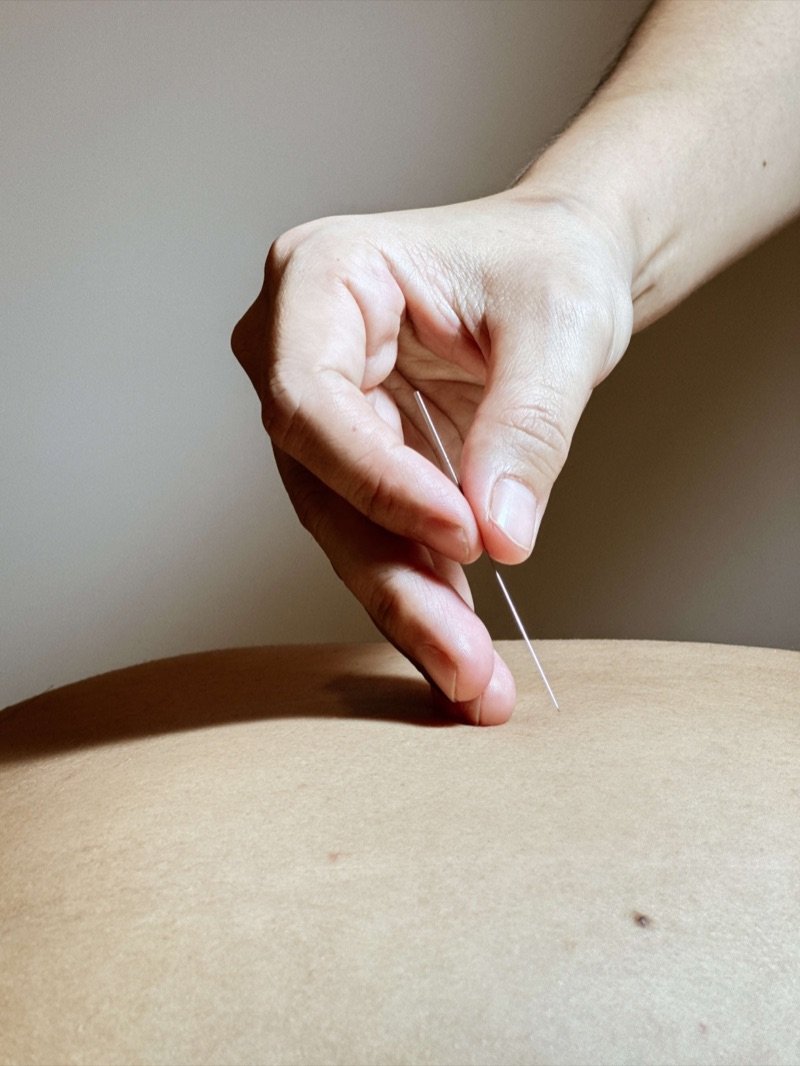
Le traitement combine des points locaux autour de l'oreille avec des points distaux le long des méridiens concernés. Les points locaux fréquemment utilisés incluent des zones devant et derrière l'oreille, le long des méridiens de la Vésicule Biliaire, du Triple Réchauffeur et de l'Intestin Grêle qui traversent cette région. Pour les schémas de déficience des Reins, des points sur le bas du dos, la cheville interne et la plante du pied nourrissent l'énergie racine profonde. Pour la montée du yang du Foie, des points qui dispersent la chaleur et ancrent l'énergie montante sont sélectionnés le long des pieds et du bas des jambes. Pour les schémas de mucosités, des points qui renforcent la digestion et résolvent l'humidité sont ajoutés au protocole de base pour l'oreille.
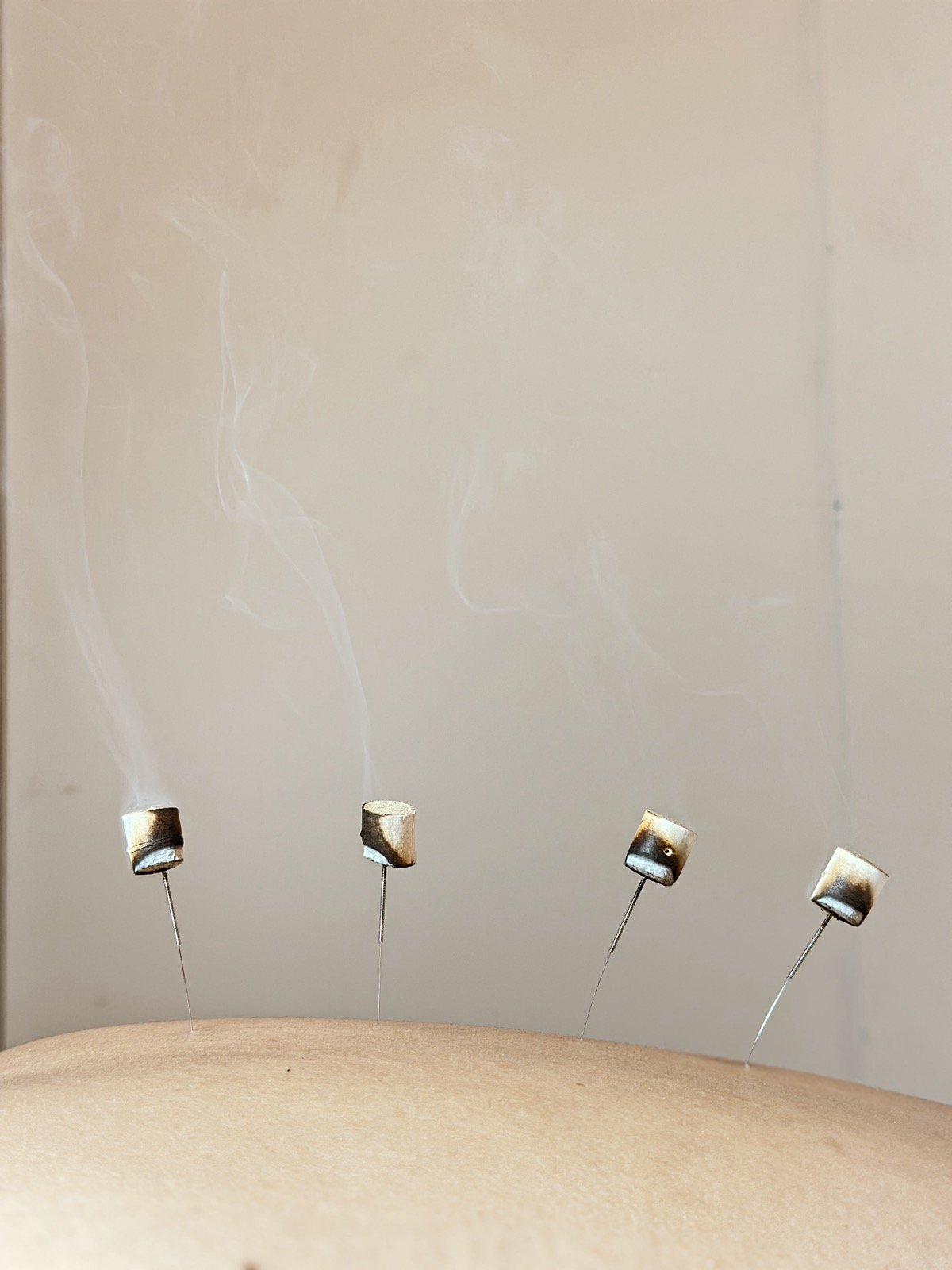
La moxibustion, l'application d'une herbe chauffante sur les points d'acupuncture, est particulièrement précieuse pour les schémas de froid et de déficience. Lorsque les acouphènes sont associés à un bourdonnement sourd, de la fatigue et une sensation de froid plutôt qu'à de la chaleur et de l'agitation, le moxa doux sur le bas du dos et les points des Reins soutient le travail nourrissant que les aiguilles seules ne peuvent pas pleinement accomplir.
Les séances durent environ 60 à 70 minutes incluant la consultation. Le temps de rétention des aiguilles est généralement de 25 à 35 minutes.
Combien de séances sont nécessaires
Les acouphènes se résolvent rarement après une seule séance. La plupart des patients souffrant d'acouphènes chroniques commencent à remarquer des changements après quatre à six séances : le son peut devenir moins intrusif, ou des périodes de silence peuvent commencer à apparaître qui n'existaient pas auparavant. Un traitement complet pour les acouphènes comprend généralement huit à douze séances, avec une réévaluation à mi-parcours.
Le schéma et la durée des acouphènes influencent tous deux la réponse. Les acouphènes d'apparition récente, en particulier ceux qui ont commencé suite à un stress aigu comme un événement sonore fort ou une période de détresse émotionnelle extrême, répondent souvent plus rapidement que les acouphènes présents depuis des années. Les schémas de déficience des Reins de longue date nécessitent un traitement constant et un soutien du mode de vie sur plusieurs mois pour produire un changement durable.
Pour les visiteurs de Koh Samui avec un séjour limité, Claire peut travailler sur un calendrier concentré. Même un traitement de huit séances sur deux à trois semaines peut produire des réductions significatives de l'intensité et de la détresse des acouphènes qui se maintiennent après le départ. Elle vous donnera une évaluation honnête de ce qui est réaliste compte tenu de votre présentation et de votre calendrier.
Ce que vous pouvez faire entre les séances
Les facteurs de mode de vie les plus importants pour les acouphènes en MTC correspondent étroitement à ce que la médecine intégrative recommande également, et à ce que les patients souffrant d'acouphènes découvrent généralement par l'expérience.
Protégez vos oreilles des dommages sonores supplémentaires. C'est évident mais souvent sous-estimé. Une seule soirée dans un lieu bruyant peut anéantir une semaine de progrès de traitement pour certains patients. Les bouchons d'oreille ne sont pas optionnels si vous êtes en phase de récupération d'acouphènes induits par le bruit.
Le sommeil est un médicament. Les Reins se régénèrent pendant le sommeil. Le manque de sommeil chronique épuise l'essence des Reins et aggrave significativement les acouphènes. Prioriser le sommeil, et traiter tout trouble du sommeil qui interfère avec le repos profond, est un élément central de la gestion des acouphènes en MTC.
Limitez l'alcool et les stimulants. L'alcool génère de la chaleur et perturbe le Foie, aggravant les schémas de montée du yang du Foie. La caféine contracte les vaisseaux sanguins et augmente l'excitation du système nerveux. Les deux aggravent les acouphènes à court et à long terme.
Gérez la réponse au stress. Le stress est l'aggravateur d'acouphènes le plus constant à travers tous les schémas. Lorsque le système nerveux est dans un état d'activation chronique, le cortex auditif devient plus sensible au bruit interne. Les pratiques qui calment véritablement le système nerveux, que ce soit la méditation, les mouvements lents, le temps dans la nature, ou quoi que ce soit qui fonctionne réellement pour l'individu, ne sont pas complémentaires au traitement. Elles en font partie.
Aliments nourrissant les Reins. En diététique chinoise, les aliments qui soutiennent les Reins incluent le sésame noir, les noix, les haricots noirs, les haricots rouges, le bouillon d'os et les légumes verts foncés à feuilles. Ce ne sont pas des remèdes miracles, mais manger de manière constante de façon à soutenir le système organique traité renforce le travail effectué en clinique.
L'acupuncture vaut-elle la peine d'être essayée pour vos acouphènes ?
Si on vous a dit qu'il n'y avait plus rien à faire, l'acupuncture mérite d'être sérieusement envisagée. Les preuves sont imparfaites, comme c'est le cas pour presque toute intervention contre les acouphènes, mais elles sont véritablement positives pour les acouphènes subjectifs chroniques. Le profil de risque de l'acupuncture est faible. L'inconvénient d'essayer un traitement est le temps et le coût. Le bénéfice potentiel, pour une pathologie qui peut rendre la vie véritablement misérable, est significatif.
Les patients qui tendent à mieux répondre sont ceux qui abordent le traitement avec des attentes réalistes et un engagement véritable. Les acouphènes sont une pathologie complexe. Ils ne répondent pas à l'espoir passif. Ils répondent à un traitement constant, un soutien du mode de vie et une attention au schéma sous-jacent, pas seulement au symptôme.
Si vos acouphènes sont relativement récents, ou si vos acouphènes existants se sont récemment aggravés sans explication, il vaut également la peine de faire un bilan médical pour exclure les causes nécessitant une intervention directe : le neurinome acoustique, l'otospongiose ou la maladie de Ménière sont rares mais importants à exclure. L'acupuncture fonctionne parallèlement à une investigation médicale appropriée plutôt qu'à sa place.
Si vous êtes à Koh Samui et souhaitez explorer si la MTC peut aider vos acouphènes, réservez une première séance et décrivez vos symptômes auriculaires dans les notes de réservation. Claire utilisera la première séance pour une évaluation approfondie et vous donnera un tableau honnête de la probabilité que votre schéma réponde et de ce à quoi ressemble un plan de traitement réaliste. Si vous avez des questions au préalable, contactez-nous via la page de contact ou WhatsApp.
L'acupuncture peut-elle guérir les acouphènes ?
L'acupuncture ne guérit pas les acouphènes dans tous les cas, mais les essais cliniques montrent de manière constante des réductions significatives de l'intensité, de l'intrusivité et de l'impact fonctionnel des acouphènes chez les patients souffrant d'acouphènes subjectifs chroniques. Les meilleurs résultats sont observés chez les patients dont les acouphènes sont liés à une déficience des Reins, une montée du yang du Foie, ou une apparition aiguë due au stress ou à l'exposition au bruit. Les acouphènes de longue date avec une surdité neurosensorielle significative ont moins de chances de se résoudre complètement, mais même dans ces cas, l'acupuncture réduit souvent la détresse et l'intrusivité du son. Un traitement réaliste de huit à douze séances est nécessaire pour évaluer si votre schéma spécifique répond au traitement.
Combien de séances d'acupuncture les acouphènes nécessitent-ils ?
La plupart des patients souffrant d'acouphènes ont besoin d'un traitement de huit à douze séances pour voir une amélioration significative et durable. Les changements commencent généralement à apparaître après quatre à six séances. Les acouphènes d'apparition récente ou liés à un déclencheur clair tendent à répondre plus rapidement que ceux présents depuis de nombreuses années. Les séances sont généralement programmées deux fois par semaine au début, puis réduites à une fois par semaine une fois l'amélioration établie. Pour les visiteurs de Koh Samui disposant de peu de temps, un calendrier concentré de séances plus fréquentes sur deux à trois semaines peut produire des gains significatifs qui continuent de se développer après le départ.