Your Hormones Are Not the Problem
If you have been told your symptoms are "just hormonal," you are not alone. Women come to Piraluna every week with the same frustration. They have period pain that stops them in their tracks, cycles that arrive whenever they feel like it, mood swings that make them feel like a different person for a week each month, or perimenopausal symptoms that no one warned them about. They have been told this is normal. It is common, but that does not make it normal.
Hormonal balance is not about forcing your body into a fixed state. Your hormones are supposed to fluctuate. Estrogen rises and falls across your menstrual cycle. Progesterone peaks and drops. Cortisol shifts through the day. The problem is not fluctuation itself. The problem is when these natural rhythms lose their timing, when the rises are too sharp, the drops too steep, or the whole system gets stuck.
Traditional Chinese Medicine has been treating women's hormonal health for over two thousand years. Long before anyone measured estrogen levels in a lab, TCM practitioners were observing, diagnosing, and effectively treating the same patterns of imbalance that women experience today. The approach works because it does not try to override your body. It works with your body's own intelligence, removing the obstacles that prevent it from finding balance on its own.
How TCM Sees Hormonal Health Differently
Western medicine tends to measure individual hormone levels and prescribe replacements or blockers to correct the numbers. If estrogen is low, supplement it. If testosterone is high, suppress it. This can provide relief, but it often treats the lab result rather than the root cause.
TCM takes a wider view. Rather than looking at hormones as isolated chemicals, it looks at the entire system that produces and regulates them. In TCM, hormonal balance depends on the smooth function of several organ systems working together, particularly the liver, kidneys, and spleen.
The liver governs the smooth flow of qi. When liver qi stagnates (most commonly from chronic stress, frustration, or emotional suppression), the entire hormonal cascade can become disrupted. Symptoms of liver qi stagnation include PMS irritability, breast tenderness before your period, bloating, headaches that come with your cycle, and a feeling of tightness in the chest or ribs. This is probably the most common hormonal pattern Claire sees at the clinic, and it responds remarkably well to acupuncture.
The kidneys store your constitutional essence. In TCM, the kidneys govern reproduction, fertility, and the deep reserves of energy that power your hormonal system. Kidney essence declines naturally with age, which is why perimenopause and menopause symptoms emerge as we get older. But it can also be depleted prematurely by overwork, chronic sleep deprivation, excessive exercise, or prolonged illness. When kidney yin is deficient, you experience hot flashes, night sweats, vaginal dryness, thinning hair, and a feeling of internal heat. When kidney yang is deficient, the pattern shifts to cold hands and feet, low libido, fatigue, and lower back weakness.
The spleen transforms food into blood and energy. When the spleen is weakened by poor diet, irregular eating, overthinking, or worry, it cannot produce enough blood to nourish the uterus and support a healthy cycle. This leads to scanty periods, late cycles, fatigue around menstruation, spotting between periods, and a pale, washed out feeling that no amount of rest seems to fix.
Most women do not have a single, clean pattern. They have combinations: liver stagnation with underlying blood deficiency, or kidney yin depletion with spleen weakness layered on top. Claire's job during your consultation is to identify your specific combination and build a treatment plan that addresses all the layers.
What Acupuncture Does for Your Hormones
Acupuncture regulates hormones through several well studied mechanisms. It is not a vague or mystical process. Research published in peer reviewed journals has shown that acupuncture directly influences the hypothalamic pituitary ovarian axis, which is the communication loop between your brain and your reproductive organs that controls your entire hormonal cycle.
Specifically, acupuncture has been shown to regulate levels of follicle stimulating hormone (FSH) and luteinizing hormone (LH), which control ovulation and cycle timing. It modulates estrogen and progesterone levels, helping them rise and fall in the right amounts at the right times. It reduces cortisol, the stress hormone that disrupts virtually every other hormone when it stays elevated too long. And it increases blood flow to the uterus and ovaries, which improves egg quality, supports the uterine lining, and reduces menstrual pain.
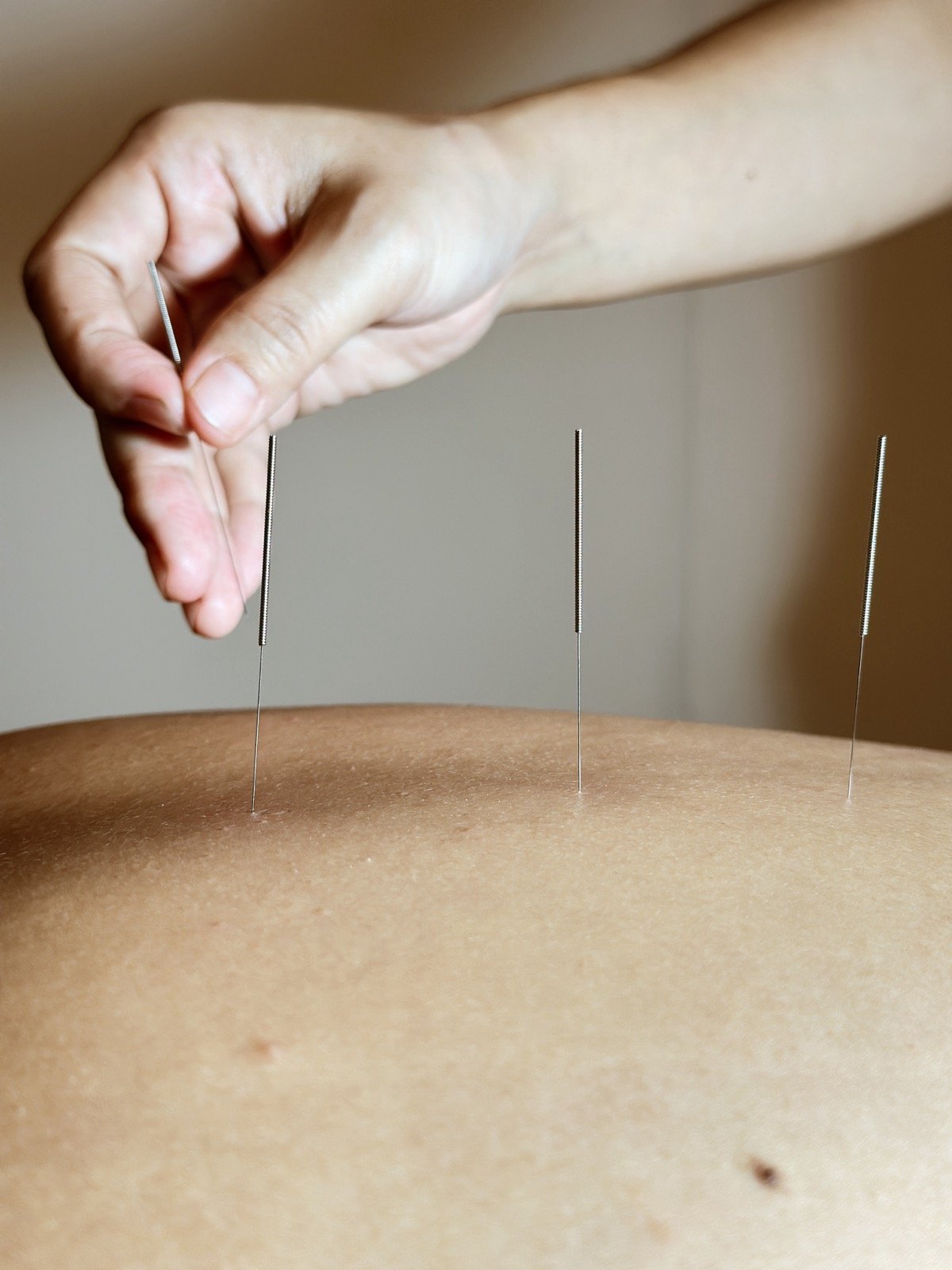
In the treatment room, the experience is profoundly relaxing. Points on the lower abdomen, legs, feet, hands, and ears are commonly used for hormonal conditions. You will feel your nervous system shift from alert mode into rest mode within the first few minutes. Many patients describe a warm, heavy feeling settling into their pelvis and lower body, which is a sign that blood flow to the reproductive organs is increasing.
Claire tailors every session to where you are in your cycle. The points she uses in the follicular phase (the first half of your cycle) are different from those she uses around ovulation or in the luteal phase. This cycle aware approach is one of the reasons TCM can be so precise in addressing hormonal issues.
Conditions That Respond Well to TCM
Women come to Piraluna for a wide range of hormonal concerns. Here are the ones Claire treats most frequently.
PMS and premenstrual symptoms. Irritability, mood swings, breast tenderness, bloating, headaches, food cravings, and fatigue in the week before your period are not inevitable side effects of having a cycle. These symptoms point to liver qi stagnation, blood deficiency, or both. Most women notice a significant improvement within two to three cycles of regular acupuncture. Some report changes after the very first treatment.
Period pain (dysmenorrhea). Menstrual cramps range from mildly annoying to debilitating. In TCM, the cause determines the treatment. Pain that responds to warmth (you instinctively reach for a hot water bottle) usually involves cold in the uterus, and moxibustion combined with acupuncture is highly effective. Pain that feels sharp and fixed often points to blood stagnation. Pain with a heavy, dragging quality may indicate dampness. Claire assesses your specific pain pattern and treats accordingly.
Irregular cycles. Cycles that are consistently too long, too short, or unpredictable are a sign that the hormonal communication loop is not functioning smoothly. Acupuncture helps regulate cycle length by supporting the proper timing of ovulation and the hormonal shifts that follow it. Most women see their cycles become more predictable within three to four months of treatment.
Fertility support. TCM has a long history of supporting fertility, and modern research increasingly validates the approach. Acupuncture improves ovarian blood flow, supports egg quality, regulates ovulation, and creates a more receptive uterine environment for implantation. Whether you are trying to conceive naturally or preparing for IVF, acupuncture can be a powerful complement to your efforts. Claire works with women at all stages of their fertility journey.
Perimenopause and menopause. The transition into menopause is not a disease, but the symptoms that accompany it can be genuinely disruptive. Hot flashes, night sweats, insomnia, mood changes, sleep disturbance, weight gain, joint stiffness, and brain fog are all common complaints. TCM addresses these by nourishing kidney yin and yang, calming the liver, and supporting the body's ability to regulate its own temperature and energy. Many women find that acupuncture offers relief comparable to hormone replacement therapy, without the associated risks and side effects.
TCM Food Therapy for Hormonal Balance
What you eat directly affects your hormonal health. TCM food therapy is not a diet plan. It is a system of eating that supports your body's specific needs based on your constitution and current pattern of imbalance.
For most women dealing with hormonal issues, a few principles apply broadly.
Eat warm, cooked foods. In TCM, the spleen and stomach prefer warm food. Cold, raw meals require extra energy to digest, and that energy gets diverted away from blood production and hormonal regulation. This does not mean you can never eat a salad. It means that the foundation of your meals should be cooked vegetables, warm grains, soups, and stews, especially in the second half of your cycle when your body needs more nourishment.
Build blood with food. Iron rich foods like dark leafy greens, beets, black beans, lentils, and bone broth support blood production. In TCM, blood nourishment is central to women's health. If your periods are scanty, your energy is low, or you feel lightheaded when you stand up, you likely need more blood building foods. Goji berries, red dates (jujubes), and black sesame seeds are classic TCM blood tonics that are easy to add to your daily routine.
Support liver function. Bitter and sour flavors help the liver move qi smoothly. Lemon water in the morning, leafy greens like dandelion and arugula, and fermented foods like sauerkraut all support the liver. Reduce alcohol and processed sugar, which burden the liver and worsen stagnation patterns. If PMS is your main concern, cleaning up your liver support is one of the most impactful changes you can make.
Eat according to your cycle. During menstruation, focus on warm, blood nourishing foods. In the follicular phase, lighter foods that support rising energy. Around ovulation, foods that promote circulation and warmth. In the luteal phase, grounding, nourishing meals that support progesterone production. This cycle based approach to eating mirrors the treatment strategy Claire uses in the clinic.
What a Treatment Course Looks Like at Piraluna
Hormonal conditions are not one session fixes. They respond best to a sustained course of treatment that works with your body over several cycles. Here is what you can typically expect.
Your first visit begins with a thorough consultation. Claire will ask about your cycle in detail: length, flow, pain, color, clotting, PMS symptoms, and any changes you have noticed recently. She will also check your pulse and tongue, which provide diagnostic information about the state of your blood, energy, and organ systems. This first assessment usually takes 20 to 30 minutes.
Treatment typically begins with weekly sessions for the first cycle, sometimes twice per week if symptoms are severe. After one to two cycles, sessions may taper to every two weeks or be timed to specific phases of your cycle (for example, around ovulation for fertility support, or in the luteal phase for PMS management).
Most women begin to notice changes within the first one to two cycles. PMS symptoms soften. Pain becomes less intense. Mood becomes more stable. Cycles start arriving more predictably. By three to four cycles, many patients report a significant transformation in their menstrual experience.
Claire may also recommend specific dietary changes, herbal formulas, or self care practices like acupressure at home to support your progress between sessions. The treatment plan is collaborative and adapts as your condition evolves.
This Is Not Something You Just Have to Live With
One of the most damaging things women hear about their hormonal health is "that is just how it is." Period pain is not something you should have to push through every month. PMS should not derail your life for a week at a time. Perimenopausal symptoms do not have to be endured until they eventually pass. There is a difference between common and normal, and TCM has been helping women close that gap for thousands of years.
At Piraluna in Koh Samui, Claire treats women from all over the world who have come looking for a different approach. Many have tried everything: birth control, supplements, elimination diets, meditation apps. What brings them to acupuncture is a desire to work with their body rather than against it, and to find solutions that last.
If you are dealing with any of the conditions described in this post, you do not have to figure it out alone. Book a session at Piraluna and let Claire assess your pattern, explain what is happening, and create a treatment plan designed around you.
Want to start supporting your health at home? Download our free acupressure guide for better sleep. Better sleep is one of the fastest ways to support hormonal balance, and these three points can help you get there tonight.