Active People in Koh Samui Need Real Recovery
Koh Samui draws a particular kind of person. Muay Thai camps fill their morning and evening classes with fighters in training, fitness tourists on two week camps, and expats who have built their routines around early runs along the coast or daily sessions at the gym. Add the cyclists who loop through the hills, the yoga practitioners training for teacher certification, and the water sports enthusiasts, and you have an island full of people putting serious demand on their bodies.
The problem is that recovery often gets less attention than training. People push hard, sustain minor injuries, train through them, and then find themselves with something that will not go away on its own. Tendinitis that started as a twinge three weeks ago. A hamstring that keeps tightening no matter how much you stretch it. A shoulder that never quite healed after a hard sparring session. A knee that aches going down stairs after long runs.
At Piraluna, these are among the most common presentations we see from active patients. Acupuncture and cupping therapy are highly effective tools for sports recovery and sports injury rehabilitation, and they work in ways that standard rest alone does not.
How TCM Understands Sports Injuries
Traditional Chinese Medicine has a detailed framework for understanding musculoskeletal injuries that maps closely to what modern sports medicine also recognises, just using different language.
In TCM, muscles and tendons are governed primarily by the Liver, which stores blood and ensures that tendons and ligaments remain supple and well nourished. Joints and bones fall under the domain of the Kidneys, which govern structural integrity and the body's core vitality. When these organ systems are functioning well and qi and blood flow freely through the body's pathways, tissues heal quickly and remain resilient to injury.
Sports injuries occur when this flow is disrupted. A sprained ankle creates local stagnation of qi and blood: the swelling, bruising, and pain are the physical expression of that disruption. An overuse injury like tendinitis represents a longer term pattern where the tendon has been repeatedly strained without adequate recovery, leaving the tissue in a state of chronic stagnation and undernourishment. Old injuries that never fully resolved often carry residual stagnation that makes the area vulnerable to re injury.
The distinction TCM makes between acute and chronic injury mirrors what physiotherapists also observe. Acute injuries (recent sprains, strains, and contusions) require moving stagnant blood and reducing swelling. Chronic injuries (tendinitis, repetitive strain, old tears) require both clearing residual stagnation and rebuilding the nourishment the tissue lacks.
What Acupuncture Does for Muscle Recovery
Acupuncture accelerates tissue repair through several mechanisms that have been measured in clinical research.
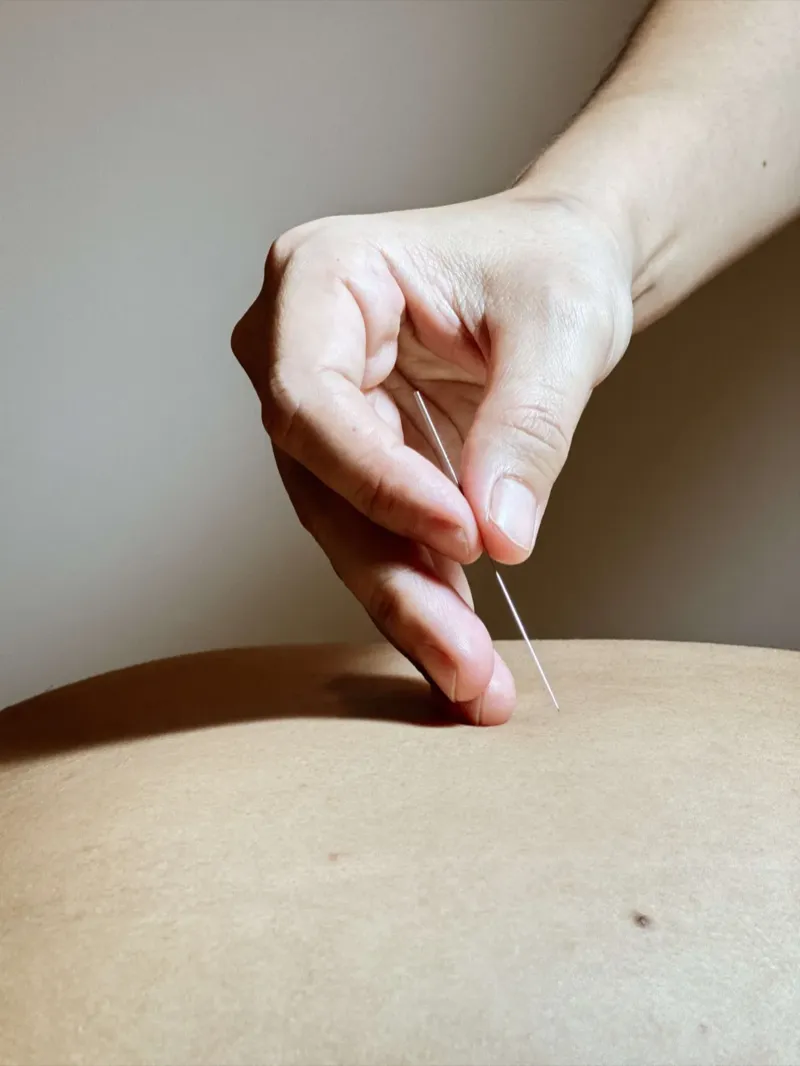
The most significant is its effect on local blood circulation. When a needle is placed in or near an injured area, the body increases blood flow to that site. This delivers oxygen, nutrients, and immune cells to the tissue, exactly what is needed for repair. It also removes metabolic waste products like lactic acid that accumulate in overworked muscle and create the soreness and fatigue familiar to anyone who trains hard.
Acupuncture also reduces inflammation through pathways that are distinct from anti inflammatory medications. It modulates the production of pro inflammatory cytokines while supporting the repair phase of the inflammatory process. This is important because inflammation itself is not the problem: it is the first stage of healing. The goal is not to suppress inflammation entirely but to ensure it resolves properly and does not become chronic. Acupuncture supports this resolution.
For pain management, acupuncture stimulates the release of endorphins and enkephalins, the body's own pain modulating compounds. It also reduces the hypersensitivity of nerves around an injured area, which is why many patients notice that the referred pain patterns around an injury begin to change during the session itself.
From a TCM perspective, the needles move qi and blood through the affected pathways, releasing stagnation, softening the surrounding tissue, and restoring the flow that makes healing possible.
Cupping Therapy for Athletes
Cupping became internationally visible when Michael Phelps competed at the 2016 Olympics with distinctive circular marks across his back and shoulders. What Olympic swimmers and professional athletes had already discovered is what TCM practitioners have used for centuries: cupping is one of the most effective tools available for deep muscle recovery.
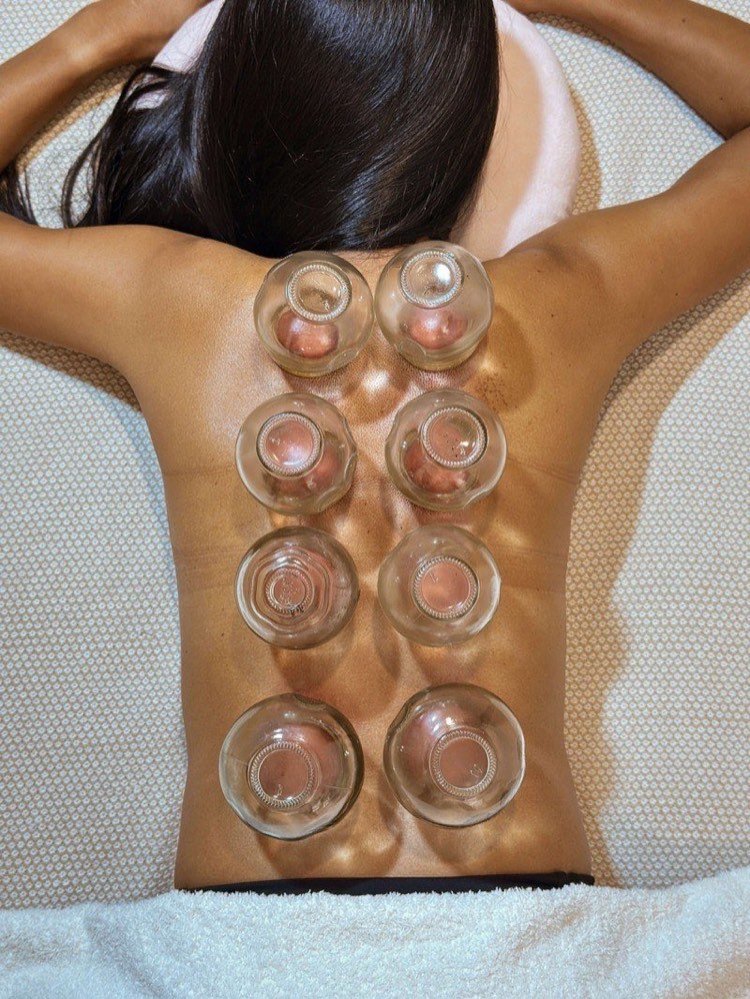
Where massage pushes into muscle tissue from the outside, cupping creates suction that lifts the fascia and muscle layers upward. This decompression stretches connective tissue that has become adhered and restricted through repetitive movement, pulling apart the tight bands that limit range of motion and create pain. The suction also dramatically increases local blood flow, which is why the treated area flushes with colour and warmth after a session.
For athletes, cupping is particularly effective for:
- Tight upper back and shoulders from Muay Thai striking, swimming, or overhead training
- Lower back tightness from running, cycling, or heavy lifting
- IT band and lateral thigh restriction common in runners and cyclists
- Hamstring and calf tightness that resists stretching
- General muscle soreness after high volume training weeks
At Piraluna, Claire combines acupuncture and cupping in most sports recovery sessions. The needles address the deeper meridian level and trigger healing systemically, while cupping targets the specific muscles and fascial restrictions most relevant to your training load and injury history. The combination produces results that are faster and more complete than either modality alone.
You can read more about what cupping marks mean and what they tell us about your tissue in the cupping marks color guide.
Common Sports Injuries Treated at Piraluna
The injuries we see most frequently from active patients in Koh Samui fall into recognisable patterns depending on the activity.
Muay Thai training injuries are among the most common. These include shoulder joint strain from clinch work and repeated striking, wrist and forearm pain from hitting pads and bags, shin bruising and periosteal soreness, ankle sprains from kicks and footwork, and neck tension from impact. Cupping over the upper back and shoulders combined with acupuncture along the arm meridians gives significant relief, and local treatment around the shin and ankle speeds resolution of contusions that would otherwise take weeks to fully clear.
Runner's injuries include IT band syndrome, plantar fasciitis, shin splints, knee pain (both anterior and lateral), and Achilles tendinitis. These are all overuse injuries where the tissue has been stressed beyond its recovery capacity. Acupuncture targets the tendons and surrounding tissue directly as well as the meridian pathways that run through the affected area, with the Bladder meridian running along the posterior chain and the Stomach and Gallbladder meridians covering the anterior and lateral leg respectively.
Cycling injuries typically produce lower back pain from the sustained flexed position, knee pain particularly at the medial joint line, tight hip flexors, and piriformis syndrome (a deep buttock pain that mimics sciatica). These respond very well to a combination of acupuncture at the lumbar and hip points with cupping along the lumbar erectors and IT band.
Yoga and functional training injuries often involve the rotator cuff, wrist flexors and extensors, and the lumbar spine. These are injuries where flexibility demands have exceeded strength support, creating strain at the attachment points of tendons and ligaments. TCM treats these as Blood deficiency conditions: the tendon is not getting enough nourishment to remain resilient under load, and treatment focuses on building circulation to the tissue as well as clearing the local stagnation.
Swimming shoulder is a rotator cuff overuse pattern common in competitive swimmers and triathletes, characterised by impingement, tendinitis of the supraspinatus, and sometimes biceps tendon involvement. Acupuncture at local shoulder points combined with distal points on the Small Intestine and Triple Burner meridians along the arm consistently reduces pain and improves range of motion.
What a Session Looks Like
When you come in with a sports injury or for recovery support, Claire will begin with a full assessment. She will ask about the history of the injury or pattern, what activity caused or aggravates it, what you have already tried, and what your current training volume looks like. She will also assess your overall TCM pattern because sports injuries do not occur in isolation: they are often connected to systemic factors like chronic fatigue, poor sleep, or digestive issues that affect the body's recovery capacity.
She will observe your posture and movement, palpate the affected area, and identify the specific muscles, tendons, and meridian pathways involved. Based on this, she will select the combination of local and distal acupuncture points most appropriate for your presentation.
During treatment you will lie comfortably on the treatment table while needles are retained for 20 to 40 minutes. Most people experience significant relaxation during this phase, and it is common to fall asleep. Depending on your injury and presentation, Claire may add cupping over specific muscle groups, moxibustion to warm the area if cold or deficiency is a factor, or gua sha along tight fascial bands.
After treatment, the affected area often feels noticeably lighter, the range of motion improves, and the quality of pain changes. What was sharp often becomes dull. What was constant often becomes intermittent. These are signs that the stagnation has begun to shift.
How Many Sessions Will You Need?
Acute sports injuries that are fewer than one to two weeks old often respond within one to three sessions. The tissue responds quickly when the injury is fresh and no compensatory patterns have had time to form.
Subacute injuries that are two to eight weeks old typically need four to six sessions. By this stage the body has begun to adapt around the injury and some muscle guarding and movement pattern changes have developed. Treatment needs to address both the original injury and these secondary patterns.
Chronic injuries that have been present for months or longer require a longer course of treatment. These are conditions where scar tissue, fascial adhesion, and established movement compensations all need to be addressed. Expect eight to twelve sessions for significant resolution, though most patients notice meaningful improvement within the first three or four.
For ongoing training recovery (rather than specific injury treatment), many athletes at our clinic choose regular sessions every one to two weeks to maintain tissue quality and prevent overuse injuries from developing. This is the approach most similar to what professional athletes use: not waiting for an injury to seek treatment, but using acupuncture proactively as part of the recovery stack alongside sleep, nutrition, and training load management.
What You Can Do Between Sessions
Acupuncture creates the conditions for healing, but what you do between sessions determines how quickly that healing progresses.
- Respect the recovery window. For 24 to 48 hours after acupuncture treatment, the body is in an active repair phase. High intensity training immediately after a session can disrupt this process. Light movement is fine and often beneficial, but hold off on heavy training sessions the day after treatment.
- Stay hydrated. Acupuncture mobilises tissue and increases metabolic activity in the treated areas. Adequate water intake supports the removal of waste products from this process and keeps tissue hydrated for repair.
- Apply heat, not ice, to chronic injuries. TCM consistently recommends warmth for chronic musculoskeletal conditions. Ice is appropriate for the first 24 hours after an acute injury to limit swelling, but for anything more than a few days old, heat promotes blood flow and supports the healing response. A warm pack or heat lamp after treatment extends the vasodilatory effects of acupuncture.
- Load management matters. If an overuse injury keeps returning, the training volume or intensity is exceeding your recovery capacity. Acupuncture can raise your recovery ceiling, but it cannot eliminate the consequence of training loads that chronically outpace repair. Having an honest conversation about load is part of what Claire does in the assessment.
- Sleep adequately. Most tissue repair occurs during sleep, particularly in the first few hours after sleep onset. Poor sleep is one of the most common reasons athletes fail to recover between sessions. If sleep is consistently disrupted, it is worth addressing sleep directly as a treatment priority.
Why Acupuncture Works Alongside Other Sports Medicine
Acupuncture is not a replacement for physiotherapy, sports medicine assessment, imaging, or other standard of care approaches to serious injury. It is most powerful as an integrated component of sports medicine: it accelerates what other modalities are doing and addresses dimensions of recovery (tissue level circulation, pain modulation, systemic pattern) that other modalities do not reach.
Many athletes at our clinic combine acupuncture with physiotherapy. The physiotherapist addresses movement patterns, loading strategies, and structural rehabilitation. The acupuncture session accelerates local tissue repair, reduces pain so rehabilitation exercises can be performed more effectively, and addresses systemic recovery. The two approaches reinforce each other.
If you are already working with a physio or sports medicine doctor, Claire can coordinate with your existing treatment plan rather than replacing it.
Ready to Recover Faster?
Whether you are dealing with a specific injury that will not resolve, persistent tightness that limits your training, or simply want to include professional recovery in your routine while you are in Koh Samui, acupuncture and cupping at Piraluna can help.
Book a session and describe your injury or training goals when you book so Claire can prepare accordingly. Or if you want to ask whether your specific condition is something we treat, reach out via WhatsApp or the contact form first. We will give you an honest answer about what treatment can achieve for your situation.
Can acupuncture help sports injuries heal faster?
Yes. Acupuncture increases local blood circulation to injured tissue, reduces inflammation, stimulates collagen production in tendons and ligaments, and activates the body's own pain modulation system. For acute injuries it is most effective when started within the first one to two weeks. For chronic overuse injuries it addresses both the stagnation in the tissue and the systemic patterns that slow recovery. Most athletes notice meaningful improvement within two to four sessions.
Is acupuncture good for Muay Thai recovery?
Yes. Acupuncture and cupping are particularly effective for the injuries common in Muay Thai training: shoulder and wrist strain from striking, shin bruising and periosteal soreness, ankle sprains, and neck tension from impact. Cupping over the upper back and shoulders releases the deep muscular tension that builds from clinch work and repeated striking. Most Muay Thai practitioners training at camps in Koh Samui benefit from one to two sessions per week alongside their regular training.