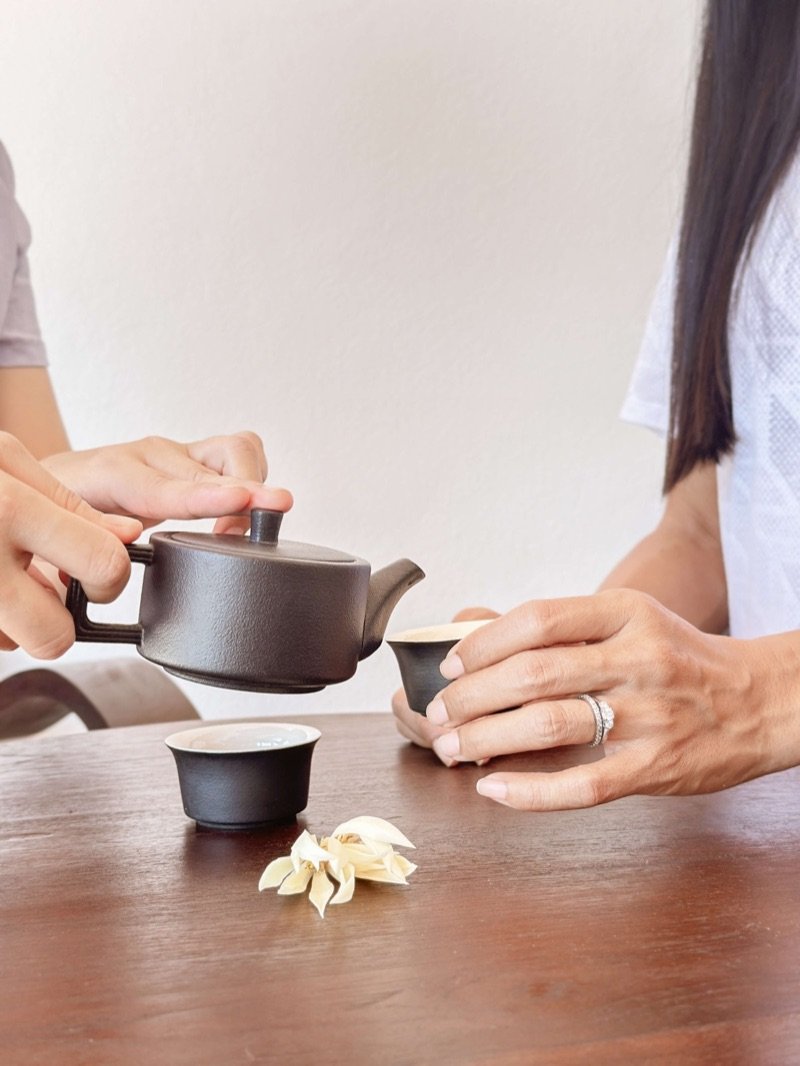
The Idea Behind Warming and Cooling Foods
In Traditional Chinese Medicine, every food carries an energetic quality that warms or cools the body, quite apart from its temperature on the plate. Warming foods gently raise the body's internal warmth and support digestion and circulation, while cooling foods clear heat and calm an overheated system. Eating well in TCM is not about counting calories. It is about choosing foods whose energetic nature balances your body and your environment. In a hot, humid climate like Koh Samui, that balance is what keeps your digestion steady and your energy stable through the day.
This framework is one of the most practical tools TCM offers, and you can start using it without ever stepping into a clinic. Once you understand whether your body and your climate are running hot, damp, or cold, you can adjust what you eat to match.
What Makes a Food Warming or Cooling
The warming or cooling nature of a food is a quality observed over centuries of practice, based on how the food tends to affect the body rather than its taste alone. As a rough guide, here is how foods sort out.
Warming foods tend to support circulation and digestion and suit people who feel cold, sluggish, or damp. Examples include ginger, cinnamon, garlic, onions, lamb, chicken, oats, and most cooked and lightly spiced dishes.
Cooling foods clear heat and suit people who run hot, feel inflamed, or are overexposed to the tropical sun. Examples include cucumber, watermelon, mint, mung beans, leafy greens, most raw fruit, and cold or iced dishes.
Neutral foods sit in the middle and form the backbone of a balanced diet. Examples include rice, most cooked grains, many beans, carrots, and pork. These are easy on the body and pair well with both warming and cooling choices.
The goal is not to eat only one category. It is to lean toward the foods that bring your body back to centre, given how you feel and what season you are in.
Eating for Digestion in a Hot Climate
Here is where many expats get tripped up. The instinct in the tropics is to reach for cold, raw, refreshing food: smoothies, big raw salads, iced drinks, lots of cold fruit. It feels right in the heat. But in TCM, the digestive system works best when it is kept warm, and a steady stream of cold and raw food weakens it over time.
The Spleen and Stomach, the central digestive organs in TCM, are described as preferring warmth. When you flood them with cold, they have to work harder to warm and transform that food, which drains energy and can leave you bloated, sluggish, and tired even when you have eaten well. This is one of the most common patterns we see in newcomers to Koh Samui, and it is covered in more depth in our guide to living well in the tropics.
The practical takeaway is gentler than it sounds. You do not have to give up cooling foods in the heat. You simply balance them. A few warming touches keep digestion strong even when the climate and your appetite pull you toward cold and raw.
- Favour warm, cooked meals as your base, especially breakfast, and treat cold raw dishes as additions rather than the whole meal.
- Drink warm or room temperature water rather than iced drinks, which shock the digestive system.
- Add a little ginger, garlic, or warming spice to cooling meals to take the edge off their coldness.
- Eat at consistent times rather than skipping meals and overloading later, which strains digestion further.
- Notice how you feel after eating. Heaviness and bloating are signals that the balance has tipped too cold.
Matching Your Food to the Pattern and the Season
Beyond digestion, warming and cooling foods help you respond to how your body actually feels. If you run hot, break out easily, and feel inflamed, leaning toward cooling foods such as cucumber, watermelon, and mint helps clear that heat. If you feel cold, tired, and damp, with sluggish digestion, leaning toward warming foods such as ginger, cinnamon, and cooked meals rebuilds energy from the inside.
The seasons matter too. The hot season here, roughly March to May, is when cooling foods earn their place, helping the body shed excess heat. The wet season, around October to December on the east coast, brings dampness, and that is the time to favour warm, cooked, lightly spiced food and to ease off the sweet, raw, and very cold foods that feed dampness. Eating with the season rather than against it is one of the quiet secrets to staying well year round in the tropics.
When Food Is Not Enough on Its Own
Adjusting your diet is powerful, but it works best as part of a fuller picture. If you have persistent digestive trouble, low energy, or skin and sleep issues that food alone has not resolved, it is worth having your pattern assessed properly. Claire, who trained at Chengdu University of TCM, will read your pulse and tongue, identify whether heat, cold, or dampness is leading, and tailor dietary guidance to your situation. You can read how that first visit works in our guide on what to expect at your first acupuncture session.
Eating for your body and your climate is one of the most rewarding habits you can build here. If you would like guidance tailored to your own pattern, book a session at Piraluna and we will help you find the balance that suits you.