Why Are My Hands and Feet Always Cold?
If your hands and feet feel cold even in a warm room, if you reach for socks in bed every night, or if your circulation feels sluggish no matter the weather, Traditional Chinese Medicine has a clear way of understanding this. In TCM, persistent cold in the extremities usually points to weak or deficient yang energy, the warming force that your body relies on to keep blood moving all the way out to your fingers and toes. Moxibustion, the gentle warming of specific points with the herb mugwort, is one of the most direct tools we have for building that warmth back up. At Piraluna, it is one of the treatments Claire turns to most often for people who simply cannot get warm.
This post explains what cold patterns are in TCM, why moxibustion suits them so well, and what you can expect if you come in for treatment.
Cold Patterns in Traditional Chinese Medicine
Your body maintains a balance between warmth, called yang, and coolness, called yin. When yang energy is strong, blood and warmth circulate freely to every part of the body, including the hands and feet, which sit furthest from the core. When yang runs low, the body prioritises the centre and the extremities are the first to lose their warmth. This is why cold hands and feet are so often the earliest and most visible sign of a cold pattern.
Cold patterns rarely travel alone. Alongside cold extremities, people often notice some combination of the following.
- Low energy that dips in the afternoon, with a sense of being depleted rather than simply tired.
- A preference for warmth. You feel better with a hot drink or a hot water bottle, and worse in air conditioning.
- Sluggish circulation, sometimes with pale skin or a faintly bluish tinge to the fingers in cool conditions.
- Aches that improve with heat, particularly in the lower back, knees, or abdomen.
Several things drain yang over time. Long hours of overwork and stress, eating a lot of cold and raw food, and sleeping in heavily air conditioned rooms all allow cold to settle in. Women often notice it more during menstruation, after childbirth, and around perimenopause, when yang naturally fluctuates. None of this means anything is broken. It simply means the warming side of the balance needs support.
How Moxibustion Warms the Body
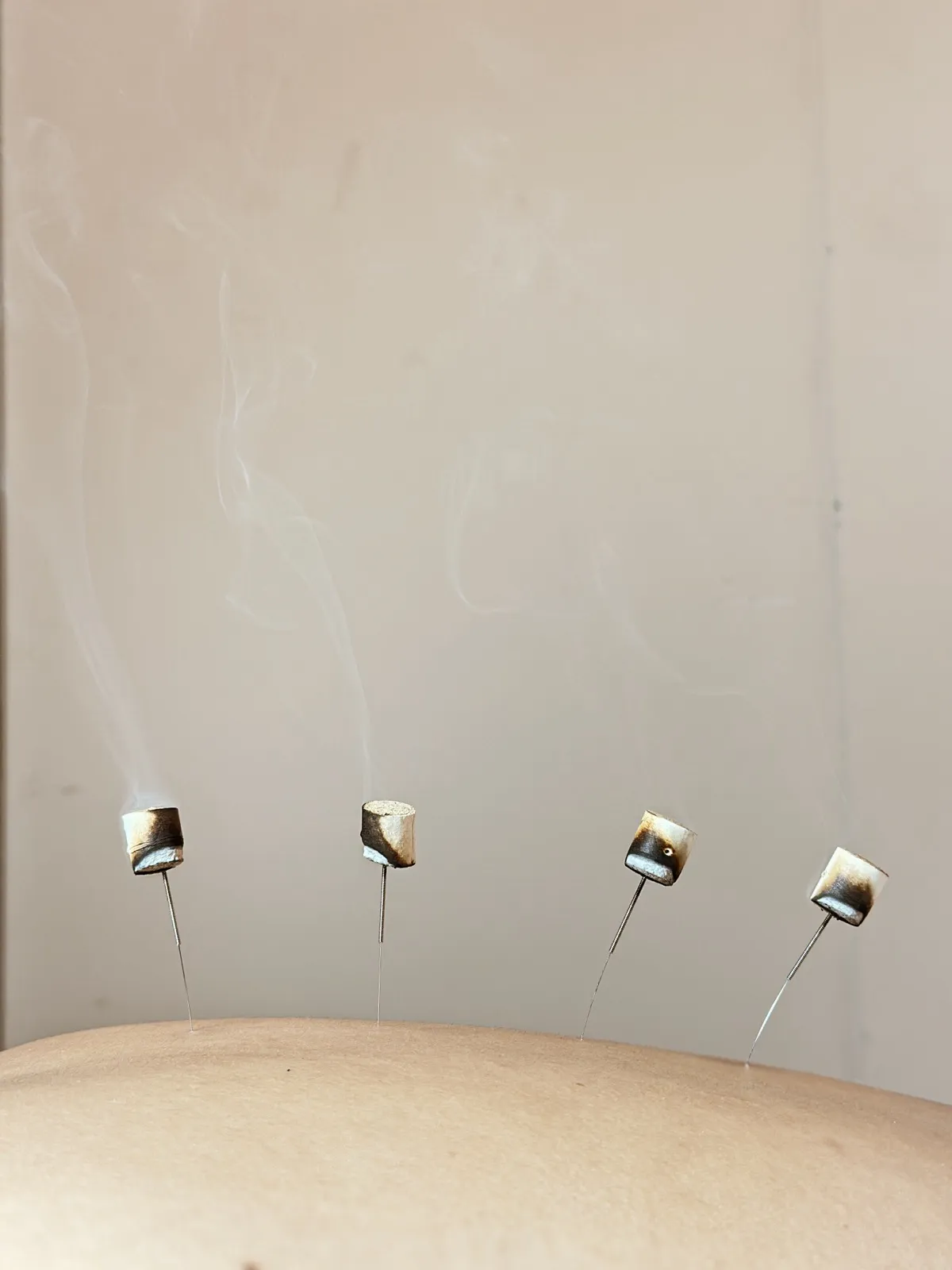
Moxibustion works by burning dried mugwort, known as moxa, close to the surface of the skin over chosen points. The herb gives off a deep, penetrating, infrared style heat that reaches well past the skin into the muscle and connective tissue beneath. In TCM terms, this warmth expels cold, invigorates the movement of blood, and rebuilds yang energy at its source.
For cold hands and feet specifically, the goal is not to warm the fingers and toes directly, although that can feel lovely. The real aim is to strengthen the warming centre of the body so that good circulation reaches the extremities on its own. Points on the lower abdomen, lower back, and lower legs are commonly used because they nourish the body's core warmth and the energy of the kidneys, which TCM considers the root of yang.
From a modern research perspective, studies have observed that moxibustion increases local blood circulation and supports immune activity. That fits neatly with the centuries old experience of practitioners who have used it to bring warmth and vitality back to depleted bodies. If you would like the fuller background on the herb and the method, our guide to what moxibustion is and how it works goes into more depth.
What a Session at Piraluna Looks Like
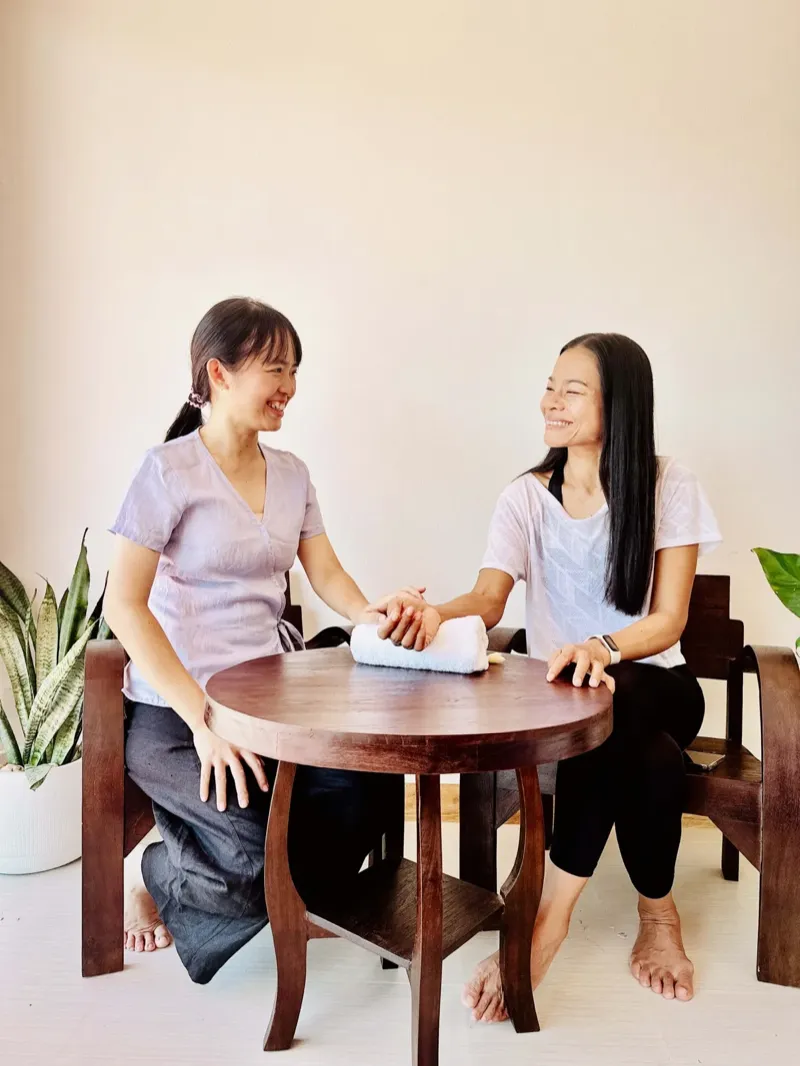
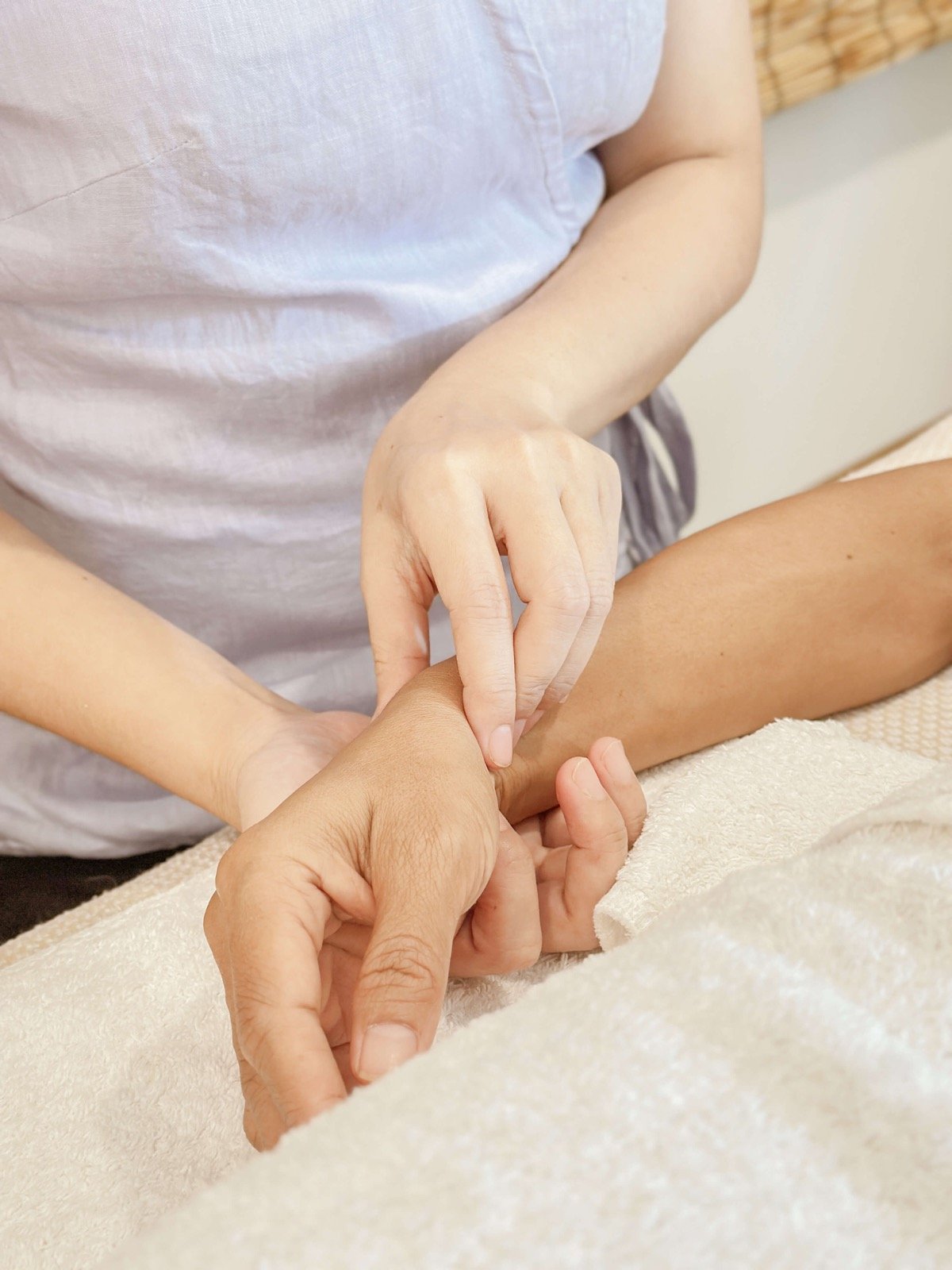
Every treatment begins with a consultation. Claire trained at Chengdu University of TCM and has worked with well over a thousand patients across more than five years of practice, and she uses that experience to read your specific pattern rather than apply a fixed routine. She will check your pulse and tongue and ask about your energy, your digestion, how you respond to warmth and cold, and your sleep. This tells her whether a cold pattern is genuinely behind your symptoms and which points will help most.
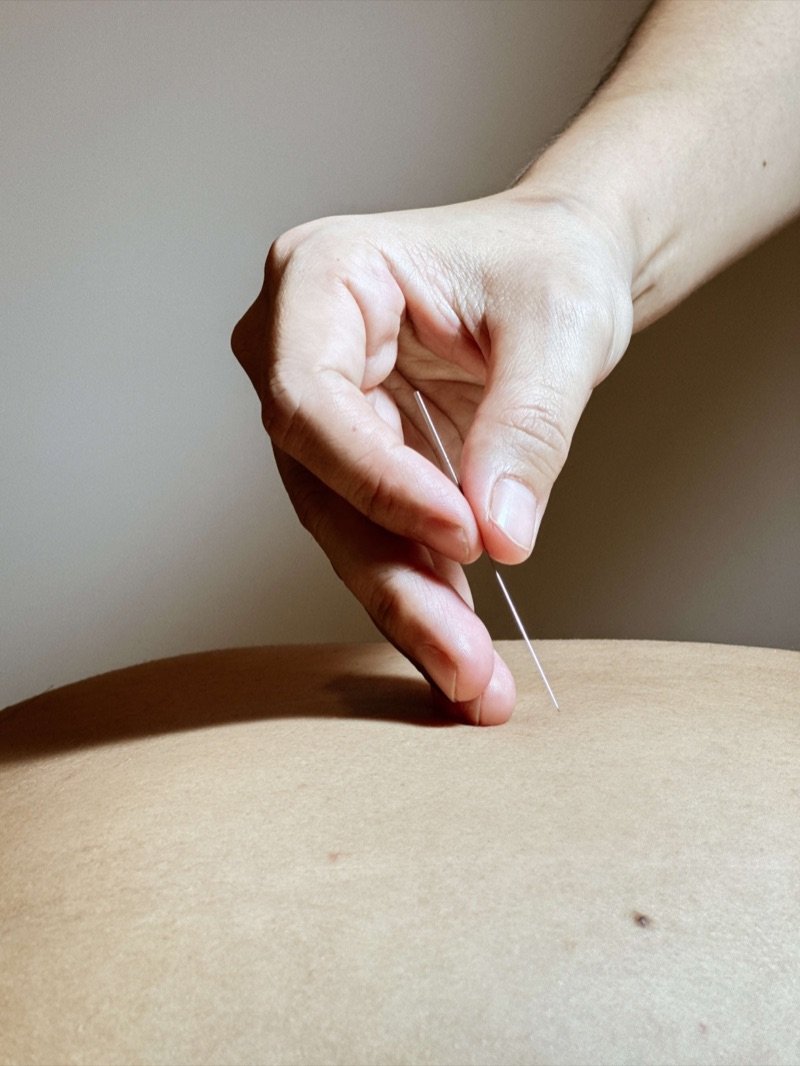
During treatment you lie comfortably on the table. If acupuncture is part of the plan, the needles go in first, then Claire lights a moxa stick and holds it over the chosen points, building a gentle warmth that spreads outward. The heat is never sharp. She keeps it in the comfortable zone and adjusts the moment you tell her it is warm enough. Most people find it deeply soothing, and many drift into a calm, drowsy state.
A typical session lasts around 45 to 60 minutes. Afterward you may feel pleasantly warm and grounded, sometimes for the rest of the day. Moxibustion and acupuncture work especially well together for cold patterns, because the needles move stagnant energy while the moxa supplies the warmth the body lacks. Patients often tell us the lasting warmth is what surprises them most.
Is Moxibustion Right for You?
Moxibustion suits people who feel the cold easily, whose energy runs low, and whose aches ease with warmth. It is not the right choice for everyone. People with strong heat signs, such as feeling hot most of the time, inflammation, or fever, are better served by other techniques, since adding warmth would not help. This is exactly why the consultation matters, and why we never apply moxibustion as a one size fits all fix.
If cold hands and feet have been a quiet background frustration for years, it is worth finding out whether a cold pattern is the cause. To understand whether this gentle therapy is genuinely safe and appropriate for your situation, you may also like our honest look at whether acupuncture and related therapies are safe. When you are ready, book a session at Piraluna and let us help your body find its warmth again.