L'articulation qui ne prend jamais de repos
Le genou est l'une des articulations les plus sollicitées du corps. Il absorbe les chocs à chaque pas, stabilise le corps en position assise et debout, et supporte la totalité de votre poids chaque fois que vous montez des escaliers, vous accroupissez ou marchez sur un terrain irrégulier. La plupart des gens ne pensent pas à leurs genoux jusqu'à ce qu'ils commencent à faire mal. Au moment où la douleur devient une réalité quotidienne, le déséquilibre sous-jacent s'est généralement installé depuis des mois, voire des années.
À Piraluna, la douleur au genou est l'un des motifs de consultation les plus fréquents. Nous la voyons chez des voyageurs qui ont passé des mois à randonner, à faire de la moto et à pousser leur corps à travers l'Asie du Sud-Est. Chez des expatriés plus âgés confrontés à l'apparition progressive de l'arthrose. Chez des personnes actives qui ont mal atterri ou se sont surentraînées, et chez des personnes qui restent assises pendant de longues heures et ont perdu la force musculaire qui maintient l'articulation stable.
Les présentations sont différentes, mais la question est habituellement la même : existe-t-il quelque chose qui puisse véritablement aider, ou est-ce simplement quelque chose que je devrai gérer pour le reste de ma vie ?
Pour la plupart des cas de douleur au genou, l'acupuncture offre une réponse concrète.
Comment la MTC comprend la douleur au genou
La médecine traditionnelle chinoise ne traite pas la douleur au genou comme un diagnostic unique. Elle examine le déséquilibre sous-jacent, qui détermine à la fois la cause et l'approche thérapeutique la plus efficace.
Trois principaux déséquilibres expliquent la majorité des présentations de douleur au genou.
La déficience rénale est le déséquilibre sous-jacent le plus courant chez les personnes de plus de 40 ans. En MTC, le système Rénal gouverne les os et est étroitement lié aux genoux. Les textes classiques décrivent les genoux comme la « maison » du Rein. Lorsque l'essence et l'énergie rénales déclinent avec l'âge ou le surmenage chronique, les genoux commencent à perdre leur soutien structurel. Le résultat est une apparition progressive de douleurs, de faiblesse et de raideur typiquement aggravées après une activité prolongée ou en station debout prolongée. Le bas du dos est souvent impliqué également, car le même déséquilibre de déficience affecte les deux zones. Ce déséquilibre correspond étroitement à ce que la médecine occidentale diagnostique comme une arthrose du genou précoce à modérée.
Le syndrome Bi est le terme de MTC pour l'obstruction dans les articulations causée par des pathogènes externes, spécifiquement le Vent, le Froid et l'Humidité. Ces pathogènes peuvent envahir l'articulation et bloquer la circulation normale du qi et du sang, causant douleur, raideur et mobilité réduite. Le syndrome Bi de type Froid produit une douleur fixe et intense qui s'aggrave considérablement par temps froid et s'améliore avec la chaleur. Le syndrome Bi de type Humidité produit une douleur sourde, lourde et gonflée qui est pire par temps humide et peut s'accompagner d'un gonflement visible de l'articulation. Pour toute personne vivant à Koh Samui, la saison des pluies déclenche ou aggrave souvent le syndrome Bi de type Humidité, en particulier chez les personnes présentant déjà une déficience rénale. Le syndrome Bi de type Vent produit une douleur plus variable et migrante qui se déplace d'une articulation à l'autre.
La stase de sang est typiquement associée à une blessure, qu'elle soit récente ou ancienne. En MTC, un traumatisme perturbe la circulation fluide du sang dans la zone locale, causant un schéma de douleur fixe et aiguë qui peut s'accompagner de gonflement, d'ecchymoses ou d'une sensation de tension dans l'articulation. Les anciennes blessures jamais complètement résolues sont une source courante de problèmes persistants au genou. L'articulation peut avoir guéri structurellement mais le schéma de stase persiste, contribuant à un inconfort récurrent et une amplitude de mouvement réduite.
Ces trois déséquilibres se chevauchent fréquemment. Un patient plus âgé peut avoir une déficience rénale comme racine avec un syndrome Bi de type Humidité en couche supérieure, déclenché par la saison des pluies ou par une climatisation puissante. Un patient plus jeune peut avoir un schéma de stase de sang dû à une ancienne blessure sportive avec un syndrome Bi de type Froid qui s'embrase pendant la saison des pluies. Le traitement est ajusté pour traiter la combinaison présente.
Ce que l'acupuncture fait pour le genou
L'acupuncture agit sur le genou par plusieurs mécanismes soutenus à la fois par la théorie de la MTC et la recherche moderne.
D'un point de vue physiologique, les aiguilles d'acupuncture placées autour du genou stimulent le flux sanguin local, contribuant à éliminer l'inflammation et à apporter oxygène et nutriments à l'articulation. Le genou a un apport sanguin relativement pauvre par rapport à d'autres tissus, ce qui est l'une des raisons pour lesquelles le cartilage se répare lentement. Tout ce qui améliore la circulation dans la zone soutient le processus naturel de guérison.
L'acupuncture déclenche également la libération d'endorphines et d'enképhalines, les antidouleurs naturels du corps. Ceux-ci se fixent sur les mêmes récepteurs que les analgésiques pharmaceutiques mais sans les effets secondaires. L'effet ne consiste pas simplement à masquer la douleur. Il change véritablement le signal douloureux au niveau du système nerveux.
L'aiguilletage local autour de l'articulation réduit l'inflammation en modulant la libération de cytokines pro-inflammatoires. Pour l'arthrose du genou spécifiquement, la recherche montre des réductions mesurables des marqueurs inflammatoires dans le liquide synovial de l'articulation après un traitement d'acupuncture.
Du point de vue de la MTC, l'objectif est de restaurer la libre circulation du qi et du sang à travers le genou et ses méridiens associés, de traiter le déséquilibre de déficience ou d'excès sous-jacent, et de soutenir les systèmes organiques (Rein, Foie, Rate) qui gouvernent la santé des os, des tendons et des articulations.
La base de preuves pour l'acupuncture dans la douleur au genou est l'une des plus solides du domaine. Une grande méta-analyse sur données individuelles publiée par l'Acupuncture Trialists Collaboration, s'appuyant sur les données de près de 18 000 patients à travers 39 essais de haute qualité, a conclu que l'acupuncture produisait des améliorations cliniquement significatives de la douleur au genou qui persistaient bien au-delà de la fin du traitement. L'ampleur de l'effet était substantiellement supérieure à ce qui est habituellement obtenu avec les anti-inflammatoires seuls.
Points utilisés pour la douleur au genou
Votre praticienne sélectionnera les points en fonction de votre déséquilibre spécifique, mais plusieurs points sont utilisés de manière constante pour les pathologies du genou.
Les points Xiyan, parfois appelés les « yeux du genou », sont deux petites dépressions de chaque côté de la rotule. L'aiguilletage de ces points traite directement la douleur locale et l'inflammation dans l'articulation. Ils comptent parmi les points les plus couramment utilisés pour toute pathologie du genou.
Estomac 36 (Zusanli) est situé juste en dessous du bord externe du genou, sur la face antérieure de la jambe. C'est l'un des points les plus importants de tout le corps, utilisé pour renforcer le qi, soutenir la digestion et tonifier l'ensemble du système. Pour la douleur au genou associée à une déficience rénale ou une faiblesse générale, ce point est presque toujours inclus.
Rate 9 (Yinlingquan) se trouve sur le bord interne de la jambe juste en dessous du genou et constitue le point principal pour éliminer l'Humidité. Si le gonflement, la lourdeur ou la raideur de l'articulation font partie du tableau, ce point sera central dans le traitement.
Vésicule biliaire 34 (Yanglingquan) est situé sur le côté externe de la jambe, juste en dessous du genou. En MTC, c'est le « point d'influence » pour tous les tendons et ligaments du corps. Pour la douleur au genou impliquant les tendons, une laxité ligamentaire ou des problèmes de structure articulaire plutôt que simplement de l'inflammation, ce point est particulièrement précieux.
Vessie 40 (Weizhong), situé à l'arrière du genou, est un point classique pour tous les troubles du genou. Le texte classique dit « pour le dos et les genoux, cherchez Weizhong ». Il est également utilisé pour libérer la chaleur et éliminer la stase de sang de l'articulation.
Pour les déséquilibres de déficience rénale, des points sur la cheville comme Rein 3 (Taixi) et Rein 7 (Fuliu) sont inclus pour traiter la cause profonde plutôt que les seuls symptômes locaux.
Les points Ashi (points sensibles directement sur ou autour de l'articulation) sont souvent ajoutés en fonction de l'endroit où le patient ressent le plus de sensibilité lors de l'évaluation.
Le déroulement d'une séance à Piraluna
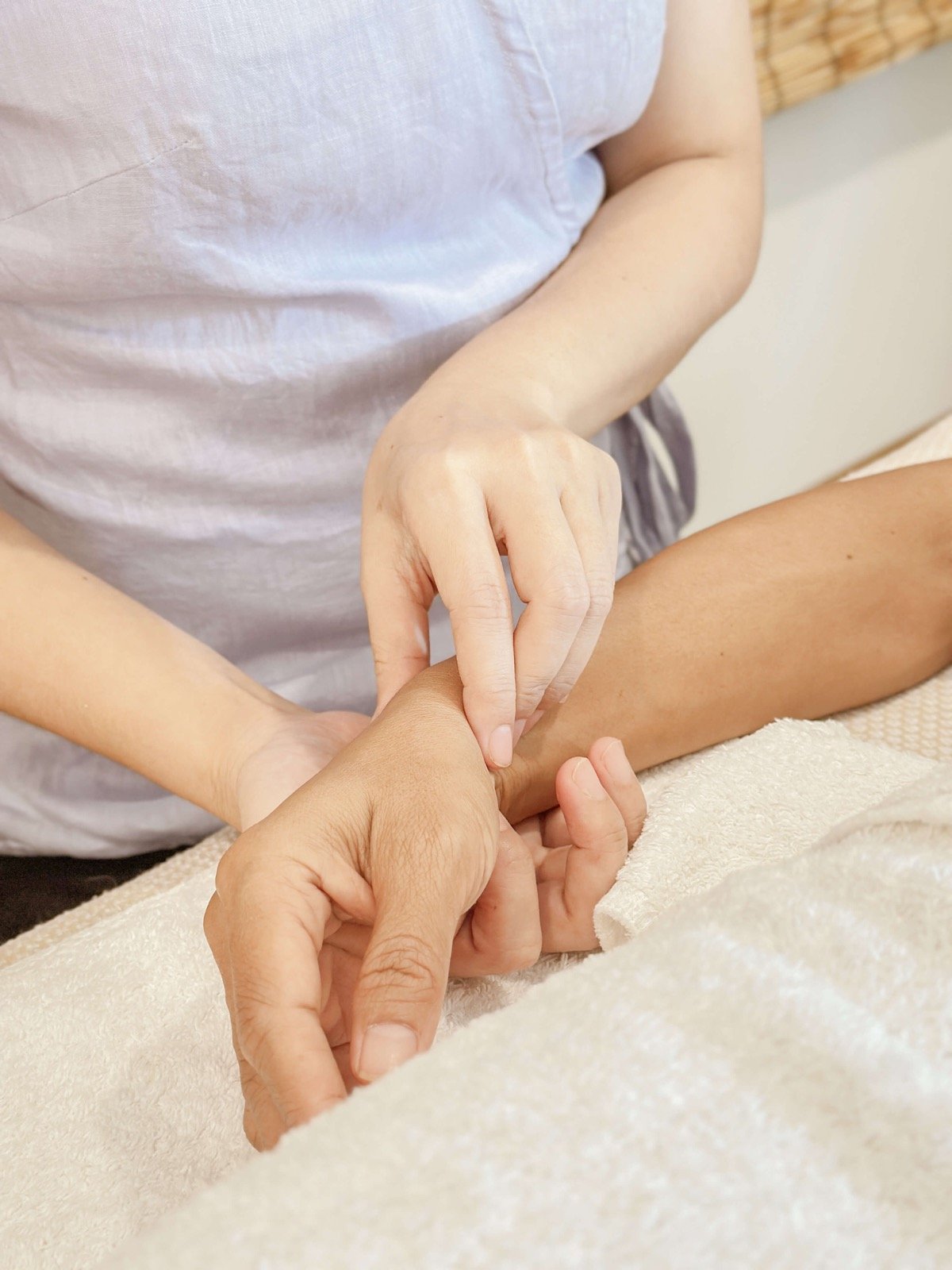
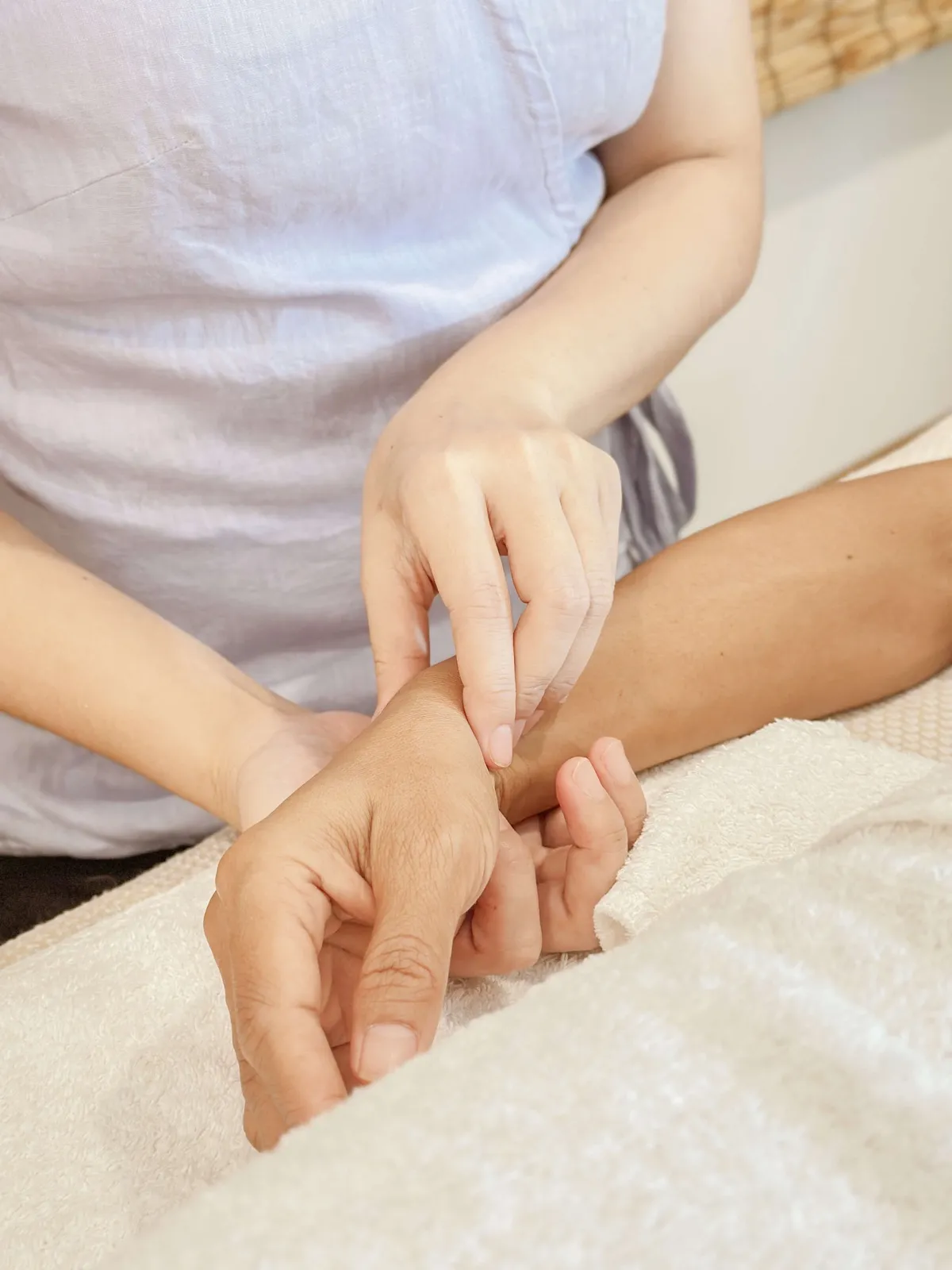
Votre première séance commence par une consultation détaillée. Claire vous interrogera sur le début et les circonstances de la douleur, sa localisation précise (à l'intérieur de l'articulation, sur le bord externe, derrière la rotule, à l'arrière du genou), ce qui l'améliore ou l'aggrave, et quel est votre niveau d'activité et votre état de santé général. Elle prendra également votre pouls et examinera votre langue, qui fournissent des informations diagnostiques importantes sur votre déséquilibre global en MTC.
Elle palpera ensuite le genou lui-même, recherchant les zones de sensibilité, de chaleur, de gonflement et vérifiant l'amplitude de mouvement. Cette évaluation manuelle fait partie de ce qui rend chaque traitement spécifique à votre cas.
Sur la base de l'ensemble des informations recueillies, elle concevra un traitement qui traite à la fois la douleur locale du genou et le déséquilibre sous-jacent qui l'entretient. Vous serez installé confortablement tandis que les aiguilles sont placées autour et parfois à distance du genou. Les points situés sous le genou sur la jambe et la cheville sont souvent inclus car ils agissent par les voies des méridiens plutôt que simplement localement.
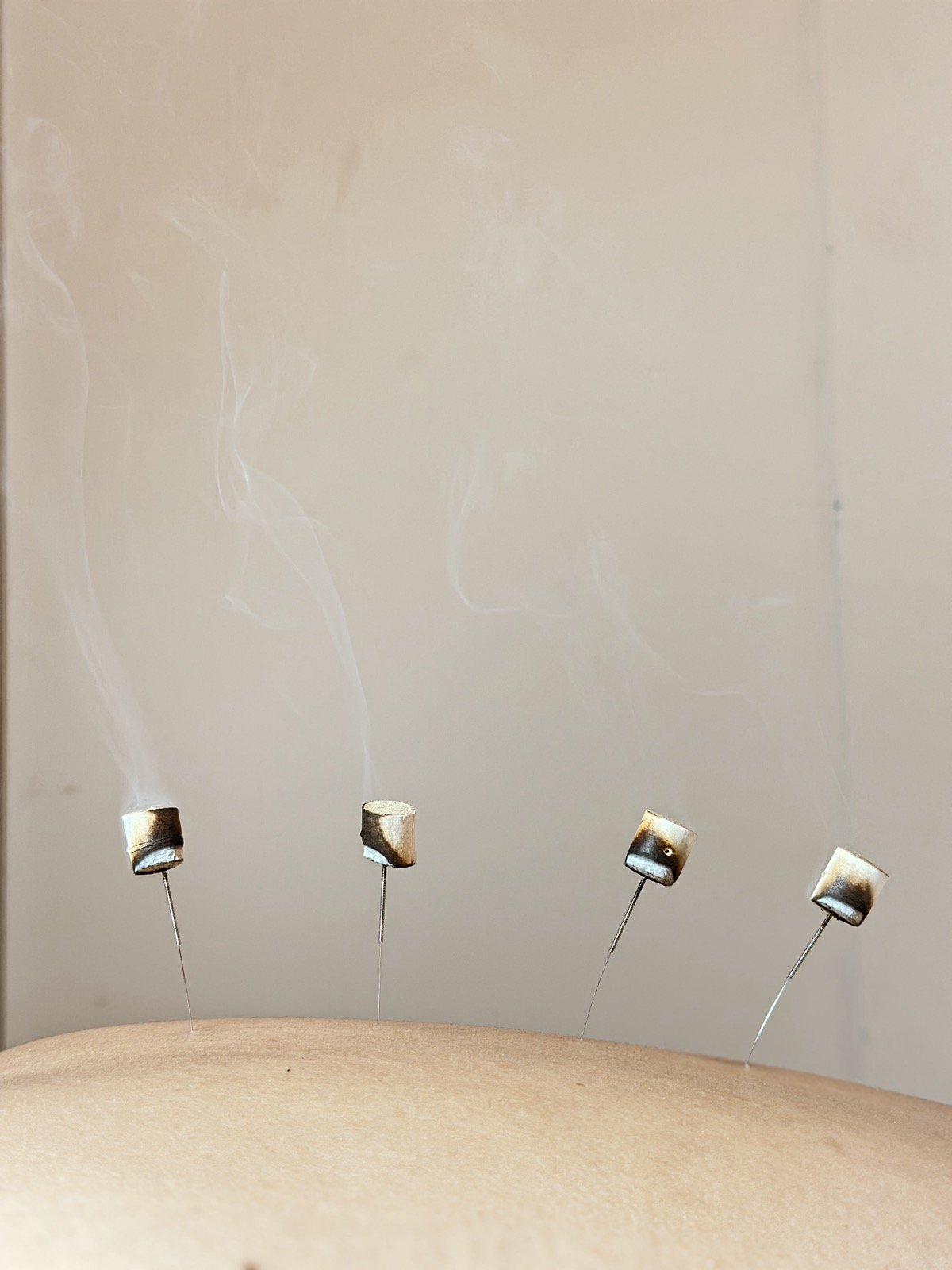
Pour les douleurs au genou avec un déséquilibre de Froid ou d'Humidité, la moxibustion est fréquemment ajoutée. La chaleur de l'herbe brûlée chasse le Froid et l'Humidité de l'articulation et tonifie le Rein et la Rate. De nombreux patients décrivent la combinaison d'acupuncture et de moxibustion sur un genou froid et raide comme l'une des sensations de soulagement les plus immédiates qu'ils aient connues.
Vous vous reposerez avec les aiguilles en place pendant 20 à 40 minutes. La plupart des patients sentent le genou nettement plus souple à la fin de la séance.
Combien de séances seront nécessaires ?
Cela dépend du type de douleur, de son ancienneté et du déséquilibre sous-jacent.
Pour une poussée aiguë due à la surutilisation, une entorse ou une aggravation liée au temps d'un état préexistant, trois à six séances produisent souvent un soulagement substantiel. Des traitements rapprochés (deux par semaine) tendent à mieux fonctionner pour les présentations aiguës.
Pour l'arthrose chronique du genou ou une douleur de longue date, un cycle de huit à douze séances est plus réaliste, avec des séances passant de deux par semaine à une par semaine puis une toutes les deux semaines à mesure que les symptômes s'améliorent. Les résultats s'accumulent avec le temps. Les deux ou trois premières séances établissent le schéma, et le bénéfice se cumule.
Pour la récupération post-blessure où la stase de sang est le déséquilibre dominant, l'intensité du traitement dépend de l'ancienneté de la blessure et des soins conventionnels déjà appliqués. Les blessures récentes avec un gonflement important peuvent nécessiter quelques séances de traitement doux avant qu'un aiguilletage local plus appuyé soit approprié.
La plupart des patients constatent une amélioration significative en trois séances. Quelques-uns remarquent un changement spectaculaire dès le tout premier traitement. Pour les pathologies de longue date, la patience fait partie du processus, mais la direction du changement est généralement claire dès le début.
Ce que vous pouvez faire entre les séances
L'acupuncture fonctionne mieux lorsqu'elle est combinée avec des habitudes quotidiennes sensées qui soutiennent l'articulation.
- Gardez le genou au chaud. Le Froid est l'un des principaux facteurs de douleur au genou en MTC. Si vous dormez avec la climatisation ou si vous êtes assis dans des environnements froids, couvrez le genou. C'est particulièrement important pendant la saison des pluies à Koh Samui.
- Renforcez les muscles de soutien. Les quadriceps (face avant de la cuisse) et les fessiers sont les principaux stabilisateurs de l'articulation du genou. Des exercices de renforcement doux réduisent la charge qui traverse l'articulation elle-même. Votre praticienne peut vous recommander des exercices appropriés en fonction de votre déséquilibre et de votre niveau de douleur.
- Évitez de rester assis trop longtemps sans bouger. La position assise prolongée affaiblit la circulation du qi dans les membres inférieurs et peut raidir l'articulation du genou. Levez-vous et faites une courte marche toutes les 30 à 40 minutes.
- Soutenez la fonction rénale par l'alimentation. En MTC, les aliments qui soutiennent le Rein comprennent les haricots noirs, les noix, les graines de sésame, le bouillon d'os et les légumineuses de couleur foncée. Ce ne sont pas des remèdes en soi, mais ils s'alignent avec la direction de traitement pour les déséquilibres de déficience rénale.
- Évitez les boissons très froides et les aliments crus. En MTC, le Froid et l'Humidité sont les principaux pathogènes externes qui aggravent les pathologies du genou. Les boissons glacées et les aliments crus et froids introduisent du Froid et de l'Humidité internes. Les aliments chauds et cuits sont systématiquement recommandés aux patients présentant des déséquilibres de syndrome Bi de type Froid ou Humidité.
Quand la douleur vous dit quelque chose
Toutes les douleurs au genou ne se valent pas, et elles ne sont pas toutes simplement dues à l'âge ou à l'usure. En MTC, le lien étroit du genou avec le Rein signifie qu'une douleur persistante ou qui s'aggrave au genou est souvent un signal concernant les réserves d'énergie profondes. C'est peut-être le signe que le corps est sous une pression soutenue significative, que ce soit par le surmenage, le stress chronique ou un déséquilibre sous-jacent présent depuis des années sans avoir été traité.
Bien traiter le genou, c'est bien traiter l'ensemble du système. Les améliorations que les patients constatent au niveau de leurs genoux durant une cure d'acupuncture s'accompagnent souvent d'améliorations de l'énergie, du sommeil et de la vitalité générale, car le déséquilibre de fond est traité en même temps que le symptôme local.
Si votre douleur au genou est présente depuis plus de quelques semaines, si elle affecte votre capacité à marcher, faire de l'exercice ou dormir confortablement, ou si elle revient sans cesse malgré le repos et les traitements conventionnels, une évaluation en MTC vaut la peine d'être envisagée.
À Piraluna, Claire reçoit des patients à tous les stades de douleur au genou, du gonflement post-blessure aigu à l'arthrose de plusieurs décennies. Chaque cas bénéficie de sa propre évaluation et de son propre plan de traitement. Réservez une séance et découvrez quel est votre déséquilibre spécifique et ce qu'il faudra pour le corriger.
Pas encore prêt à réserver ? Envoyez-nous un message ou contactez-nous sur WhatsApp et décrivez ce que vous ressentez. Nous serons ravis de vous donner une idée de si l'acupuncture est la bonne approche pour votre situation avant votre venue.
Combien de séances d'acupuncture faut-il pour la douleur au genou ?
Pour une douleur aiguë au genou due à une poussée récente ou une blessure mineure, trois à six séances suffisent souvent pour un soulagement significatif. Pour l'arthrose chronique du genou ou une douleur de longue date, un cycle de huit à douze séances est plus typique, avec une amélioration qui se construit progressivement. La plupart des patients constatent une réduction significative de la douleur dès les trois premières séances.
L'acupuncture peut-elle aider l'arthrose du genou ?
Oui. L'acupuncture est l'un des traitements les mieux documentés par la recherche pour l'arthrose du genou. De nombreux grands essais cliniques montrent que l'acupuncture réduit significativement la douleur et améliore la fonction par rapport à l'absence de traitement et à l'acupuncture factice. Elle agit en réduisant l'inflammation dans l'articulation, en améliorant la circulation et en traitant le déséquilibre sous-jacent en MTC (généralement une déficience rénale combinée au syndrome Bi).