Pourquoi les maux de tête reviennent sans cesse
Les maux de tête sont si courants que la plupart des gens les considèrent comme un phénomène normal de la vie. Vous attrapez un ibuprofène, attendez qu'il fasse effet et retournez travailler. Le mal de tête disparaît. Puis il revient. Vous prenez un autre comprimé. Avec le temps, vous commencez à vous demander si quelque chose d'autre ne se cache pas derrière.
À Piraluna, nous recevons des patients souffrant de maux de tête chroniques et de migraines chaque semaine. Pour beaucoup d'entre eux, le traitement conventionnel n'a apporté qu'un soulagement partiel. Les médicaments fonctionnent à court terme, mais les maux de tête reviennent, parfois plus fréquemment qu'avant. Ce phénomène, où les antidouleurs entraînent des céphalées de surconsommation médicamenteuse, est l'un des cercles vicieux les plus frustrants pour les personnes souffrant de céphalées chroniques.
L'acupuncture offre une approche différente. Au lieu de bloquer le signal douloureux, elle cherche à comprendre pourquoi la douleur est là. Cette question, posée correctement, mène à des traitements capables de briser le cycle plutôt que de simplement le gérer.
Comment la MTC catégorise les maux de tête
La médecine traditionnelle chinoise reconnaît depuis des milliers d'années que tous les maux de tête ne se ressemblent pas. L'emplacement de la douleur, sa nature, ses déclencheurs et ce qui la soulage fournissent des informations diagnostiques qui déterminent le traitement.
En MTC, les maux de tête sont compris selon leur profil énergétique plutôt que selon leur seule localisation. Voici les profils les plus courants que Claire observe à la clinique.
La montée du yang du foie est le profil le plus fréquent derrière les céphalées de tension et de nombreuses migraines. Le foie en MTC gouverne la libre circulation du qi dans tout le corps. Quand le stress, la frustration ou la pression chronique font surchauffer le foie, cet excès d'énergie monte et martèle les tempes et les côtés de la tête. Ces maux de tête s'accompagnent souvent d'irritabilité, d'yeux rouges, d'un goût amer dans la bouche ou d'une sensation de pression derrière les yeux. Ils tendent à s'aggraver sous l'effet du stress, après un mauvais sommeil ou suite à la consommation d'alcool.
La déficience de sang produit un mal de tête sourd et douloureux qui apparaît souvent l'après-midi ou après un effort physique. Si vos maux de tête ressemblent à un vide ou une pression vague au sommet ou à l'avant de la tête, et s'ils s'accompagnent de fatigue, de pâleur, d'un mauvais sommeil ou de règles légères, la déficience de sang peut en être la cause sous-jacente. Ce profil est fréquent chez les personnes qui travaillent de longues heures, sautent des repas et ne dorment pas assez.
Les glaires et l'humidité créent un mal de tête lourd et brumeux qui donne la sensation d'un bandeau serré autour de la tête. Les personnes présentant ce profil le décrivent souvent comme une lourdeur sourde plutôt qu'une douleur vive. C'est pire le matin ou par temps humide, et cela s'accompagne souvent de brouillard mental, de lenteur digestive ou d'une sensation d'épaisseur au fond de la gorge. Ce profil apparaît chez les personnes qui consomment beaucoup d'aliments lourds, gras ou sucrés, ou qui ont une fonction digestive affaiblie.
L'invasion de vent-froid est un schéma externe où l'air froid déclenche un mal de tête à l'arrière de la tête et de la nuque. Ce schéma s'accompagne souvent d'une nuque raide, de frissons et d'une aversion pour le vent ou le froid. Il est courant chez les personnes qui dorment avec la climatisation soufflant directement sur leur tête et leur nuque, ou qui passent fréquemment entre les températures chaudes extérieures et les espaces froids et climatisés.
La stase sanguine produit des maux de tête fixes et perçants qui reviennent exactement au même endroit à chaque fois. Ce schéma est associé à un antécédent de traumatisme crânien, de maladie prolongée ou de céphalées chroniques de longue date. La douleur est lancinante plutôt que pulsatile et peut s'aggraver la nuit.
Comprendre quel profil est à l'origine de vos maux de tête change tout dans le traitement. Deux personnes décrivant toutes deux des migraines peuvent recevoir des protocoles d'acupuncture complètement différents parce que le déséquilibre sous-jacent est différent. C'est pourquoi l'acupuncture peut fonctionner pour des personnes qui n'ont pas trouvé de soulagement avec les médicaments conventionnels.
Ce que dit la recherche sur l'acupuncture pour les maux de tête
L'acupuncture est l'une des thérapies complémentaires les plus étudiées pour les maux de tête. Les preuves scientifiques sont suffisamment solides pour que plusieurs grandes recommandations de santé incluent désormais l'acupuncture comme traitement recommandé pour les céphalées de tension et les migraines.
Une revue majeure de la Cochrane Database of Systematic Reviews, regroupant les données de plus de 4 000 patients à travers de multiples essais, a conclu que l'acupuncture était aussi efficace que les médicaments préventifs pour réduire la fréquence des migraines. Point essentiel : l'acupuncture y parvenait sans les effets secondaires qui accompagnent la plupart des traitements antimigraineux, notamment la prise de poids, la fatigue et les changements d'humeur.
La recherche montre que l'acupuncture agit par plusieurs mécanismes directement pertinents pour les maux de tête. Elle réduit la libération de neuropeptides inflammatoires qui sensibilisent les voies de la douleur dans le cerveau. Elle module les niveaux de sérotonine, qui jouent un rôle central dans le déclenchement des migraines. Elle réduit la tension musculaire dans la nuque, les épaules et les muscles sous-occipitaux qui contribuent aux céphalées de tension. Et elle régule le tonus vasculaire, impliqué dans la qualité pulsatile des migraines vasculaires.
De multiples études ont montré que l'acupuncture réduit la fréquence, la durée et l'intensité des migraines lorsqu'elle est utilisée en traitement préventif sur 6 à 12 semaines. De nombreux patients qui viennent à Piraluna pour des migraines chroniques constatent une réduction du nombre de maux de tête par mois et de la sévérité de ceux qui surviennent encore, dès les premières séances.
À quoi ressemble un traitement à Piraluna
Votre première séance commence par une consultation. Claire vous posera des questions détaillées sur vos maux de tête : où ils se situent, ce qu'ils provoquent comme sensation, leur fréquence, ce qui les déclenche, ce qui les améliore ou les aggrave, la durée de chaque épisode, et si vous ressentez des troubles visuels ou des nausées. Elle vous interrogera également sur votre sommeil, vos niveaux de stress, votre alimentation et votre digestion, car tous ces facteurs contribuent aux schémas de céphalées en MTC.
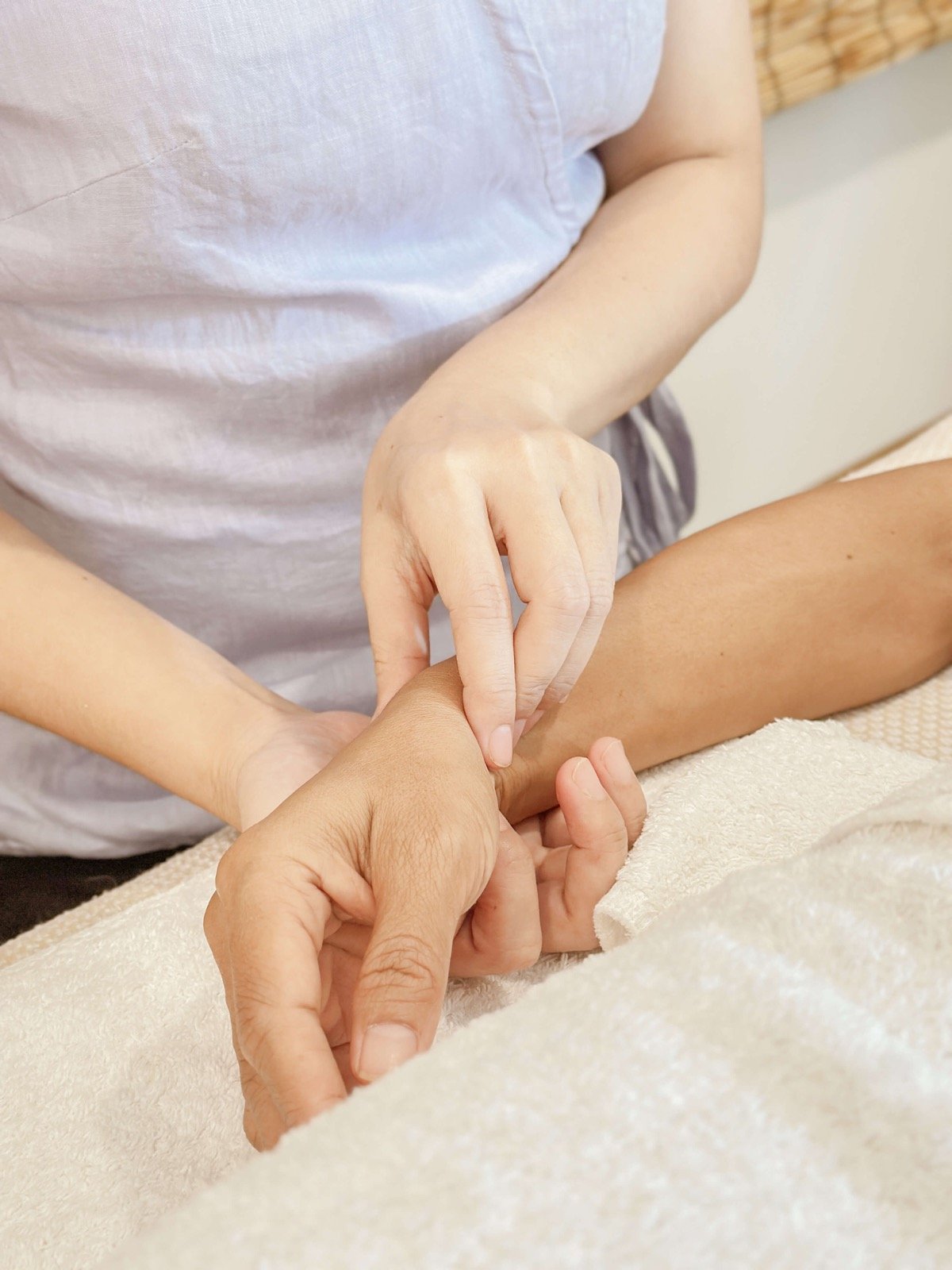
Elle vérifiera votre pouls et votre langue pour confirmer le déséquilibre sous-jacent. Cette évaluation fournit des informations qu'un simple questionnaire de symptômes ne peut pas capturer.
Sur la base de la consultation, elle conçoit un traitement ciblant votre profil spécifique. Pour la montée du yang du foie, l'accent est mis sur le calme du foie et la descente de l'excès d'énergie. Pour la déficience de sang, l'accent se porte sur la nutrition du sang et le soutien des organes qui le produisent. Chaque traitement est construit autour du profil, pas seulement de la localisation de la douleur.
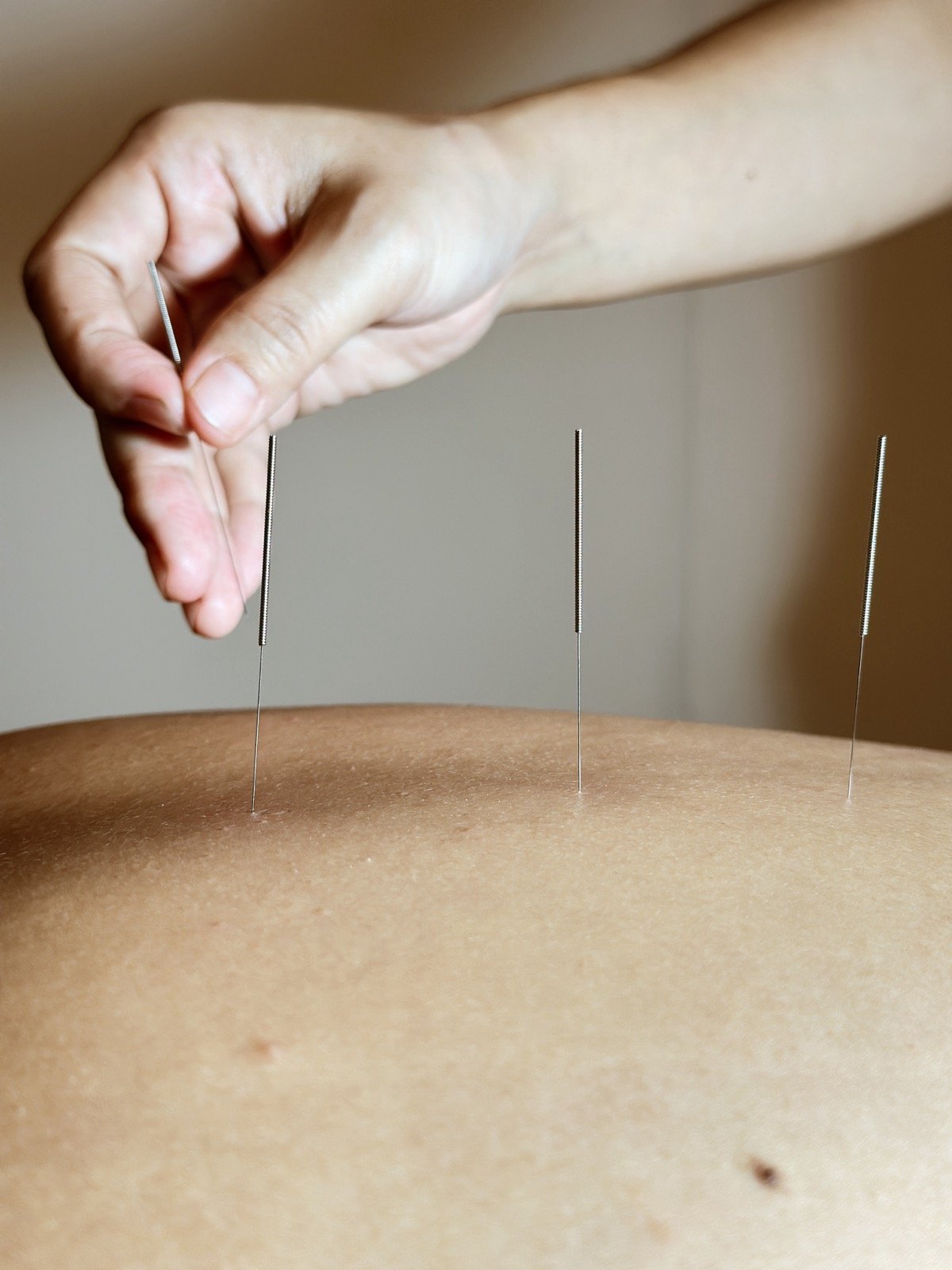
Le placement des aiguilles pour les maux de tête implique souvent des points sur les mains, les pieds et le bas des jambes plutôt que sur la tête elle-même. Ces points distaux agissent le long des méridiens qui se connectent à la tête et sont souvent plus efficaces que le placement d'aiguilles directement sur la zone douloureuse. Claire peut également utiliser des points locaux sur le cuir chevelu, les tempes ou la base du crâne pour un soulagement ciblé.
Pour les céphalées de tension avec une implication significative de la nuque et des épaules, les ventouses sur le haut du dos et la base du crâne peuvent réduire considérablement la tension musculaire qui pousse la douleur vers la tête. De nombreux patients sentent le mal de tête s'atténuer sensiblement pendant cette partie du traitement.
Points d'acupression à essayer chez vous
Vous n'avez pas besoin d'aiguilles pour commencer à bénéficier des techniques de MTC. L'acupression applique une pression ferme du doigt sur les mêmes points que l'acupuncture cible avec des aiguilles. Ce n'est pas aussi puissant qu'un traitement complet, mais cela peut apporter un soulagement significatif pendant un mal de tête et réduire la fréquence lorsque pratiqué régulièrement.
Appuyez fermement sur chaque point avec votre pouce ou le bout du doigt et maintenez pendant une à deux minutes. La pression doit être forte mais pas douloureuse. Respirez lentement en maintenant chaque point.
Gros Intestin 4 (Hegu) est le point le plus utilisé pour les maux de tête dans toute la MTC. Il se situe dans la commissure entre le pouce et l'index, au sommet du muscle lorsque vous serrez les deux doigts ensemble. Appuyer fermement sur ce point soulage les céphalées de tension, les maux de tête frontaux et ceux accompagnés de congestion des sinus. Il est particulièrement efficace lorsque la douleur est localisée à l'avant de la tête ou autour des yeux. Ne pas utiliser ce point pendant la grossesse.
Vésicule Biliaire 20 (Fengchi) se situe à la base du crâne, dans les creux de chaque côté des deux gros muscles qui descendent à l'arrière de la nuque. Placez vos pouces dans ces creux et appuyez vers l'intérieur et légèrement vers le haut. Ce point libère la tension à la base du crâne et est l'un des points principaux pour les céphalées occipitales, les maux de tête liés à la tension cervicale et les migraines qui commencent par une raideur à l'arrière de la tête.
Foie 3 (Taichong) se trouve sur le dessus du pied, dans le creux entre le premier et le deuxième métatarse, environ deux largeurs de doigt au-dessus de la commissure entre le gros orteil et le deuxième orteil. Ce point calme le foie et fait descendre l'excès d'énergie, ce qui le rend essentiel pour les maux de tête liés au stress ou à l'irritabilité. Combiné avec Gros Intestin 4, ces deux points forment un duo classique appelé les Quatre Portes qui fait circuler puissamment le qi dans tout le corps et est très efficace contre les céphalées de stress et de tension.
Triple Réchauffeur 5 (Waiguan) se trouve sur le dos de l'avant-bras, deux largeurs de doigt au-dessus du pli du poignet, entre les deux os de l'avant-bras. Ce point est particulièrement utile pour les maux de tête unilatéraux et les migraines aux tempes. Il agit le long des méridiens de la Vésicule Biliaire et du Triple Réchauffeur qui traversent les côtés de la tête et est souvent combiné avec Vésicule Biliaire 20 pour les migraines.
Combien de séances faut-il prévoir ?
Cela dépend de la durée et de la sévérité de vos maux de tête.
Pour des maux de tête occasionnels, une à trois séances peuvent apporter un soulagement significatif. De nombreux patients viennent pendant ou juste après un mal de tête et constatent qu'un seul traitement raccourcit sa durée et réduit le besoin d'antidouleurs.
Pour les maux de tête chroniques survenant plusieurs fois par semaine, ou pour la prévention des migraines, un protocole soutenu produit les meilleurs résultats. La plupart des protocoles de prévention des céphalées recommandent une séance d'acupuncture hebdomadaire pendant six à douze semaines. Durant cette période, la plupart des patients constatent une réduction progressive de la fréquence. À la sixième séance, beaucoup rapportent que les maux de tête sont moins fréquents, moins sévères, ou les deux.
Une fois la fréquence maîtrisée, des séances d'entretien toutes les deux à quatre semaines peuvent empêcher le schéma de revenir. De nombreux patients à Piraluna qui souffraient auparavant de migraines hebdomadaires invalidantes viennent désormais une fois par mois pour l'entretien et n'ont plus eu besoin de médicaments contre la migraine depuis des mois.
Vous n'avez pas à gérer les maux de tête éternellement
Les maux de tête chroniques peuvent devenir si familiers qu'il est difficile d'imaginer la vie sans eux. Mais familier ne veut pas dire permanent. Les déséquilibres derrière la plupart des maux de tête peuvent être identifiés et traités. Le système nerveux peut être apaisé. Les déclencheurs peuvent être réduits. Le cercle vicieux peut être brisé.
À Piraluna à Koh Samui, Claire a traité de nombreux patients qui venaient sans être sûrs que quoi que ce soit puisse changer leur schéma de céphalées. Certains souffraient de migraines hebdomadaires depuis des années. Au terme d'un protocole de traitement, la plupart ont connu une amélioration significative et durable.
Si les maux de tête vous privent de temps, d'énergie ou de qualité de vie, réservez une séance à Piraluna et découvrez ce qui les provoque. La réponse pourrait vous surprendre, et le soulagement pourrait arriver plus vite que vous ne le pensez.
Si la qualité du sommeil est liée à votre schéma de céphalées (et pour beaucoup de gens, c'est le cas), téléchargez notre guide gratuit d'acupression et apprenez trois points pour vous aider à dormir plus profondément ce soir.