Votre intestin essaie de vous dire quelque chose
Vous avez essayé les régimes d'éviction. Vous avez pris des probiotiques. Vous avez peut-être eu une coloscopie revenue normale. On vous a dit que c'était « juste un SII » et on vous a remis une ordonnance pour quelque chose qui gère les symptômes mais ne les résout jamais. Si cela vous parle, vous n'êtes pas seul, et il existe une autre voie.
La Médecine Traditionnelle Chinoise traite les troubles digestifs depuis plus de deux mille ans, avec une sophistication que la gastro-entérologie moderne commence tout juste à apprécier. Là où la médecine conventionnelle peine souvent face aux troubles fonctionnels digestifs comme le SII parce qu'il n'y a pas de lésion structurelle visible à traiter, la MTC excelle précisément parce qu'elle a été conçue pour identifier et corriger les déséquilibres fonctionnels avant qu'ils ne deviennent une maladie structurelle.
L'acupuncture pour la santé digestive est l'une des applications les mieux étayées de la MTC, soutenue par un corpus croissant de recherches cliniques et des millénaires d'observation clinique.
Comment la MTC comprend la digestion
En MTC, la digestion est gouvernée principalement par deux systèmes organiques : la Rate et l'Estomac. Ces termes en MTC désignent des systèmes fonctionnels qui recoupent mais dépassent leurs homologues anatomiques occidentaux.
La Rate est l'organe central de la digestion en MTC. Son rôle est de transformer la nourriture et les boissons en qi (énergie) et en sang utilisables, et de transporter ces substances dans tout le corps. La Rate aime la chaleur, la régularité et la modération. Elle est affaiblie par les aliments crus et froids, les habitudes alimentaires irrégulières, l'inquiétude excessive et la rumination, les environnements humides et le surmenage chronique. Quand les praticiens de MTC disent que la Rate est « en vide », ils veulent dire que le système digestif a perdu sa capacité à traiter efficacement la nourriture et à en extraire la nutrition.
L'Estomac reçoit la nourriture et commence le processus de « décomposition et maturation », qui est la façon dont la MTC décrit la dégradation des aliments. L'Estomac aime l'humidité et n'aime pas la sécheresse. Son qi descend naturellement, envoyant les aliments transformés vers le bas du tube digestif. Lorsque le qi de l'Estomac se rebelle vers le haut au lieu de descendre, le résultat est des nausées, un reflux acide, des éructations et des vomissements.
Le Foie joue un rôle de soutien crucial. En MTC, le Foie assure la circulation harmonieuse du qi dans tout le corps, y compris dans le système digestif. Lorsque le qi du Foie stagne, généralement à cause du stress, de la frustration ou des émotions refoulées, il peut envahir la Rate et l'Estomac, perturbant leur fonctionnement. Ce schéma, appelé « le Foie envahit la Rate », est l'explication de la MTC pour pourquoi votre digestion se dérègle quand vous êtes stressé. C'est aussi le schéma le plus courant derrière le SII.
Les schémas de MTC derrière les problèmes digestifs
Plutôt que de donner à chaque patient souffrant de ballonnements ou de transit irrégulier le même diagnostic, la MTC identifie des schémas spécifiques. Votre schéma détermine votre traitement.
Le vide de qi de la Rate est le schéma digestif le plus fondamental. Les symptômes comprennent des ballonnements après les repas, de la fatigue (surtout après manger), des selles molles ou des aliments non digérés dans les selles, un mauvais appétit, une sensation de lourdeur dans les membres et une langue pâle et gonflée. Ce schéma se développe à cause d'habitudes alimentaires chroniquement mauvaises, d'une consommation excessive d'aliments froids et crus, de l'inquiétude et du surmenage mental, et de maladies prolongées. Il est extrêmement fréquent chez les voyageurs et les expatriés dont la digestion a été sollicitée par des changements alimentaires constants et les climats tropicaux.
Le vide de yang de la Rate est une version plus profonde du vide de qi de la Rate avec du froid en plus. En plus des symptômes ci-dessus, on retrouve une sensation de froid dans l'abdomen, une préférence pour les aliments et boissons chauds, des diarrhées aqueuses (surtout le matin) et des extrémités froides. Ce schéma se développe souvent lorsque le vide de qi de la Rate n'est pas traité ou lorsqu'il y a une exposition excessive au froid, que ce soit par le climat, les boissons froides ou trop d'aliments crus.
La stagnation du qi du Foie envahissant la Rate est le schéma classique du SII. La présentation caractéristique est celle de symptômes digestifs qui fluctuent avec le stress et les émotions. Les symptômes comprennent une alternance de constipation et de diarrhée, des douleurs abdominales soulagées par les selles, une distension et des ballonnements qui se déplacent dans l'abdomen, de l'irritabilité et une sensation d'oppression dans la poitrine ou les côtes. Les patients présentant ce schéma remarquent souvent que leur digestion va bien quand ils sont détendus et en vacances, mais se dérègle pendant les périodes de stress. Le diagnostic occidental de « SII mixte » ou « SII alternant » correspond étroitement à ce schéma de MTC.
La chaleur-humidité dans l'Estomac et les Intestins produit des symptômes plus aigus : diarrhée urgente, sensation de brûlure pendant les selles, selles malodorantes, crampes abdominales, possible présence de mucus ou de sang dans les selles, soif sans envie de boire, et un enduit lingual épais et jaune. Ce schéma peut se développer à cause d'une consommation excessive d'aliments gras, épicés ou transformés, d'alcool, ou d'infections bactériennes et parasitaires, qui ne sont pas rares en milieu tropical.
La stagnation alimentaire survient lorsque la capacité digestive de l'Estomac est dépassée. Les symptômes comprennent une sensation de plénitude qui ne se résout pas, des éructations avec un goût aigre ou pourri, des nausées, une aversion pour la nourriture et une distension qui s'aggrave à la pression. C'est le schéma derrière le « coma alimentaire » poussé à l'extrême, et il chevauche souvent d'autres schémas dans les cas chroniques.
Le vide de yin de l'Estomac produit un ensemble de symptômes différent : bouche et gorge sèches, faim sans envie de manger, sensation de brûlure dans l'estomac, selles sèches et une langue rouge avec peu ou pas d'enduit. Ce schéma peut se développer à partir d'une chaleur chronique de l'Estomac, d'une utilisation prolongée d'antibiotiques, ou des effets déshydratants de l'alcool et de la caféine.
Comment l'acupuncture traite les troubles digestifs
Les mécanismes par lesquels l'acupuncture agit sur le système digestif sont bien documentés.
Régulation de la motilité gastrique. Il a été démontré que l'acupuncture régule la motilité gastrique et intestinale, la ralentissant lorsqu'elle est trop rapide (diarrhée) et l'accélérant lorsqu'elle est trop lente (constipation). Cet effet régulateur bidirectionnel est unique à l'acupuncture et explique pourquoi la même approche thérapeutique peut aider à la fois le SII constipation et le SII diarrhée.
Réduction de l'hypersensibilité viscérale. L'un des traits distinctifs du SII est l'hypersensibilité viscérale, où l'intestin surréagit à des stimuli normaux comme les gaz ou une légère distension. Il a été démontré que l'acupuncture réduit cette hypersensibilité en modulant le traitement de la douleur dans la moelle épinière et le cerveau, recalibrant efficacement le seuil de sensibilité de l'intestin.
Activation du nerf vague. L'acupuncture stimule le nerf vague, qui contrôle l'état parasympathique de « repos et digestion ». Cela favorise les sécrétions digestives, améliore le flux sanguin intestinal et réduit l'état inflammatoire qui caractérise de nombreux troubles digestifs. L'axe intestin-cerveau, le système de communication bidirectionnel entre l'intestin et le cerveau, est de plus en plus reconnu comme central dans le SII, et l'acupuncture module directement cet axe.
Modulation de l'inflammation et du système immunitaire. L'acupuncture réduit l'inflammation intestinale en modulant les cytokines inflammatoires et en régulant l'activité des cellules immunitaires dans la muqueuse intestinale. Pour les pathologies impliquant une inflammation intestinale, ce mécanisme favorise la cicatrisation muqueuse et réduit la réponse immunitaire hyperactive qui perpétue les symptômes.
Régulation de la réponse au stress. En réduisant les niveaux de cortisol et en orientant le système nerveux autonome vers la dominance parasympathique, l'acupuncture traite la composante de stress qui alimente les symptômes du SII chez tant de patients. C'est la base physiologique du concept de MTC « le Foie envahit la Rate ».
Ce que montre la recherche
Une méta-analyse majeure publiée dans le World Journal of Gastroenterology en 2020, analysant 41 essais contrôlés randomisés portant sur plus de 3 400 participants, a conclu que l'acupuncture est efficace pour le SII. L'analyse a montré que l'acupuncture améliorait significativement les symptômes globaux du SII, les douleurs abdominales, les ballonnements et la consistance des selles par rapport au traitement pharmacologique.
Une recherche publiée dans l'American Journal of Gastroenterology a démontré que l'acupuncture améliorait les symptômes chez les patients atteints de SII qui n'avaient pas répondu au traitement conventionnel, avec des bénéfices persistant pendant au moins trois mois après la fin du traitement.
Une étude publiée dans Neurogastroenterology and Motility a utilisé l'IRM fonctionnelle pour montrer que l'acupuncture normalise la signalisation intestin-cerveau chez les patients atteints de SII, réduisant l'hyperactivation des régions cérébrales impliquées dans le traitement de la douleur et la sensation viscérale.
L'Organisation Mondiale de la Santé classe les troubles digestifs, notamment le SII, la gastrite, les nausées et la dyspepsie fonctionnelle, parmi les pathologies pour lesquelles l'acupuncture a un effet thérapeutique prouvé.
Le traitement à Piraluna
Lorsque vous consultez à Piraluna pour des problèmes digestifs, Claire commence par une évaluation détaillée qui couvre bien plus que vos symptômes intestinaux. Elle vous interrogera sur vos habitudes de transit (fréquence, consistance, urgence, odeur), votre appétit et vos préférences alimentaires, la relation entre le stress et vos symptômes, vos niveaux d'énergie, la qualité de votre sommeil et votre état émotionnel. Le diagnostic du pouls et de la langue est particulièrement informatif pour les troubles digestifs, car l'enduit lingual reflète directement l'état du système digestif.
En fonction de votre schéma, Claire sélectionnera des points d'acupuncture qui traitent à la fois la cause profonde et les symptômes. Pour le vide de qi de la Rate, des points clés sur l'abdomen et les jambes tonifient la fonction digestive. Pour le Foie envahissant la Rate, des points qui lissent le qi du Foie sont combinés à des points de renforcement de la Rate. Pour la chaleur-humidité, des points qui éliminent la chaleur et drainent l'humidité sont privilégiés.
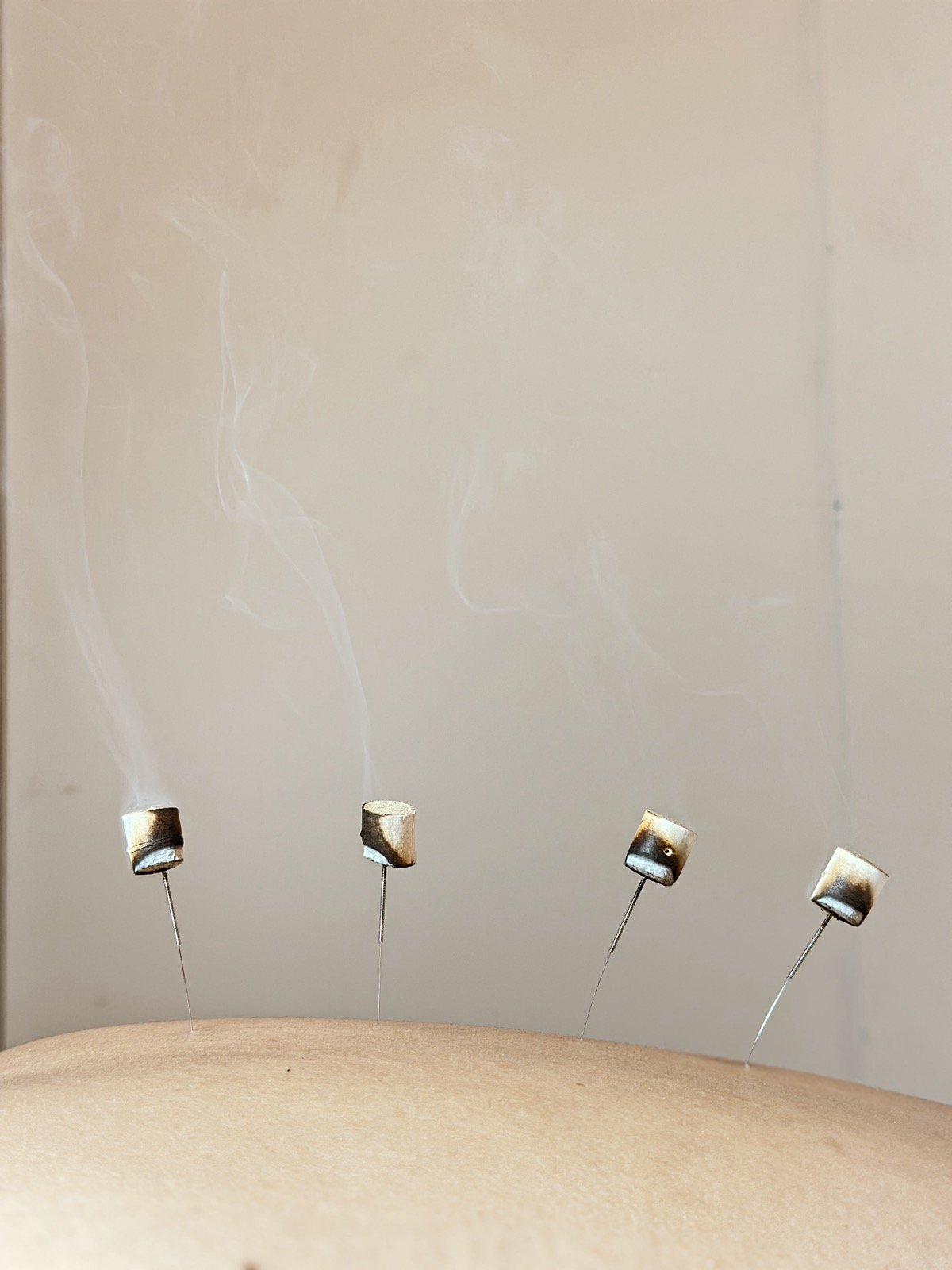
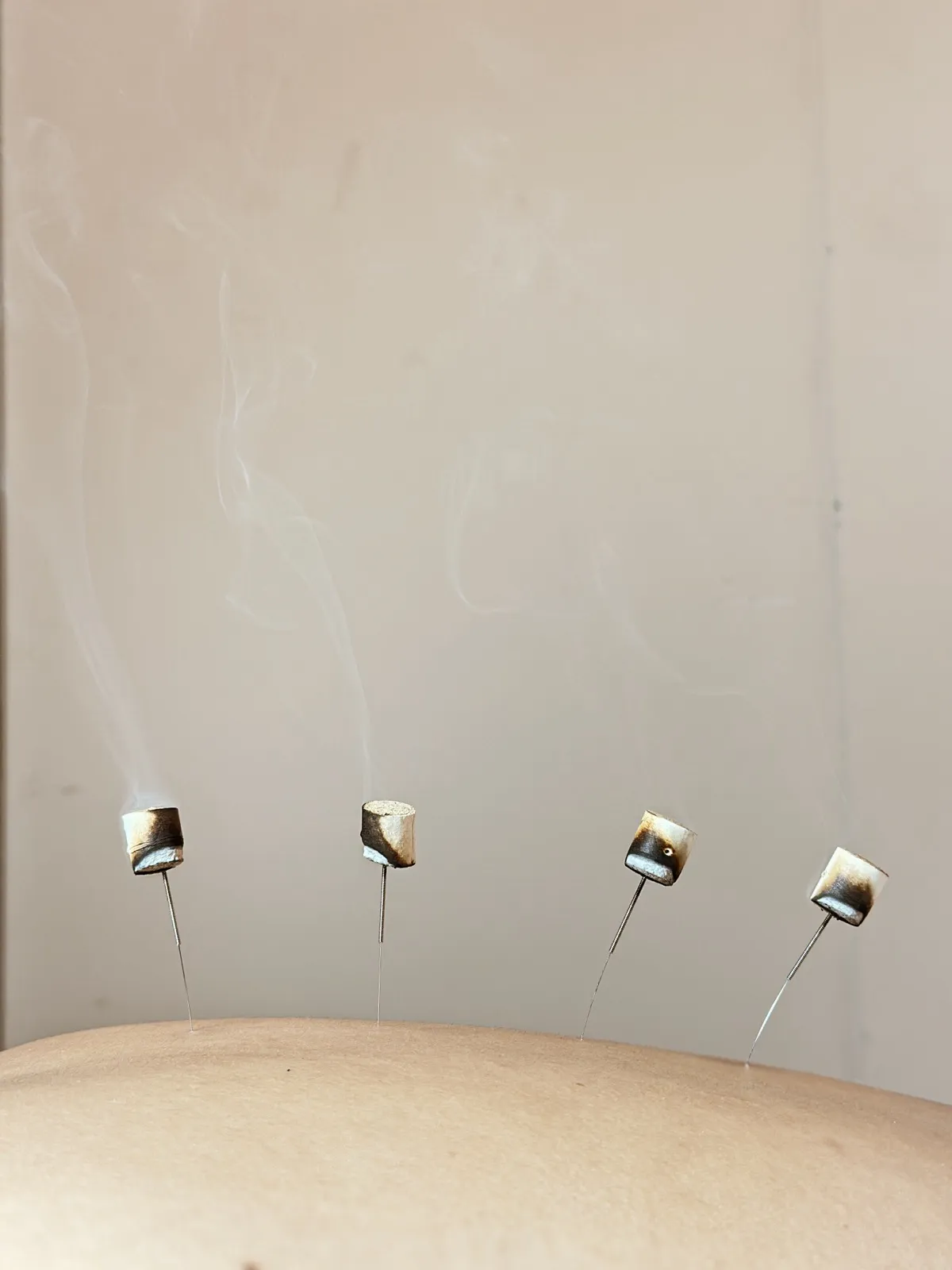
Le traitement peut également inclure la moxibustion, qui est particulièrement efficace pour les schémas digestifs froids et de vide. La chaleur douce du moxa appliquée sur des points de l'abdomen renforce directement le yang de la Rate et améliore le feu digestif.
Pour les problèmes digestifs, Claire recommande généralement des séances hebdomadaires pendant un premier cycle de six à huit semaines. De nombreux patients constatent une amélioration des ballonnements et du confort dès les deux ou trois premières séances, les habitudes de transit se normalisant sur un plus long terme. Un SII chronique qui persiste depuis des années peut nécessiter trois à quatre mois de traitement régulier pour obtenir une amélioration stable.
Conseils alimentaires selon la MTC
Ce que vous mangez compte énormément, mais les conseils diététiques de la MTC diffèrent souvent de la pensée nutritionnelle occidentale.
Aliments chauds et cuits. La Rate fonctionne comme une marmite qui a besoin de chaleur pour digérer efficacement. Les aliments crus et froids nécessitent une énergie supplémentaire pour être « réchauffés » avant d'être transformés. Cela ne signifie pas que vous ne pouvez jamais manger de salade, mais si votre digestion est faible, privilégier les repas chauds et cuits donne à votre Rate le soutien dont elle a besoin pour récupérer.
Repas réguliers. La Rate s'épanouit dans la régularité. Manger à peu près aux mêmes heures chaque jour entraîne le système digestif à préparer les enzymes et la bile au bon moment. Sauter des repas, manger tard le soir et grignoter constamment affaiblissent la fonction digestive au fil du temps.
Réduire les aliments générateurs d'humidité. En MTC, l'humidité est l'un des principaux ennemis de la Rate. Les aliments qui favorisent l'humidité comprennent les produits laitiers, le sucre, les farines raffinées, les aliments gras frits, les excès de fruits tropicaux et l'alcool. Si vous présentez des signes d'humidité (membres lourds, tête embrumée, selles collantes, enduit lingual épais), réduire ces aliments accélère la récupération.
Mâchez bien. Cela semble basique, mais c'est important. Une mastication approfondie commence le processus digestif dans la bouche et réduit significativement la charge de travail de l'Estomac et de la Rate. Manger lentement et en pleine conscience, sans écrans ni distractions, permet au système nerveux parasympathique de s'activer et de soutenir la digestion.
Tisane de gingembre. Une simple tranche de gingembre frais dans de l'eau chaude, sirotée avant ou pendant les repas, réchauffe l'Estomac, favorise les sécrétions digestives et réduit les nausées et les ballonnements. C'est l'une des interventions diététiques de MTC les plus simples et les plus efficaces pour une digestion faible.
La connexion intestin-cerveau
La science moderne et la MTC s'accordent sur un point fondamental : l'intestin et le cerveau sont indissociables. Le système nerveux entérique, parfois appelé le « deuxième cerveau », contient plus de 100 millions de neurones et produit 90 pour cent de la sérotonine du corps. Un dysfonctionnement digestif chronique ne cause pas seulement un inconfort physique — il affecte l'humeur, la cognition et la résilience émotionnelle.
C'est pourquoi la MTC traite toujours la digestion et la santé émotionnelle ensemble. Si l'on vous a dit que votre SII est « dans votre tête », la MTC offre une perspective plus juste : c'est dans votre intestin ET dans votre tête, car ces systèmes sont en communication constante. Un traitement qui s'adresse aux deux produit des résultats que le traitement de l'un ou l'autre seul ne peut égaler.
Retrouvez votre digestion
Vivre avec une digestion imprévisible — planifier sa vie autour de l'accès aux toilettes, éviter les repas en société, se sentir ballonné et inconfortable la plupart du temps — est épuisant. Ce n'est pas une fatalité.
Si vous êtes à Koh Samui et luttez contre le SII, les ballonnements chroniques, un transit irrégulier ou tout problème digestif que la médecine conventionnelle n'a pas résolu, réservez une séance à Piraluna. Claire identifiera le schéma de MTC spécifique à l'origine de vos symptômes et créera un plan de traitement qui s'attaque à la cause profonde, pas seulement aux symptômes de surface. Votre intestin essaie de vous dire quelque chose. La MTC sait comment écouter.
L'acupuncture peut-elle aider le SII ?
Oui. Une méta-analyse de 41 essais contrôlés randomisés portant sur plus de 3 400 participants a confirmé que l'acupuncture est efficace pour le SII, améliorant significativement les symptômes globaux, les douleurs abdominales, les ballonnements et la consistance des selles. L'acupuncture agit en régulant la motilité intestinale, en réduisant l'hypersensibilité viscérale, en modulant l'axe intestin-cerveau et en traitant la réponse au stress qui alimente les symptômes du SII. Elle est efficace pour tous les sous-types de SII, y compris le SII constipation, le SII diarrhée et le SII mixte.
Quelle est la rapidité d'action de l'acupuncture pour les problèmes digestifs ?
De nombreux patients constatent une amélioration des ballonnements et du confort abdominal dès les deux ou trois premières séances. La normalisation du transit prend généralement plus de temps, souvent quatre à six semaines de traitement régulier. Un SII chronique qui persiste depuis des années peut nécessiter trois à quatre mois de séances hebdomadaires pour obtenir une amélioration stable. Le délai dépend de la sévérité et de la durée de la pathologie et du schéma de MTC sous-jacent.
Que devrais-je manger si j'ai une digestion faible selon la MTC ?
La MTC recommande des aliments chauds, cuits et faciles à digérer lorsque la digestion est faible. Privilégiez les soupes, les ragoûts, les céréales cuites, les légumes cuits à la vapeur et de petites quantités de protéines bien cuites. Réduisez les aliments crus et froids, les produits laitiers, le sucre, les aliments gras et les excès de fruits tropicaux. Mangez à heures régulières, mastiquez bien et buvez des boissons chaudes plutôt que des boissons glacées. La tisane de gingembre frais avant les repas est l'un des moyens les plus simples de soutenir la fonction digestive.
Le SII est-il causé par le stress ?
Le stress est l'un des déclencheurs les plus significatifs du SII, mais la relation est bidirectionnelle. Le stress perturbe la fonction intestinale via l'axe intestin-cerveau, et un intestin dysfonctionnel envoie des signaux de détresse au cerveau. En termes de MTC, cela est décrit comme la stagnation du qi du Foie envahissant la Rate. Un traitement efficace traite simultanément la réponse au stress et la faiblesse digestive, c'est pourquoi l'acupuncture est particulièrement efficace — elle régule à la fois le système nerveux et le système digestif dans le même traitement.