Le problème de la rumination mentale
Vous connaissez cette sensation. Vous vous couchez le soir et votre cerveau commence à passer en revue tout ce qui s'est passé aujourd'hui, à planifier demain, à rejouer des conversations, à envisager des scénarios qui ne se produiront peut-être jamais. Votre corps est fatigué mais votre esprit refuse de s'arrêter.
À Piraluna, plus de la moitié de nos patients rapportent que la rumination mentale est un problème important dans leur vie quotidienne. Près de la moitié souffrent d'anxiété. Environ un tiers déclarent que le stress est l'une de leurs principales préoccupations de santé. Ces chiffres ne nous surprennent pas. Ils reflètent un schéma que nous observons chaque jour dans la salle de traitement.
Ce phénomène est particulièrement courant parmi les expatriés, les nomades numériques et les travailleurs à distance qui constituent une grande partie de notre patientèle à Koh Samui. Travailler entre plusieurs fuseaux horaires, gérer des entreprises depuis un ordinateur portable, naviguer dans un pays étranger et être séparé de ses réseaux de soutien habituels, tout cela s'additionne. La liberté du mode de vie nomade a un coût caché, et ce coût se manifeste souvent par une agitation mentale chronique.
Comment la MTC comprend l'anxiété et le stress
La médecine occidentale tend à traiter l'anxiété comme une condition unique, généralement avec des médicaments ciblant les récepteurs de la sérotonine ou du GABA. La MTC voit les choses différemment. En Médecine Traditionnelle Chinoise, l'émotionnel et le physique ne sont pas des systèmes séparés. Votre état mental reflète directement ce qui se passe dans vos organes, votre sang et votre énergie.
Deux des schémas les plus courants derrière l'anxiété et la rumination mentale impliquent le foie et le coeur.
La stagnation du qi du foie est le schéma le plus associé à la frustration, l'irritabilité et un sentiment d'être bloqué(e). Le foie en MTC est responsable de la circulation fluide du qi dans tout le corps. Lorsque le stress provoque une stagnation de cette circulation, vous le ressentez sous forme de tension dans la poitrine, de serrement au niveau des côtes, de boule dans la gorge ou d'irritabilité qui éclate pour des broutilles. Ce schéma est extrêmement courant chez les personnes qui portent beaucoup de responsabilités et ont le sentiment de ne pas pouvoir exprimer pleinement leurs émotions.
Le vide de sang du coeur est le schéma derrière les pensées qui s'emballent, les difficultés de concentration et le type d'anxiété qui se manifeste par une sensation de palpitation dans la poitrine. En MTC, le coeur abrite le shen, votre conscience et votre esprit. Lorsque le sang qui nourrit le coeur s'épuise (par le surmenage, le manque de sommeil, une alimentation irrégulière ou une tension émotionnelle prolongée), le shen perd son ancrage. Vos pensées se dispersent. Vous vous sentez anxieux(se) sans raison claire. Vous sursautez facilement. Le sommeil devient insaisissable.
Il existe d'autres schémas également, impliquant la rate (qui gouverne l'inquiétude et la rumination), les reins (qui sont liés à la peur profonde et à l'épuisement) et des combinaisons de tous ces éléments. L'essentiel est que la MTC ne se contente pas de demander "êtes-vous anxieux(se) ?" Elle demande "quel type d'anxiété, et pourquoi ?"
Comment l'acupuncture apaise l'esprit
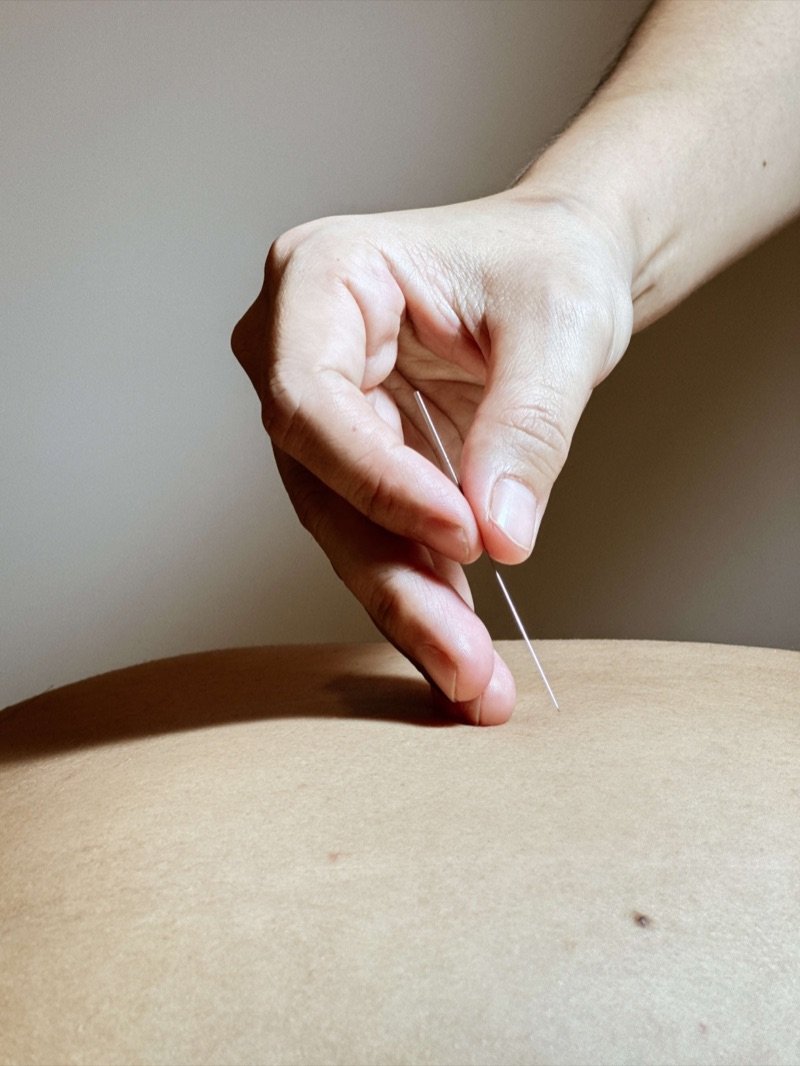
L'acupuncture traite l'anxiété et le stress sous plusieurs angles simultanément. Sur le plan physiologique, elle active le système nerveux parasympathique et régule à la baisse le système sympathique (réaction de lutte ou de fuite). Ce n'est pas subtil. Les patients décrivent fréquemment une vague de calme qui les envahit dès les premières minutes du traitement.
La recherche confirme ce que les patients ressentent sur la table. Des études montrent que l'acupuncture réduit les niveaux de cortisol, augmente la production d'endorphines et de sérotonine, et stimule le nerf vague, qui est la principale voie de communication entre votre cerveau et la réponse de relaxation de votre corps.
Pour la stagnation du qi du foie, des points spécifiques sont utilisés pour fluidifier la circulation du qi et relâcher la tension dans la poitrine et les flancs. Pour le vide de sang du coeur, des points sont choisis pour nourrir le sang et apaiser le shen. Pour la rumination liée à la rate, le traitement se concentre sur le renforcement du système digestif et l'ancrage de l'énergie dispersée.
Parce que chaque traitement est adapté à l'individu, deux personnes qui viennent toutes deux en disant "je me sens anxieux(se)" peuvent recevoir des protocoles d'acupuncture très différents. Cette spécificité est l'une des raisons pour lesquelles l'acupuncture peut fonctionner pour des personnes qui n'ont pas trouvé de soulagement par d'autres méthodes.
Ventouses et moxibustion pour le soulagement du stress
L'acupuncture est l'outil principal, mais les ventouses et la moxibustion jouent souvent un rôle complémentaire dans le traitement du stress et de l'anxiété.
Les ventouses sur le haut du dos et les épaules libèrent les tensions physiques qui s'accumulent parallèlement au stress mental. Il existe une relation directe entre la tension émotionnelle et la crispation musculaire. Lorsque vous relâchez les muscles, l'esprit suit souvent. Les patients rapportent systématiquement se sentir "plus légers" après les ventouses, tant physiquement qu'émotionnellement.
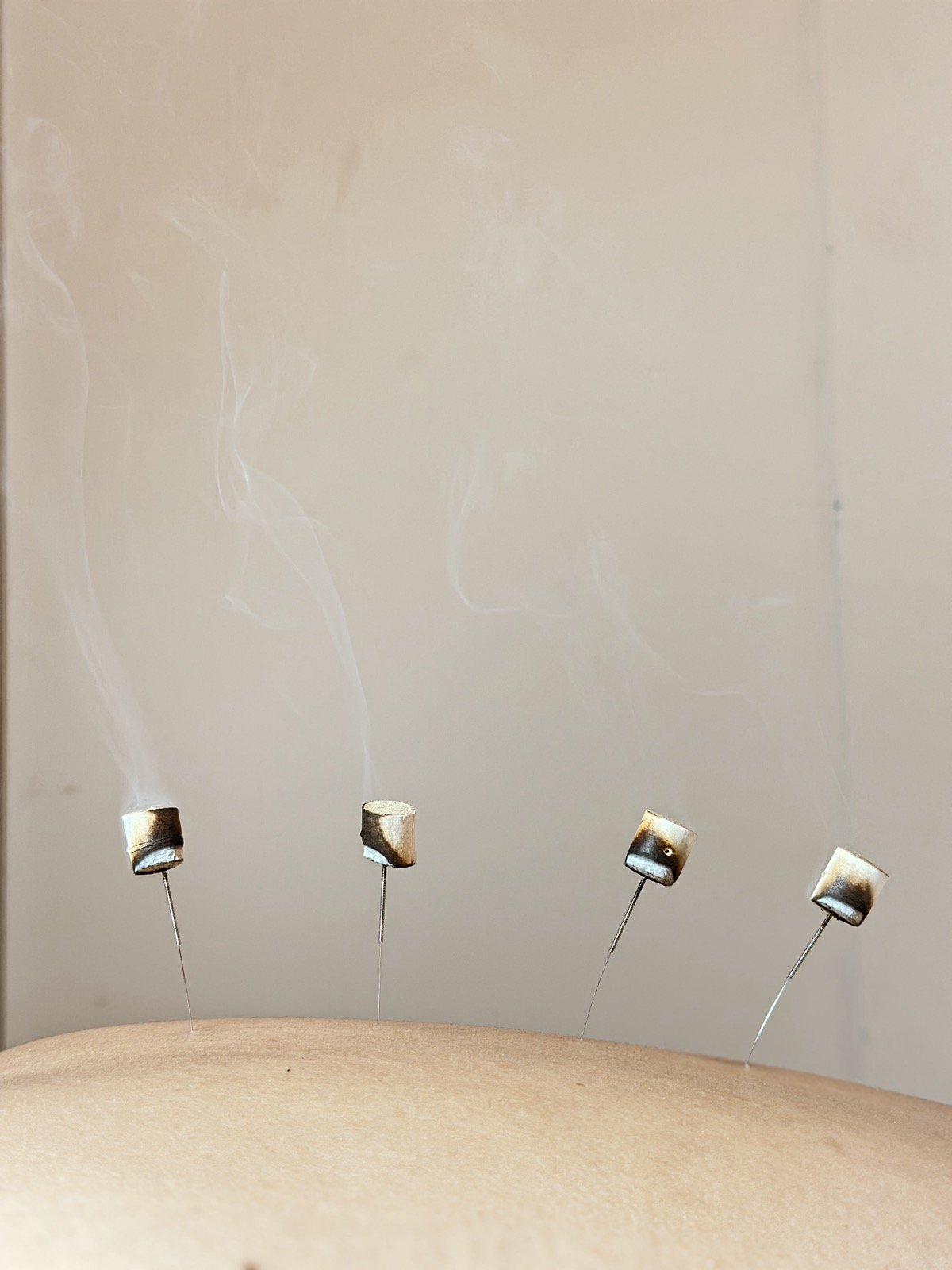
La moxibustion est particulièrement utile pour les patients dont l'anxiété s'accompagne de fatigue, de frilosité ou d'un sentiment d'épuisement. La chaleur douce du moxa nourrit l'énergie yang du corps et renforce le centre. Elle procure une sensation profondément apaisante et ancrante que de nombreux patients trouvent aussi relaxante que l'acupuncture elle-même.
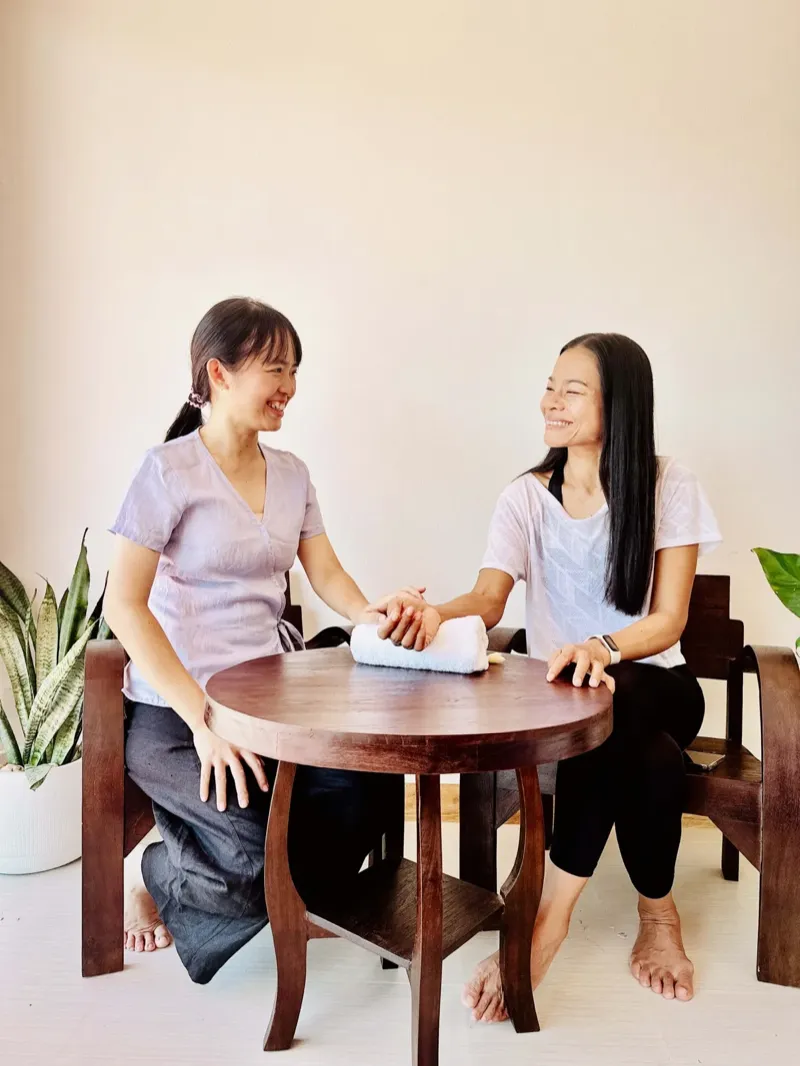
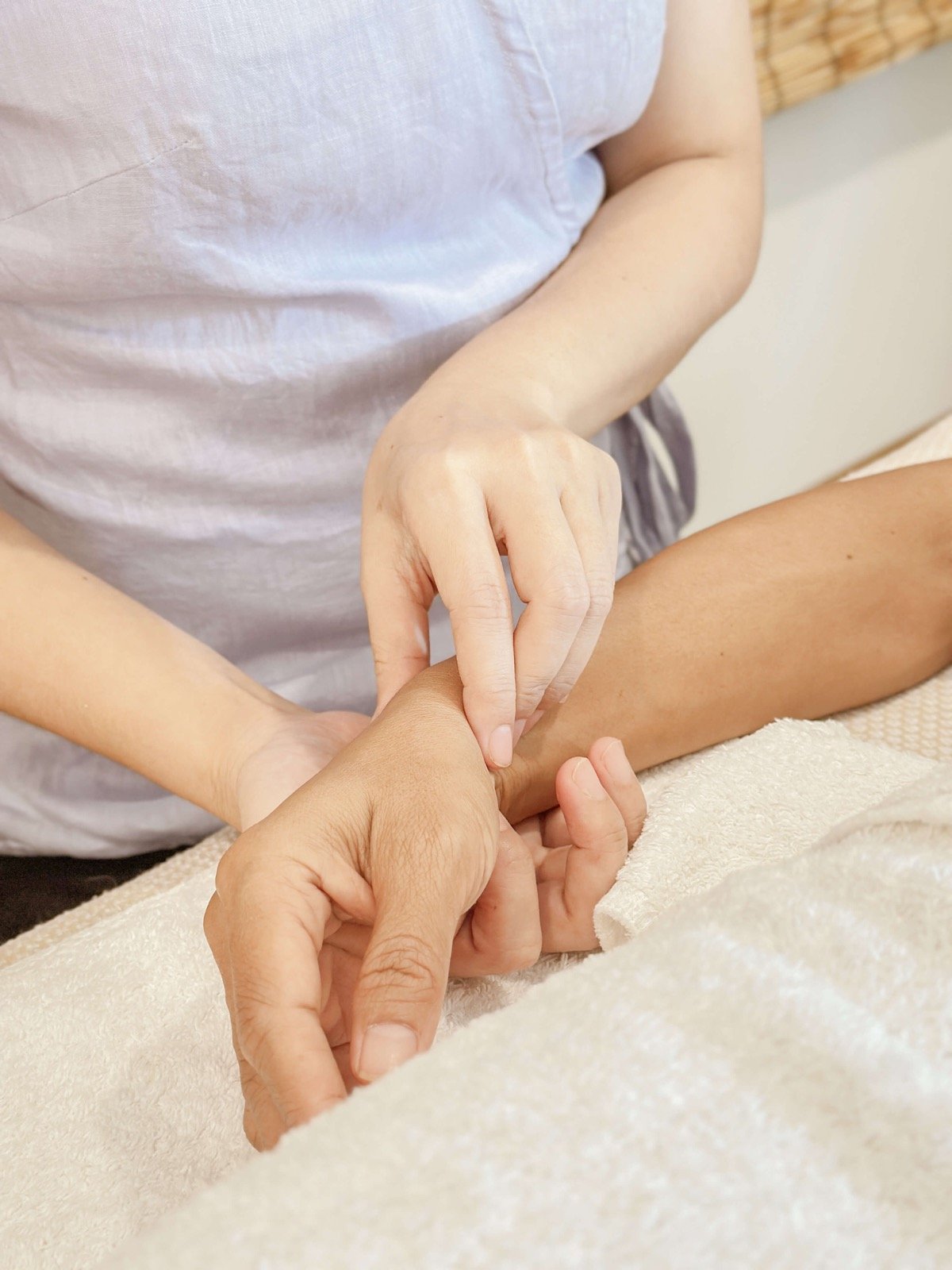
À Piraluna, Claire évalue quelle combinaison de techniques vous sera la plus bénéfique lors de votre consultation. Certains patients bénéficient de l'acupuncture seule. D'autres répondent mieux lorsque les ventouses ou la moxibustion sont ajoutées. Le plan de traitement n'est jamais figé. Il s'adapte à mesure que votre état évolue d'une séance à l'autre.
Habitudes quotidiennes recommandées par la MTC pour le calme mental
Le traitement fonctionne mieux lorsqu'il est soutenu par des changements dans vos habitudes quotidiennes. La MTC a une longue tradition de recommandations de mode de vie pour le bien-être émotionnel. Voici quelques-unes des plus efficaces.
Bougez votre corps chaque jour, mais sans excès. L'exercice modéré comme la marche, la natation, le yoga ou le tai-chi aide à faire circuler le qi et à prévenir la stagnation. L'exercice intense peut être contre-productif si vous êtes déjà épuisé(e). Adaptez votre niveau d'activité à votre énergie.
Mangez des aliments chauds et cuits. En MTC, la rate (l'organe le plus lié à la rumination mentale) est affaiblie par les aliments froids, crus et les repas irréguliers. Les soupes chaudes, les céréales cuites et les repas réguliers soutiennent la rate et apaisent le système digestif, ce qui à son tour apaise l'esprit.
Limitez les stimulants. Le café et les boissons énergisantes poussent votre corps plus profondément dans l'état de stress et d'excitation que vous essayez de fuir. Si vous buvez du café, essayez de vous limiter à une tasse avant midi. Le thé vert est une alternative plus douce qui procure de la concentration sans le pic de cortisol.
Créez un rituel de décompression avant le coucher. Votre système nerveux a besoin d'un signal clair indiquant que la journée est terminée. Tamisez les lumières. Mettez votre téléphone dans une autre pièce. Lisez quelque chose qui ne demande pas de réflexion intense. Même dix minutes de calme peuvent faire une différence mesurable sur la qualité du sommeil et la clarté mentale du lendemain.
Respirez consciemment. La respiration lente et profonde est l'un des moyens les plus rapides d'activer votre système nerveux parasympathique. Essayez d'inspirer en comptant jusqu'à quatre, de retenir votre souffle pendant quatre temps, et d'expirer pendant six temps. Cinq minutes de cette pratique peuvent transformer votre état tout entier.
Vous n'avez pas à rester bloqué(e)
Le stress et la rumination mentale peuvent sembler être des caractéristiques permanentes de votre personnalité. Ce n'est pas le cas. Ce sont des schémas, et les schémas peuvent être modifiés.
À Piraluna, nous accompagnons chaque jour des personnes qui se sentent prisonnières de leurs propres pensées. Des expatriés gérant des entreprises depuis Koh Samui. Des voyageurs portant des mois de tensions accumulées. Des résidents locaux aux prises avec le rythme incessant du quotidien. La salle de traitement est un lieu où vous pouvez réellement vous arrêter, et où votre système nerveux reçoit le signal qu'il est en sécurité pour lâcher prise.
Si vous portez ce poids depuis un certain temps, vous méritez un soutien qui va plus loin que des exercices de respiration et des citations motivantes. Réservez une séance à Piraluna et laissez-nous vous aider à retrouver le chemin du calme.