L'insomnie ne concerne pas que le sommeil
Vous êtes allongé dans votre lit. Votre corps est épuisé mais votre esprit refuse de s'arrêter. Les pensées tournent en boucle, rejouant la journée, planifiant le lendemain, s'inquiétant de choses que vous ne pouvez pas contrôler à 2 heures du matin. Ou peut-être que vous vous endormez sans problème mais vous réveillez à 3 heures avec le cœur qui bat la chamade, puis passez les deux heures suivantes à fixer le plafond avant que le réveil ne sonne.
L'insomnie prend de nombreuses formes. Certaines personnes ont du mal à s'endormir. D'autres s'endorment vite mais se réveillent plusieurs fois dans la nuit. Certaines dorment légèrement et ne se sentent jamais reposées, quel que soit le nombre d'heures passées au lit. Et pour beaucoup, l'insomnie se manifeste différemment selon la semaine, la saison ou ce qui se passe dans leur vie.
Ce que toutes les formes ont en commun, ce sont les mêmes dégâts en aval. Un mauvais sommeil chronique érode votre concentration, votre patience, votre système immunitaire, votre digestion et votre résilience émotionnelle. Il aggrave l'anxiété, rend la douleur plus difficile à gérer et ralentit la guérison. Si vous vivez avec de l'insomnie depuis des mois ou des années, vous le savez déjà. Vous le ressentez dans chaque aspect de votre vie.
L'approche conventionnelle (somnifères, compléments de mélatonine, listes de règles d'hygiène du sommeil) traite l'insomnie comme un problème unique avec une solution unique. La médecine traditionnelle chinoise voit les choses différemment. En MTC, l'insomnie est un symptôme avec de nombreuses causes profondes possibles. Identifier votre profil spécifique est la clé pour la traiter efficacement et durablement.
Comment la MTC comprend le sommeil
En médecine traditionnelle chinoise, le sommeil est gouverné par le concept de Shen. Le Shen est souvent traduit par « esprit » ou « mental », mais il se comprend plus précisément comme la qualité de votre conscience, votre capacité à penser clairement le jour et à vous reposer profondément la nuit. Le Shen réside dans le Cœur (en majuscule car en MTC, le Cœur est plus que l'organe physique ; il englobe votre centre émotionnel et votre clarté mentale).
Quand le Cœur est nourri et calme, le Shen s'apaise naturellement la nuit. Vous vous endormez sans effort, dormez profondément et vous réveillez restauré. Quand quelque chose perturbe le Cœur, qu'il s'agisse de tourments émotionnels, de surmenage, d'épuisement physique ou de chaleur interne, le Shen devient agité. Il ne peut pas se poser. Et quand le Shen ne peut pas se poser, vous ne pouvez pas dormir.
La MTC encadre aussi le sommeil à travers le prisme du yin et du yang. L'énergie yang est active, chaude et tournée vers l'extérieur. Elle domine pendant la journée, alimentant votre vigilance et votre activité. L'énergie yin est calme, fraîche et tournée vers l'intérieur. Elle monte le soir et devrait naturellement attirer l'énergie yang vers l'intérieur, permettant à votre corps et votre esprit de se reposer. L'insomnie signale souvent que cette transition yin-yang ne se fait pas correctement. Soit le yin est trop faible pour ancrer le yang (votre esprit reste donc actif), soit quelque chose génère un excès de chaleur ou d'agitation qui pousse le yang vers le haut quand il devrait descendre.
Ce cadre explique quelque chose que la médecine du sommeil occidentale néglige souvent : pourquoi votre insomnie a un schéma spécifique. L'heure à laquelle vous vous réveillez, la nature de vos pensées et les sensations physiques que vous ressentez pendant l'insomnie pointent toutes vers le système organique en déséquilibre. Les praticiens de MTC utilisent ces indices comme un détective utilise des preuves, pour identifier exactement le mécanisme qui vous maintient éveillé.
L'horloge des organes et ce que révèle votre heure de réveil
La MTC enseigne que le qi circule à travers chaque système organique selon un cycle prévisible de deux heures tout au long du jour et de la nuit. C'est ce qu'on appelle l'horloge des organes, et elle est remarquablement utile pour diagnostiquer les profils d'insomnie.
Difficulté à s'endormir (avant 23h). Les heures entre 21h et 23h appartiennent au Triple Réchauffeur, qui gouverne la thermorégulation et le métabolisme des liquides. Si vous avez systématiquement du mal à vous endormir pendant cette fenêtre, cela pointe souvent vers un excès de chaleur dans le corps ou un système nerveux hyperactif qui n'a pas ralenti depuis la journée. Le stress, l'exposition aux écrans et les repas tardifs aggravent ce schéma.
Réveil entre 23h et 1h. C'est l'heure de pointe de la Vésicule Biliaire. La Vésicule Biliaire en MTC est liée à la prise de décision, au courage et à la capacité de digérer les événements de la journée. Se réveiller durant ces heures est souvent corrélé à de la frustration non résolue, de l'indécision ou une difficulté à lâcher prise sur les défis de la journée. Cela accompagne fréquemment la stagnation du qi du Foie, le schéma classique du stress.
Réveil entre 1h et 3h. C'est l'heure de pointe du Foie et le schéma d'insomnie le plus fréquent que nous observons à Piraluna. Le Foie est responsable de la libre circulation du qi et du traitement des émotions, en particulier la colère, la frustration et le ressentiment. Se réveiller durant ces heures, surtout si c'est accompagné de sensations d'agitation, de serrement de mâchoire ou d'une incapacité à arrêter votre esprit de tourner, suggère fortement un déséquilibre du Foie. La consommation d'alcool, même modérée, déclenche fréquemment ce schéma car le Foie travaille en surrégime pour le traiter pendant ces heures de pointe.
Réveil entre 3h et 5h. Ces heures appartiennent aux Poumons. Se réveiller pendant cette fenêtre peut indiquer du chagrin, de la tristesse ou un sentiment de perte qui n'a pas été pleinement digéré. C'est aussi associé à une déficience du qi des Poumons, qui peut se manifester par une respiration superficielle, une tendance à soupirer fréquemment ou une vulnérabilité aux rhumes. Dans les climats tropicaux comme Koh Samui, une climatisation trop froide pendant ces heures peut aussi déclencher un réveil à l'heure des Poumons.
Réveil entre 5h et 7h (trop tôt). C'est l'heure du Gros Intestin. Un réveil précoce qui semble abrupt et définitif, où vous ne pouvez pas vous rendormir, est souvent lié à une stagnation digestive ou une incapacité à « lâcher prise » tant sur le plan physique qu'émotionnel. Cela peut accompagner des problèmes digestifs comme la constipation ou les ballonnements.
Les cinq profils d'insomnie en MTC
Quand vous consultez un praticien de MTC pour de l'insomnie, l'évaluation va bien au-delà de demander « avez-vous du mal à dormir ? ». Claire examine votre pouls, étudie votre langue et pose des questions détaillées sur la nature de votre insomnie, votre état émotionnel, vos niveaux d'énergie, votre digestion et votre santé globale. Ces informations révèlent quel profil est à l'origine de votre insomnie.
La déficience de sang du Cœur. C'est l'un des profils d'insomnie les plus courants, en particulier chez les femmes et les personnes qui travaillent de longues heures. Vous vous sentez fatiguée mais survoltée. Votre esprit s'emballe avec des pensées dispersées et anxieuses qui ne suivent pas de fil logique. Vous pouvez ressentir des palpitations cardiaques, des vertiges en vous levant, des trous de mémoire et un teint pâle. Votre sommeil est léger et fragmenté, ponctué de rêves intenses ou perturbants. Ce profil se développe à cause du surmenage chronique, de l'effort mental excessif, des pertes de sang (y compris des menstruations abondantes) ou d'une mauvaise alimentation. Le Cœur n'a littéralement pas assez de sang pour ancrer le Shen, et votre conscience flotte donc sans repos toute la nuit.
La stagnation du qi du Foie avec chaleur. C'est le profil classique de l'insomnie de stress. Vous n'arrivez pas à vous endormir parce que votre esprit tourne en boucle sur des problèmes, des disputes et des frustrations. Quand vous finissez par vous assoupir, vous vous réveillez entre 1h et 3h en ayant chaud, agité et parfois en colère. Vous pouvez avoir des maux de tête, un goût amer dans la bouche au réveil, des yeux rouges ou secs, et le caractère explosif pendant la journée. Ce profil se construit quand le stress émotionnel est refoulé ou non résolu pendant des semaines ou des mois. Le Foie se contracte, génère de la chaleur, et cette chaleur monte perturber le Cœur et le Shen.
La déficience du yin des Reins. Ce profil est fréquent chez les personnes de plus de 40 ans, chez celles qui ont supporté des années de stress chronique, et chez les femmes approchant ou traversant la ménopause. L'insomnie ici implique souvent un réveil dans la seconde moitié de la nuit avec des sueurs nocturnes, des bouffées de chaleur ou une sensation de chaleur dans les paumes, les plantes de pieds et la poitrine. Vous ressentez une fatigue profonde, au niveau des os, pendant la journée mais une veille agitée la nuit. Votre gorge et votre bouche peuvent être sèches. Ce profil reflète un épuisement de la substance yin, rafraîchissante et nourrissante, qui maintient normalement l'énergie yang en échec pendant le sommeil. Sans yin suffisant, le yang flotte vers le haut sans contrôle, générant chaleur et agitation.
Le Cœur et les Reins ne communiquent plus. Dans un sommeil sain, le Cœur (feu, en haut) et les Reins (eau, en bas) maintiennent un équilibre dynamique. Le feu du Cœur descend pour réchauffer les Reins, et l'eau des Reins monte pour rafraîchir le Cœur. Quand cette communication se rompt (généralement à cause du stress chronique ou du vieillissement), le feu du Cœur reste piégé en haut, créant de l'agitation mentale et des difficultés à dormir, tandis que le bas du corps se refroidit. Vous ne pouvez pas dormir, vous sentez anxieux et surchauffé dans le haut du corps, mais vos pieds sont froids. C'est l'un des profils d'insomnie les plus tenaces et il nécessite souvent un traitement plus long.
Les glaires-chaleur perturbant le Cœur. Ce profil apparaît quand une mauvaise digestion crée une accumulation d'humidité et de glaires (au sens de la MTC, pas seulement respiratoire) qui génère de la chaleur et monte troubler le Cœur. Le sommeil est lourd mais non réparateur. Vous vous réveillez en vous sentant hébété, brumeux et épuisé. Les rêves sont étranges et désordonnés. Pendant la journée, vous pouvez ressentir une oppression thoracique, des nausées ou un revêtement épais sur la langue. Ce profil accompagne souvent une alimentation excessive, une consommation d'alcool excessive ou un régime riche en aliments gras et copieux.
Comment l'acupuncture traite l'insomnie
L'acupuncture est l'un des traitements les plus efficaces contre l'insomnie chronique, et la recherche confirme de plus en plus ce que les praticiens de MTC observent depuis des siècles.
D'un point de vue moderne, l'acupuncture agit sur l'insomnie par plusieurs mécanismes. Elle stimule le système nerveux parasympathique, faisant passer votre corps du mode combat-fuite qui vous maintient éveillé au mode repos et digestion nécessaire au sommeil. Elle augmente la production de mélatonine, l'hormone qui régule votre cycle veille-sommeil. Elle réduit le cortisol, l'hormone du stress souvent élevée chez les personnes souffrant d'insomnie chronique. Et elle module des neurotransmetteurs comme le GABA et la sérotonine qui influencent directement la qualité du sommeil et l'humeur.
Ce qui différencie l'acupuncture des somnifères, c'est qu'elle ne force pas le sommeil. Au lieu de cela, elle supprime les obstacles qui empêchent votre corps de dormir naturellement. Un somnifère court-circuite votre système nerveux. L'acupuncture le rééquilibre. C'est pourquoi les effets du traitement par acupuncture tendent à se renforcer avec le temps et à perdurer après la fin du traitement, alors que les somnifères cessent de fonctionner dès que vous arrêtez de les prendre.
Du point de vue de la MTC, la prescription de points est personnalisée selon votre profil spécifique. Le traitement de la déficience de sang du Cœur se concentre sur la nutrition du sang et l'apaisement du Shen. Le traitement de la stagnation du qi du Foie se concentre sur la libération de l'énergie bloquée et l'élimination de la chaleur. Le traitement de la déficience du yin des Reins se concentre sur la reconstruction de la substance fraîche et nourrissante qui ancre le sommeil. C'est pourquoi deux patients souffrant d'insomnie peuvent recevoir des traitements complètement différents, et pourquoi un praticien qui maîtrise la différenciation des profils obtient de meilleurs résultats que celui qui utilise les mêmes « points du sommeil » génériques pour tout le monde.
De nombreux patients rapportent une amélioration dès la toute première séance. Il est courant de dormir plus profondément la nuit du traitement. L'effet complet se construit généralement sur un protocole de quatre à huit séances, chaque traitement approfondissant et stabilisant l'amélioration.
Points d'acupression à utiliser dès ce soir
Entre les visites à la clinique (ou si vous voulez commencer à vous aider dès maintenant), ces points d'acupression peuvent calmer votre système nerveux et préparer votre corps au sommeil. Appuyez fermement sur chaque point avec votre pouce pendant une à deux minutes, en respirant lentement et profondément pendant la pression. Pratiquez cela 30 minutes avant le coucher dans le cadre d'un rituel de décompression.
Cœur 7 (Shenmen). C'est le point le plus important pour calmer l'esprit. Trouvez le pli sur la face interne de votre poignet là où il se plie. Suivez le pli depuis le côté de l'auriculaire vers l'intérieur jusqu'à sentir un petit creux juste à l'intérieur du tendon. Appuyez fermement et respirez. Ce point nourrit le sang du Cœur, calme le Shen et apaise les pensées qui s'emballent. Il est particulièrement efficace pour le profil de déficience de sang du Cœur.
Rein 1 (Yongquan). Ce point se trouve sur la plante du pied, dans le creux qui se forme quand vous recourbez les orteils. Il se situe à environ un tiers du chemin entre la base des orteils et le talon. Appuyez fermement avec votre pouce ou roulez une balle de tennis sous votre pied. Ce point attire l'excès d'énergie vers le bas, loin de l'esprit hyperactif. Il est particulièrement utile pour les profils impliquant une montée de chaleur (sueurs nocturnes, bouffées de chaleur, pensées qui s'emballent). Appuyer sur ce point avant le coucher ancre littéralement votre énergie.
Anmian (point extra). Ce point se situe derrière l'oreille, dans le creux entre la base du crâne et la mâchoire. Placez vos doigts derrière le lobe de l'oreille, puis faites-les glisser légèrement vers l'arrière et vers le haut jusqu'à sentir un creux sensible. Appuyez doucement et maintenez. Le nom de ce point se traduit directement par « sommeil paisible » en chinois. C'est l'un des points les plus efficaces pour induire la somnolence et il est utilisé en clinique pour presque tous les patients souffrant d'insomnie.
Péricarde 6 (Neiguan). Placez trois doigts en travers de votre poignet intérieur, en partant du pli du poignet. Le point se situe entre les deux tendons, au niveau de votre troisième doigt. Appuyez fermement. Ce point calme la poitrine, apaise le Cœur et réduit cette sensation d'anxiété et d'oppression qui accompagne souvent l'éveil nocturne. Il aide aussi avec les nausées et l'oppression thoracique, ce qui le rend utile pour le profil de glaires-chaleur.
Pour un guide plus détaillé incluant des illustrations et une routine d'acupression complète pour le coucher, téléchargez notre guide gratuit d'acupression pour le sommeil. Il couvre les trois points les plus efficaces pour le sommeil avec des instructions pas à pas que vous pouvez suivre dès ce soir.
Que faire avant de vous coucher : pratiques vespérales de MTC
L'acupression fonctionne mieux quand elle est combinée à des habitudes qui soutiennent la transition naturelle de votre corps vers le sommeil.
Réchauffez vos pieds. En MTC, les pieds froids signalent que l'énergie est piégée dans le haut du corps (surtout la tête) au lieu de circuler vers le bas. Tremper vos pieds dans de l'eau chaude pendant 10 à 15 minutes avant le coucher attire le qi et le sang vers le bas, loin de votre esprit agité. Ajoutez quelques tranches de gingembre frais à l'eau pour un effet réchauffant supplémentaire. Cette pratique simple est prescrite en médecine chinoise depuis des siècles et reste l'un des rituels pré-sommeil les plus efficaces.
Arrêtez de manger trois heures avant le coucher. Quand votre Estomac traite encore de la nourriture à l'heure du coucher, il génère de l'activité et de la chaleur qui interfèrent avec le calme yin dont votre corps a besoin. Manger tard le soir est particulièrement perturbant pour les profils de glaires-chaleur et de chaleur de l'Estomac. Si vous devez manger le soir, gardez un repas léger et chaud : un petit bol de congee, des légumes légèrement cuits à la vapeur ou une tasse de bouillon d'os chaud.
Tamisez vos lumières après le coucher du soleil. Cela correspond à la compréhension du yin et du yang en MTC : à mesure que la lumière naturelle s'estompe, votre corps devrait commencer sa transition du yang actif au yin reposant. Les écrans lumineux et l'éclairage au plafond indiquent à votre système nerveux qu'il fait encore jour. Passer à un éclairage tamisé et chaud après 20h soutient la descente naturelle de l'énergie yang. Ce n'est pas seulement de la philosophie MTC ; la recherche moderne confirme que l'exposition à la lumière bleue supprime la production de mélatonine et retarde l'endormissement.
Respirez avec votre diaphragme. Allongez-vous sur le dos et placez une main sur la poitrine et une sur le ventre. Respirez de façon à ce que seule la main sur le ventre se soulève. Inspirez sur quatre temps, retenez sur sept, expirez lentement sur huit. Cela active le nerf vague et bascule votre système nerveux en mode parasympathique. Cinq minutes de ce schéma respiratoire peuvent réduire les niveaux de cortisol et préparer votre corps au sommeil plus efficacement que n'importe quel complément alimentaire.
Évitez les boissons froides le soir. Les boissons froides contractent la circulation et peuvent piéger la chaleur à l'intérieur, en particulier dans le Foie et l'Estomac. Une tisane de camomille chaude, du thé de chrysanthème ou simplement de l'eau tiède soutient le mouvement descendant et intérieur de l'énergie que le sommeil requiert.
Le traitement à Piraluna
Quand vous venez à Piraluna pour de l'insomnie, Claire commence par une évaluation complète. Elle prend votre pouls aux deux poignets (la MTC identifie jusqu'à 28 qualités de pouls distinctes qui révèlent les conditions internes), examine le revêtement et la couleur de votre langue, et pose des questions détaillées sur votre schéma de sommeil, votre état émotionnel, votre digestion, votre cycle d'énergie tout au long de la journée et votre historique de santé global.
Cette évaluation identifie votre profil d'insomnie spécifique, et révèle souvent des connexions que vous n'aviez peut-être pas remarquées vous-même. De nombreux patients sont surpris d'apprendre que leurs problèmes de sommeil sont directement liés à leurs troubles digestifs, leurs maux de tête ou leurs fluctuations hormonales. En MTC, ce ne sont pas des problèmes séparés. Ce sont des expressions différentes du même déséquilibre sous-jacent.
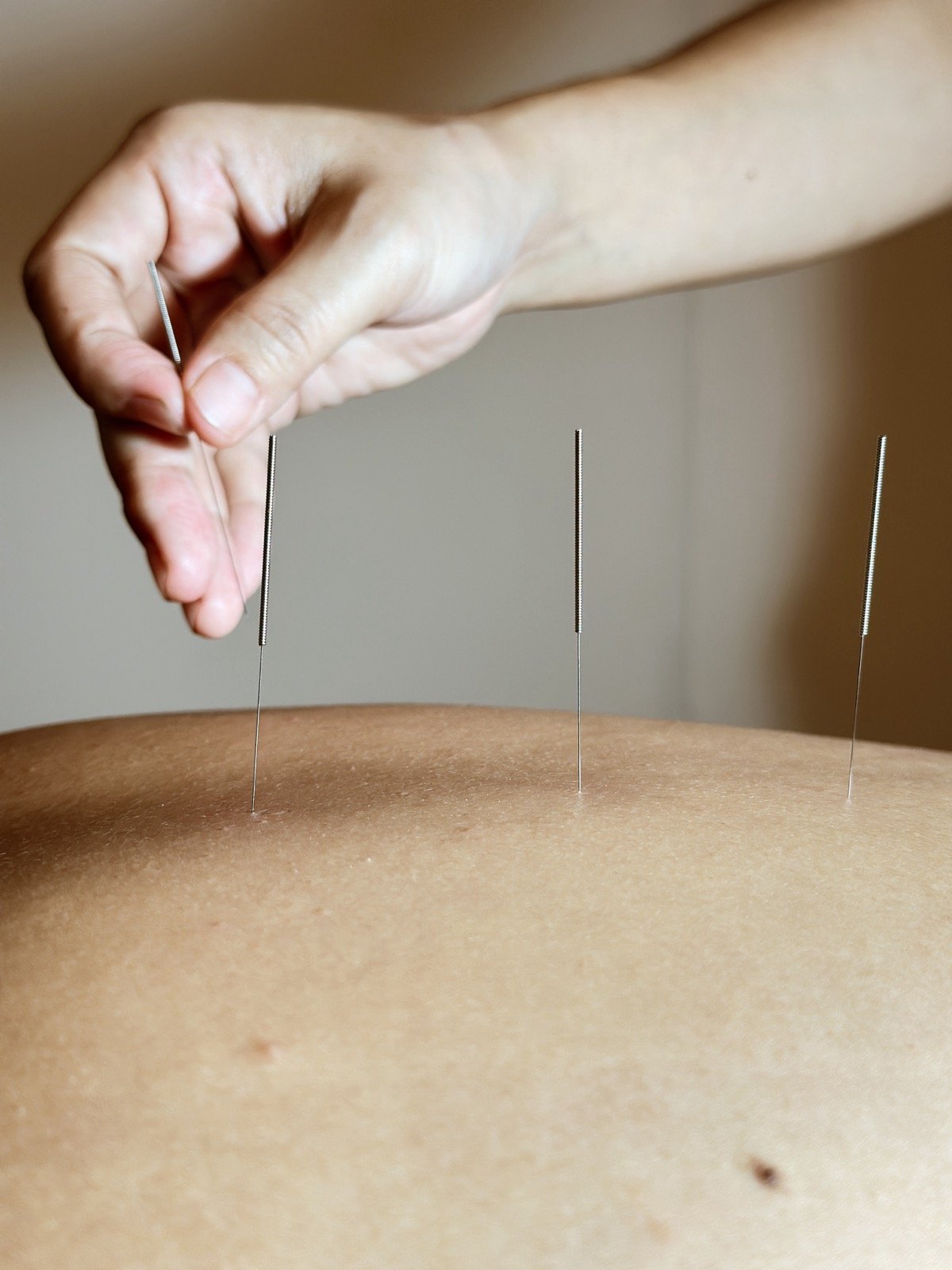
Le traitement implique de l'acupuncture avec des combinaisons de points sélectionnées pour votre profil. Les séances durent environ une heure. La plupart des patients ressentent une vague profonde de relaxation pendant le traitement, et beaucoup s'endorment sur la table. C'est un signe positif : cela démontre que l'acupuncture active avec succès le système nerveux parasympathique et apaise le Shen.
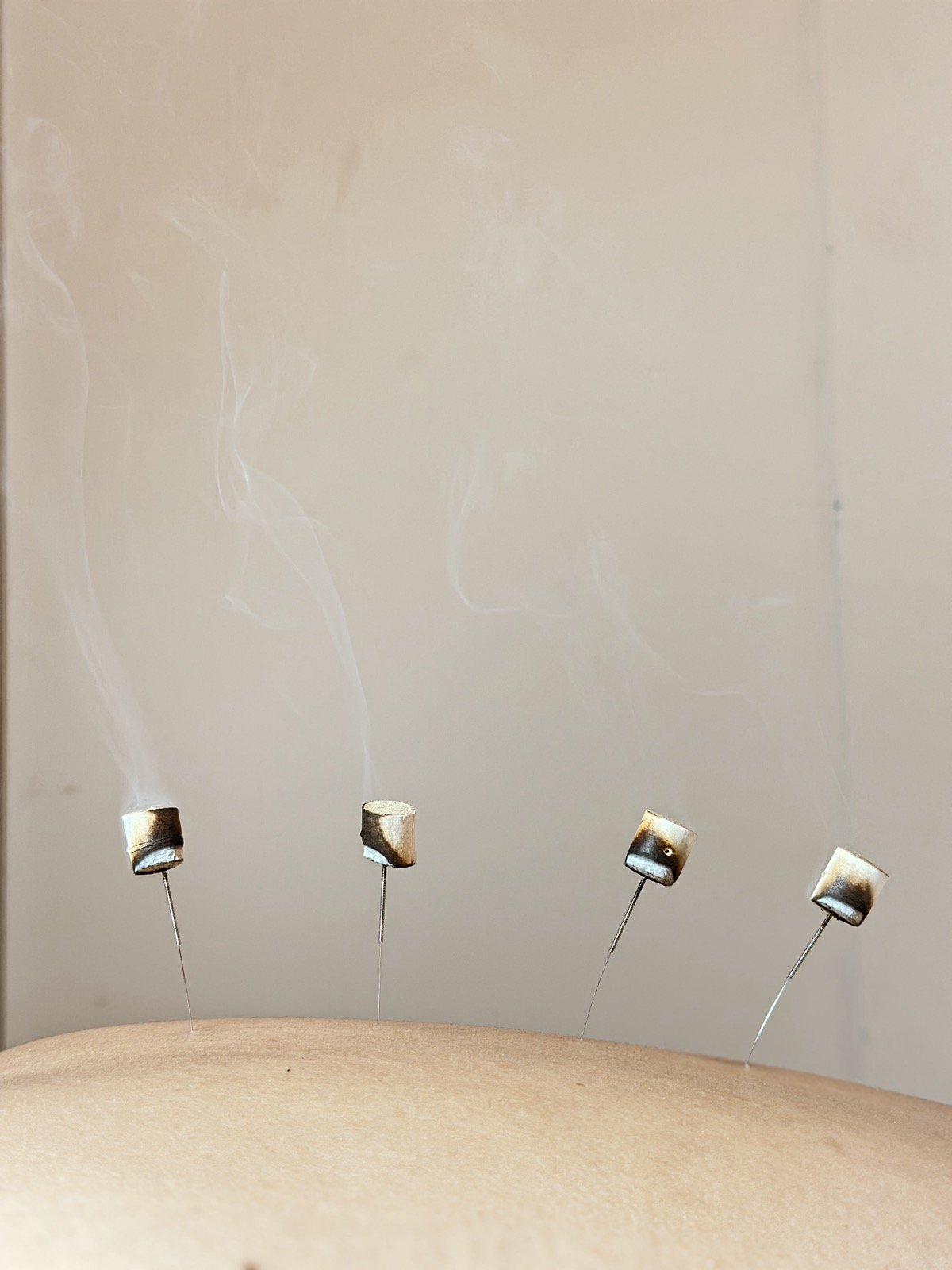
Pour certains profils, Claire peut ajouter la moxibustion (une thérapie de réchauffement) pour renforcer le yin ou le yang déficient. Pour les profils impliquant de la stagnation, elle peut intégrer des ventouses sur le haut du dos pour libérer la tension physique qui contribue à l'agitation mentale.
La plupart des patients souffrant d'insomnie constatent une amélioration en deux à trois séances. Un protocole typique comprend six à huit séances hebdomadaires, les premières séances étant consacrées à briser le cycle de l'insomnie et les suivantes à stabiliser l'amélioration. Claire fournit également des recommandations personnalisées de routine du soir et de conseils alimentaires basés sur votre profil, car ce que vous faites entre les séances affecte directement la rapidité de votre amélioration.
Vous n'avez pas à accepter les nuits blanches
Si l'insomnie est devenue votre normalité, elle n'a pas à le rester. Le fait que vous vous réveilliez à une heure précise, que vos pensées suivent un schéma particulier, que certaines conditions aggravent votre sommeil, tout cela est de l'information. La MTC lit cette information et l'utilise pour identifier exactement ce qui vous maintient éveillé et comment y remédier.
Vous n'avez pas besoin de vous médicamenter pour dormir chaque nuit. Vous n'avez pas besoin d'accepter que « c'est comme ça ». Votre corps sait comment dormir. Il le fait depuis toute votre vie. Quelque chose interfère avec ce processus naturel, et la MTC est remarquablement efficace pour trouver et supprimer cette interférence.
Si vous êtes à Koh Samui et prêt à retrouver votre sommeil, réservez une consultation à Piraluna. Claire identifiera votre profil d'insomnie, créera un plan de traitement adapté à votre situation spécifique et vous aidera à construire les bases d'un sommeil profond et réparateur.
Vous voulez commencer dès ce soir ? Téléchargez notre guide gratuit d'acupression avec trois points qui vous aident à vous endormir plus vite et à dormir plus profondément. Cela prend cinq minutes et ne coûte rien.