PMS Is Common. It Is Not Normal.
Most women are told that premenstrual syndrome is simply part of being female. The mood swings, the bloating, the breast tenderness, the irritability, the fatigue, the headaches and cramps that arrive in the week or two before a period are framed as something to manage, tolerate, or push through.
Traditional Chinese Medicine takes a different position. PMS is not an inherent feature of the female cycle. It is a signal. It is the body communicating that something in its internal environment is out of balance, and it is asking for attention. The fact that most women around you experience PMS does not make it inevitable for you.
This distinction matters enormously in practice. When you treat PMS as a normal variation, you manage symptoms. When you treat it as a pattern of imbalance, you can actually change the underlying conditions that produce those symptoms. TCM consistently achieves the second outcome, which is why it has been a cornerstone of women's healthcare in East Asia for over two thousand years.
How TCM Understands the Menstrual Cycle
In Traditional Chinese Medicine, the menstrual cycle is governed primarily by two things: the Liver organ system and blood. These are not the same as their Western anatomical equivalents. In TCM, the Liver is responsible for the smooth, even flow of qi (vital energy) throughout the body. It stores blood, regulates the rhythm of the cycle, and plays a central role in emotional processing, especially the emotions of frustration, anger, and resentment.
Blood in TCM is the material foundation of the cycle. The uterus must fill with blood in the second half of the cycle, and the Liver must release it smoothly at menstruation. When this process flows without obstruction, symptoms before and during the period are minimal.
PMS appears when that flow is disrupted. Something is blocking the smooth release of qi and blood, creating a buildup of pressure in the days before the period arrives. The specific form that disruption takes determines which symptoms you experience.
The Main TCM Patterns Behind PMS
One of the most important things TCM does is distinguish between different types of the same condition. Not all PMS is the same. Two women can both describe PMS but have completely different underlying patterns requiring different treatments. Correct diagnosis is what makes treatment effective.
Liver Qi Stagnation
This is the most common pattern in premenstrual syndrome and the one most people associate with the term PMS. The Liver governs smooth flow, and when that function is impaired, qi becomes stuck. Stagnant qi accumulates, building pressure, and the body expresses this as the range of symptoms that arrives before bleeding begins.
The signature signs of Liver Qi stagnation are premenstrual irritability, frustration, anger that feels disproportionate to events, breast distension and tenderness, sighing frequently, and a sensation of tightness or fullness in the chest and ribs. Bloating is also common, because stagnant Liver qi can overflow into the digestive system and disrupt the Spleen's function of transforming and transporting food.
Once the period starts and blood begins to flow, women with this pattern typically feel immediate relief. The mood lifts. The bloating eases. The tenderness dissipates. The period itself is the release of what was stuck. This before and after contrast is the clearest diagnostic indicator of Liver Qi stagnation.
The causes are almost always chronic stress, emotional suppression, overwork, or a diet high in alcohol and rich foods. Modern life is exceptionally good at creating this pattern.
Liver Qi Stagnation Turning to Heat
When Liver Qi stagnates for long enough, the blocked energy generates heat. This is a more intense version of the same pattern, and the symptoms reflect that intensity. Instead of irritability, there is pronounced anger or rage. Instead of mild breast tenderness, there may be significant pain. Headaches before the period, especially temporal or frontal headaches, are common. Sleep is disturbed in the premenstrual phase. The face may flush, and there can be feelings of heat or restlessness in the evenings.
Period blood in this pattern is often darker and may contain clots. The flow itself tends to be heavy at the start.
Blood Deficiency
The Liver must have sufficient blood to carry out its regulatory function. When blood is deficient, the Liver cannot fill properly, and the result is a different kind of PMS. Instead of the pressure and irritability of stagnation, Blood deficiency produces fatigue, anxiety, mild depression, poor concentration, insomnia (particularly difficulty falling asleep), heart palpitations, and a feeling of emotional fragility in the premenstrual phase.
Physically, periods in this pattern tend to be light or pale in colour, possibly short in duration, and the cycle may be irregular or longer than average. These women often feel worse as their period approaches, rather than relieved, because the body is trying to fill the uterus with blood it does not have enough of.
Blood deficiency in TCM is not the same as anaemia, although they can coexist. It can develop from inadequate nutrition, overwork, a history of heavy periods, emotional depletion, or simply a constitutional tendency.
Kidney Yang Deficiency
The Kidney system in TCM provides the deep energetic foundation for all reproductive function. When Kidney Yang (the warming, activating aspect of Kidney energy) is insufficient, the premenstrual phase may involve pronounced fatigue, particularly in the lower back and legs, cold sensations in the abdomen, swelling in the legs and feet, an increase in urinary frequency, and low libido. Emotionally, this pattern tends toward withdrawal, low motivation, and feeling overwhelmed rather than outwardly irritable.
Kidney deficiency as a contributor to PMS becomes more common in women who have been in chronic stress states for extended periods, those who have had multiple pregnancies, or those in their late thirties and forties as Kidney energy naturally begins to decline.
Spleen Qi Deficiency with Dampness
The Spleen governs digestion and the transformation of food into blood and qi. When Spleen function is impaired, the body accumulates internal dampness, a kind of pathological fluid that makes the body feel heavy, sluggish, and congested. In the premenstrual phase, this manifests as significant bloating, loose stools, nausea, breast fullness (less tender than in Liver stagnation, more of a heavy distension), fatigue, and a feeling of mental fogginess or difficulty concentrating.
This pattern is often triggered or worsened by a diet heavy in cold foods, raw foods, dairy, sugar, and refined carbohydrates. It commonly co-exists with Liver Qi stagnation, as the stagnant Liver qi invades the Spleen and further impairs its function.
What Acupuncture Does for PMS
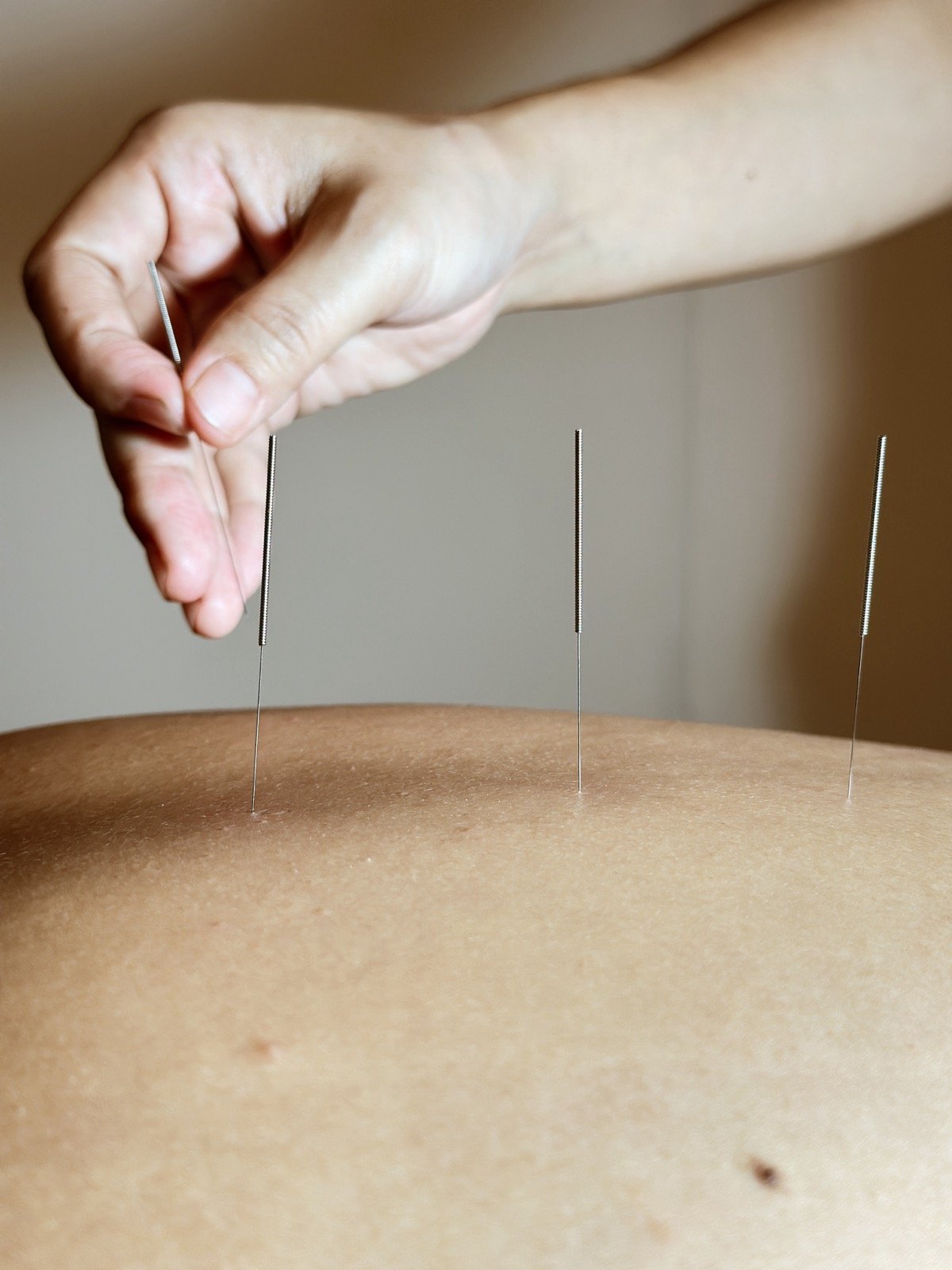
Acupuncture works on PMS primarily by restoring the smooth flow of Liver qi and ensuring the blood has a clear, unobstructed path to move through the cycle.
From a physiological perspective, acupuncture influences the hypothalamic-pituitary-ovarian axis, the hormonal feedback loop that governs the menstrual cycle. Research has shown that acupuncture can regulate the balance of estrogen and progesterone, reduce levels of prostaglandins (the compounds responsible for cramping), and modulate serotonin activity, which has a direct effect on mood, anxiety, and irritability in the premenstrual phase.
The points used vary by pattern. For Liver Qi stagnation, the primary points are on the Liver and Gallbladder meridians, particularly on the feet, legs, and ribs. For Blood deficiency, points on the Spleen and Stomach meridians support blood production. For Kidney deficiency, points on the Kidney and Conception Vessel meridians restore the root energy. For Dampness, points that strengthen the Spleen and resolve fluid accumulation are central to treatment.
Because TCM treatment is tailored to your pattern rather than your diagnosis, two women who both say they have PMS will receive treatments that look quite different. This precision is why the outcomes can be so specific and lasting.
How Long Does It Take to See Results?
Most women notice changes within two to three cycles of regular acupuncture treatment. The first cycle may show only modest improvement, as the body begins to reorganise. The second cycle typically shows clearer change. By the third cycle, most women report that their premenstrual week feels substantially different from before.
This timeline matters for expectation setting. PMS is usually the result of patterns that have been building for years. Changing those patterns takes more than one or two sessions. The standard recommendation is to have treatment in the week before the period for the first two or three cycles, with additional sessions at other points in the cycle if there are other symptoms to address, such as painful periods, irregular cycles, or difficulty with other phases.
Once the pattern is resolved and symptoms have improved significantly, monthly maintenance sessions around ovulation or the premenstrual phase can help sustain the results long term.
Herbal Medicine for PMS
Chinese herbal medicine is a powerful adjunct to acupuncture for menstrual disorders. Some of the most well known classical formulas in Chinese medicine were developed specifically for premenstrual and menstrual conditions. Formulas such as Xiao Yao San (Free and Easy Wanderer) and its modifications are among the most studied in the Chinese pharmacopoeia precisely because premenstrual disorders were recognised and treated systematically for centuries.
Herbs prescribed for PMS are typically taken daily throughout the cycle, or specifically in the premenstrual phase depending on the pattern. They work continuously, not just during sessions, which accelerates the speed of change. At Piraluna, Claire will discuss whether herbal medicine is appropriate for your situation during your consultation.
What to Do Between Sessions
Acupuncture works best when the conditions at home support what is being done in the clinic. A few consistent habits make a significant difference over a full cycle.
- Reduce the inputs that create Liver stagnation. Alcohol, caffeine, high fat and fried foods, and chronic overwork all tax the Liver and worsen the conditions that produce PMS. Reducing these in the two weeks before your period has a measurable effect.
- Move your body regularly. In TCM, physical movement promotes the flow of Liver qi. Regular moderate exercise (walking, swimming, yoga, cycling) in the second half of your cycle helps prevent the buildup of stagnation. This is not the time for extreme restriction of activity.
- Prioritise sleep in the premenstrual phase. The Liver does much of its work at night, between 1 and 3 AM in the TCM organ clock. Going to sleep before midnight and getting enough sleep is genuinely supportive of Liver function.
- Eat warm, cooked foods. Cold foods and drinks are more taxing on the Spleen, and a weakened Spleen contributes to both blood deficiency and dampness. This does not mean avoiding salads permanently, but leaning toward warm, nourishing meals in the week before your period supports the body's preparation for menstruation.
- Apply warmth to the lower abdomen. A warm water bottle or heat pack on the lower abdomen in the days before your period arrives can ease cramping and support blood flow. This is particularly useful for patterns involving Cold or Blood stagnation.
Tracking Your Cycle as Diagnostic Information
If you are planning to see a TCM practitioner for PMS, keeping a simple cycle diary for one or two months before your appointment is enormously useful. Note the length of your cycle, when symptoms begin relative to your period, the nature of any emotional shifts, the colour and flow of period blood, any physical symptoms during the period itself, and what makes things better or worse.
This information helps your practitioner identify your pattern accurately on the first visit rather than having to wait for a full cycle to gather clinical evidence. The more specific your history, the more precise the treatment from the start.
PMS as a Conversation Your Body Is Trying to Have
The premenstrual phase is the most diagnostically rich time of the menstrual cycle. The symptoms that appear in these days are not random. They are the body's most concentrated attempt to communicate what it needs. Irritability that resolves the moment bleeding starts tells you something. Fatigue that deepens in the second half of every cycle tells you something. Bloating that arrives on the same day every month and then disappears tells you something.
TCM listens to that conversation rather than silencing it. The goal is not to suppress the premenstrual phase with medication. It is to address the underlying conditions so thoroughly that the symptoms no longer need to arise.
At Piraluna, Claire works with women at all stages of menstrual health, from teenagers with severe PMS to women approaching perimenopause navigating changing cycles. Each case is assessed individually. If your premenstrual experience has been disrupting your relationships, your work, or your quality of life, there is a specific reason for that, and there is a specific treatment path that addresses it.
Book a session to find out what your pattern is and what it will take to change it. Or if you prefer to ask a question first, reach out via WhatsApp or the contact form and describe what you experience each month. We will give you an honest picture of what to expect from treatment before you come in.
Can acupuncture help with PMS mood symptoms?
Yes. Acupuncture is particularly effective for the emotional symptoms of PMS including irritability, anxiety, mood swings, and low mood. These symptoms in TCM are primarily caused by Liver Qi stagnation, and the Liver meridian is the main system treated for premenstrual mood changes. Research has also shown that acupuncture modulates serotonin activity, which directly influences premenstrual mood. Most women notice emotional improvement within two to three treatment cycles.
How many acupuncture sessions are needed for PMS?
Most women need a course of treatment spanning two to three menstrual cycles to see significant improvement in PMS. Typically this means one to two sessions in the premenstrual week of each cycle, with additional sessions at other points if the full pattern requires it. The first cycle often shows early signs of change, and by the third cycle most women report a substantially milder premenstrual experience. Maintenance sessions monthly or every six weeks can sustain the improvement long term.